
Stretch wrap is inexpensive, quick and effective, which is why it gets used freely and reviewed rarely. Two things are usually wrong with it. The first is that the number of layers was chosen by habit rather than by the load. The second is that nobody has added up the disposal cost, which in most European markets is now larger than the cost of the film itself.
What the film is actually doing
A wrap contains a load so the boxes behave as a single mass. It resists the small movements that accumulate into a shift, it keeps the top layer in place, and it holds any pads or dunnage where they were put. It does almost nothing for compression, which is what people often assume it does, and that misunderstanding is the reason over-wrapping happens in the first place.
Layers versus coverage
What matters is the overlap between successive turns and the tension at which they were applied, not the raw count. A high-tension wrap at 50% overlap will often hold a load better than twice the film applied slackly. Where the same load is wrapped by different people on different shifts, the variance in tension is usually the whole problem.
Tension and box damage
Too much tension pulls the vertical edges of a box inward and can crush the corners, particularly on a box with a folded seam running up the corner. The damage is easy to misread as a handling impact. Where corners are being crushed on an otherwise undamaged load, check the wrap tension before questioning the box specification.
The disposal bill
Wrap is a single-use plastic, separately reportable in the EU and subject to a levy in several member states. The cost per pallet is small and the annual figure is not. It is also the easiest thing for a customer’s sustainability team to object to, because it is visible, unbranded and obviously disposable.
Alternatives that hold a load
Strapping, reusable hoods, corner posts with banding and interlocking box features all contain a load without film. Each costs something in equipment or in handling time, and each suits a different pattern. In practice the answer is rarely to remove wrap entirely; it is to reduce it to what the load actually needs and strap for the rest.
What to measure before changing anything
Weigh the film used per pallet for a week and count the damaged arrivals over the same week. That gives a baseline that makes the argument concrete. Changes made without a baseline tend to be reversed at the first complaint, because nobody can say whether the change helped.
What to measure before reducing it
Weigh the film used per pallet for a week and record the damage rate over the same period. Then reduce one layer, or one turn of tension, and measure again. Two data points are enough to see whether the reduction cost anything.
Without the baseline the discussion becomes a matter of opinion, and opinion in a packing hall favours whatever is currently being done. With it, the question is settled by the arrival condition.
What we can do
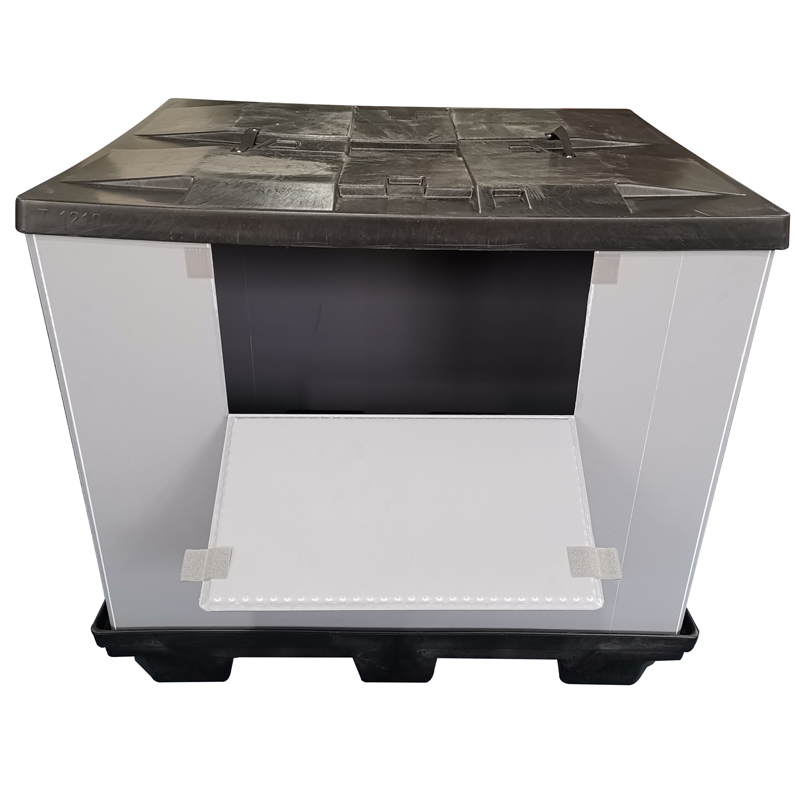
We build PP corrugated turnover boxes designed to be strapped or hooded rather than wrapped, with corner details that take banding. Tell us how the load is secured today and we will suggest what can come off. The height arithmetic is set out in working out how many layers.