
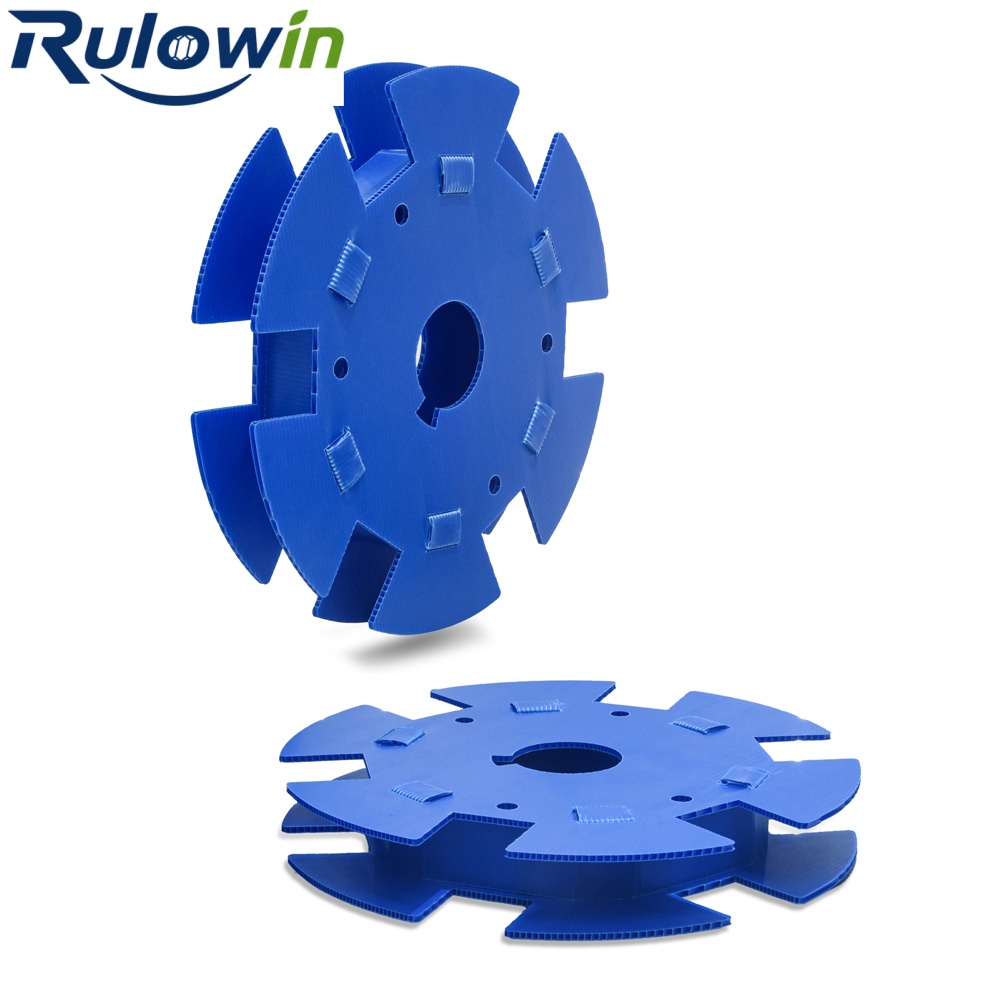
Plastic drums get stored outside because there is rarely room inside. That is a legitimate choice, but it is one with a chemistry consequence that is worth understanding before a drum that has spent two years in the sun is asked to carry a full wind at tension.
What UV does
Ultraviolet light breaks the polymer chains at the surface of polypropylene. The process is called photo-oxidation, and it has a signature that is easy to recognise once you have seen it: the surface chalks — a pale, powdery film that rubs off on your hand — and the surface loses gloss. Underneath, the material is initially fine, which is exactly why the damage is underestimated.
The problem is that the degraded surface is where the cracks start. A drum that looks only slightly faded can have a brittle skin that cracks under an impact that would previously have left a scuff. Combine that with cold weather, where PP is already less forgiving, and an outdoor-stored drum becomes a handling risk.
How fast
It depends overwhelmingly on geography and season — UV intensity in a gulf summer is several times that of a northern European winter — and on whether the drums are under cover. Rather than quote numbers, here are the practical signs in sequence:
- First: gloss loss and slight colour shift. Cosmetic, but it marks the start of the clock.
- Then: chalking. The surface is now measurably degraded.
- Then: micro-cracking at high-stress areas — flange roots, rib corners, the bore. This is the point at which the drum should not be trusted at tension.
Untreated PP in strong sun moves through those stages in months. Stabilised material takes years. That difference is the whole argument for specifying UV stabilisation on anything that lives outdoors.
What UV stabilisation actually buys
Stabilisers do not block UV; they interrupt the degradation chemistry. The practical effect is a large extension of the time before chalking and embrittlement — typically turning months into years, with the exact figure depending on grade and climate.
Two practical notes:
- Carbon black is both a pigment and an excellent UV stabiliser, which is why so many outdoor plastic products are black. Colour choices other than black or dark grey need a proper UV package rather than assuming the colour helps.
- Stabilisation is consumed over time. It does not last indefinitely, and a drum that has spent its stabiliser behaves like an untreated one, whatever the datasheet said.
Practical storage rules
- Cover is worth more than grade. A simple canopy or even stacking drums and covering the top layer removes most of the exposure. Roofed storage on three sides is cheap and dramatically extends life.
- Rotate stock. Use the oldest drums first. A drum that spends five years at the back of the yard is a different object from one that has been in service.
- Inspect before use. Chalk test: rub the surface — if a pale film comes off, the skin is degraded. Check flange roots and corners for micro-cracks by flexing gently.
- Retire on evidence, not on age. A drum that passes inspection is fine; a drum that chalks and cracks is not, regardless of what year it was bought.
If drums must live outdoors permanently
Specify a UV-stabilised grade at purchase, ideally with the stabilisation package matched to your climate — a drum for a northern European yard and one for a desert yard are not the same product. Consider darker colours. And budget for a shorter replacement cycle than the indoor number, because that is what the evidence will eventually show anyway.
If drums currently live outside at your operation, send a photo of the worst one and we can tell you roughly where it is in the degradation sequence and whether the rest of the yard is likely to be in better shape.