
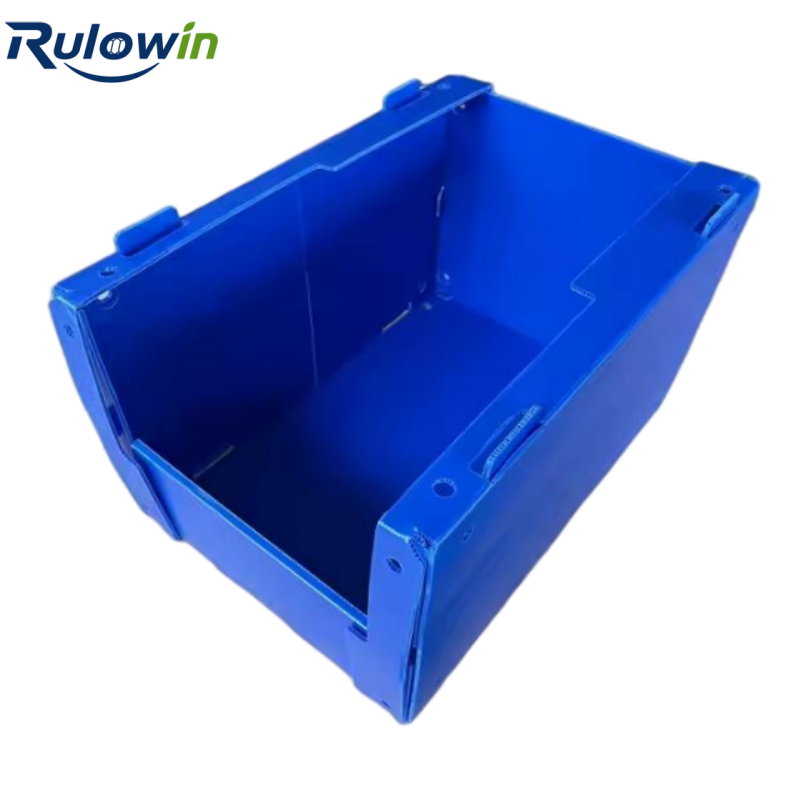
In any multi-site operation, picking boxes get bought locally. Each site has a reason for its choice, and the result is a group of sites that cannot share stock, cannot transfer equipment, and cannot move a picker between them without retraining.
Why standardisation is worth doing
- Stock transfer. Boxes that fit the same shelf and the same carton let stock move between sites without repacking.
- Shared spares. One set of spare boxes covers the whole network rather than each site holding its own.
- Better buying position. One specification, one order, better price and better availability.
- Consistent automation. Conveyors, flow racks and carton erectors configured once rather than per site.
- Faster onboarding. A new site is set up from an existing specification rather than inventing one.
Why it fails
Sites have genuinely different constraints. Shelf depths differ, racking differs, product mixes differ. A specification that suits a large distribution centre may be wrong for a smaller regional site.
Nobody wants to scrap a working fleet. The existing boxes are in service and functional. Replacing them is a cost with a benefit that lands somewhere else.
The standard is set without consultation, so the sites that have to live with it resist it.
It drifts back. Without a rule that a new variant needs an approval, each site quietly buys what it wants when it next reorders.
Making it work
Standardise on a module, not a product. Define the footprint and the stacking geometry, and allow variation in height and configuration. Sites can then have boxes that suit their orders while still being compatible with the same shelf and carton.
Phase it in. Standardise new purchases first and let the existing fleets run out. It avoids scrapping working equipment and it needs no capital.
Involve the sites in the choice. Let them specify what the box has to do, then choose one option together. A standard that everyone had a hand in is a standard that survives.
Make the standard easy to use. A published specification with a photograph, a code and an approved supplier. If finding the right box is harder than ordering a local one, the standard will be ignored.
Give one person ownership. Across sites, someone has to be accountable for the specification, or it will fragment.
What to standardise and what not to
Standardise the footprint, the stacking geometry, the grip position and the material grade. Those are what make boxes interchangeable.
Do not standardise the height, the colour or the identification. Those legitimately vary by site and by product line, and forcing them to match creates resistance for no benefit.
The measure of success
Whether a box can be moved from one site to another and be immediately usable. If it can, the standard is working. If it needs a shelf adjustment, a new label or a different carton, it is not.
Rolling it out without stopping the lines
Most standardisation programmes fail in the implementation rather than the decision, and they fail in a predictable way: nobody sets a date. Sites keep both their old boxes and the new standard while the old stock runs down, six months pass, and the operation now has two standards instead of one – the exact problem it set out to solve, plus a pallet of mixed stock nobody can count.
Three things protect against that. Set a cut-over date per site, even if it is conservative, so there is a point after which the old specification is genuinely gone rather than gradually declining. Put the existing incompatible stock somewhere it cannot be reached by accident – physically segregated, clearly marked, not simply stacked beside the new boxes. And accept that the first site will take longer than expected, because it will, and build that into the schedule instead of discovering it in month two.
Colour helps more than it should during transition. A temporary colour difference between old and new stock lets anyone on the line tell them apart at a glance, which prevents mixing during the months when both are legitimately in use. It is a small thing that saves a large amount of sorting later.
Finally, decide what happens to the exceptions. Every site has one process that genuinely will not fit the standard. Leaving it documented as an exception with named contents is healthier than quietly allowing deviations that multiply until nobody knows what the standard actually is.
What we can do
We supply picking boxes to a defined module and can supply the same specification to several sites on separate orders, with consistent dimensions between them. If you are consolidating a network onto one standard, send us the constraints from the sites that are hardest to fit and we will tell you which module covers the most of them.