
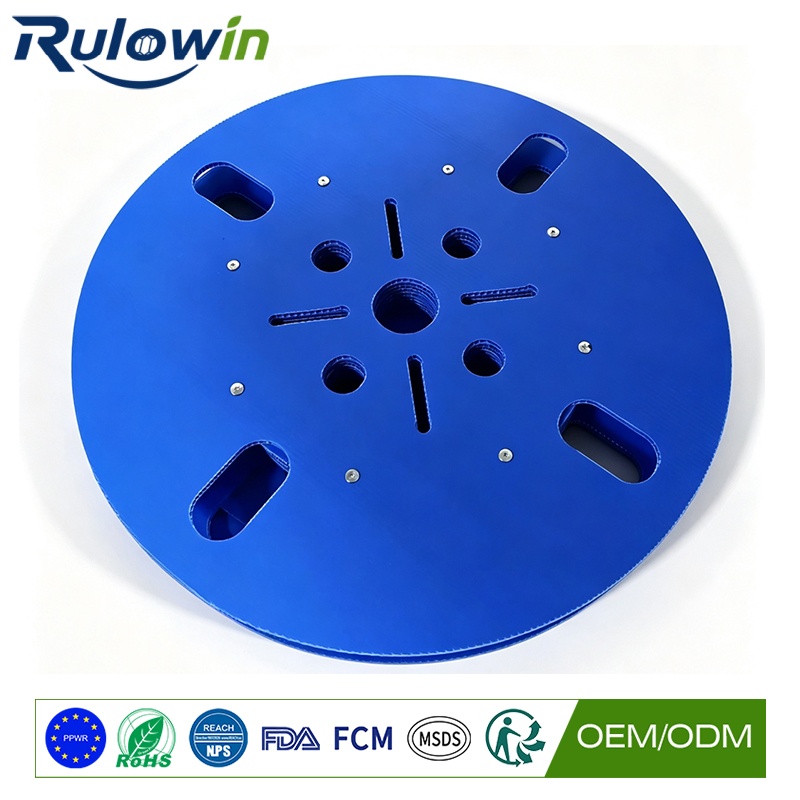
Changeover time is treated as overhead. It appears in nobody’s product cost, nobody’s efficiency report is adjusted for it, and nobody has timed it. On high-mix lines it is routinely one of the largest unmeasured costs in the building.
Where the minutes go
Timing a full spool change end to end, from the last metre wound to the first metre of the new pack:
- Stopping the line and releasing tension
- Doffing the full spool and moving it clear — covered separately in our article on doffing
- Fetching the empty spool
- Mounting it on the shaft and securing it
- Spinning up to speed
- Threading the lead-in and anchoring it — see the piece on start-up scrap
- Establishing tension
- Ramping to production speed
- Clearing the full spool from the area
None of these look significant individually. Together they are several minutes, and twenty of them is an hour.
Which parts are spool-dependent
This is the useful question, because most changeover improvement work focuses on the machine and ignores the consumable:
- Mounting. A bore that fights the shaft every time. A keyway that needs finding. A spool that needs two hands and a shove.
- Securing on the shaft. Chucks, collars, whatever — some systems are simply faster, and the interaction with bore design is direct.
- Anchoring the lead-in. Some arrangements take seconds, some take fiddling. Multiply by changeovers per year.
- Fetching empties. Where they are stored and how far the operator walks. A logistics problem that becomes a spool problem when return logistics are not designed around the line.
- Weight. Manual handling of heavier spools is slower and needs two people.
What you can measure in an afternoon
Time ten changes. Note the longest and shortest, and what was different. Note every interruption — a spool that would not go on, an end that would not anchor, an empty that was not where it should be.
This usually tells you more than any analysis, because the variability matters more than the average. A predictable three minutes can be planned around; a variable three-to-nine minutes cannot.
The changes worth making
In rough order of return:
- Empties staged at the line. Cheap, immediate, and usually the single biggest win.
- Bore fit sorted. The same argument as everywhere in this series — see bore wear — but here it is about time rather than component life.
- A consistent anchor method the operator can do without looking.
- Standard spool dimensions so nothing needs adjustment between products. This connects to the fleet decision discussed in our article on fleet sizing.
- A defined doff procedure written down, so everybody does it the same way.
When it does not matter
Long runs, low changeover frequency. If you change twice a shift, none of this is worth much, and spending effort here is worse than spending it elsewhere.
It matters progressively more as the changeover count rises, and above roughly ten per shift it is usually worth someone’s dedicated attention.
Worth raising with suppliers
Most suppliers are asked about unit price, lead time and specification. Very few are asked “how quickly can my operator put this on the machine and start winding?” Yet it is often a bigger operating cost than the difference in unit price between two quotes.
Tell us your changeover rate when you ask about our hollow board spools, and we will factor it into what we recommend. On high-changeover lines that sometimes means recommending something slightly dearer per unit because it saves more in handling.