
Vinyl and linoleum are the finishes that generate the most handover disputes, and the reason is that they fail in ways that do not look like damage. There is no chip, no crack, no obvious scratch. There is a dull patch, a grey arc, a faint pattern that will not come off with anything the cleaning contractor is allowed to use.
Three different mechanisms, three different marks
Abrasion leaves a light-coloured scuff where the surface layer has been roughened. Pressure leaves a permanent dish where a heavy object has stood long enough to deform a resilient material. And chemical transfer leaves a grey or brown mark that is actually material from something else – usually tyre plasticiser from a trolley wheel or a rubber foot – bonded into the surface. Each needs a different prevention, and cleaning does not fix any of them.
Why rubber marks are the stubborn ones
Most black rubber and many polymer wheels contain plasticiser oils that migrate out over time. Park a trolley on vinyl for three weeks in a warm corridor and the oil moves into the floor and leaves a stain that gets worse rather than better with age. The fix is not cleaning, it is not putting rubber on vinyl for long periods – either change the wheels to a non-marking compound or put something under them. This is the one that surprises people most, because the floor looks fine when the trolley is moved and the mark appears over the following days.
Pressure marks from the protection itself
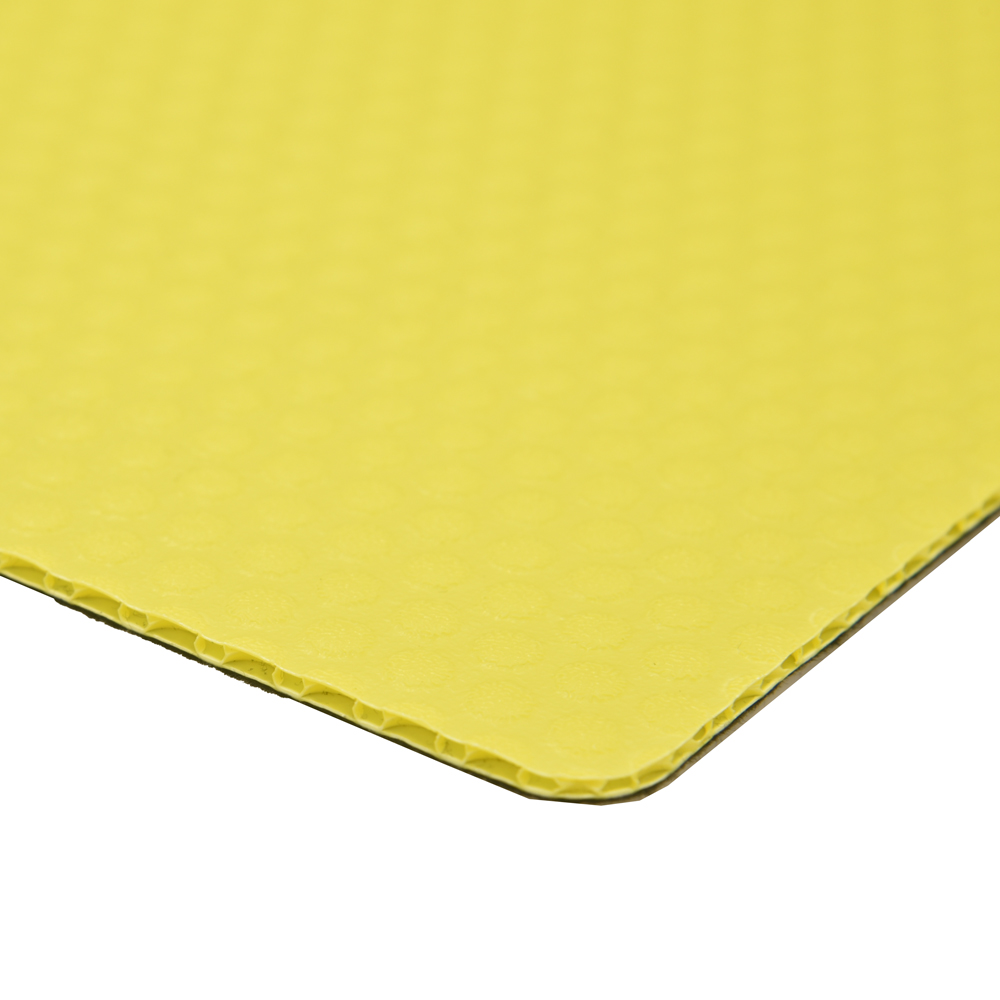
Protection can cause the problem it was bought to prevent. A panel with a raised pattern laid face-down presses its stud pattern into vinyl under load, and after a few weeks in a warm corridor the pattern is permanent. A panel with a hard edge resting across a seam leaves a line. And protection that traps heat against a resilient floor softens it slightly, which makes it far more receptive to all of the above.
What to specify instead
A flat fibrous face down against resilient flooring, so contact is distributed and there is nothing to print a pattern. Enough stiffness that loads are spread rather than concentrated. And a face that will not transfer anything of its own – some polymer faces on cheap protection board do exactly what rubber wheels do, and leaving a mark of a different shape is not an improvement. Where heavy items must stand, a sheet of something inert under the feet is the reliable answer, as described in tape, adhesive and staining on finished floors.
Temperature is a factor people miss
Vinyl above about 30 degrees is noticeably softer, and a south-facing atrium or a corridor with temporary heating running is enough to get there. Marks that would not have happened in a cool building happen in a warm one. If part of the floor is in direct sun, that part needs the heavier specification even though the rest does not.
What to do if the mark is already there
A pressure mark in vinyl sometimes recovers with gentle warmth – a warm room and time, not a heat gun. An abrasion scuff does not recover. A transfer stain from rubber gets worse with age and needs a specialist cleaner, and aggressive solvents take the wear layer off with it. Knowing which of the three it is decides whether there is any remedy at all, and it is worth getting the floor supplier to look before anybody starts cleaning.
What we can do
We supply protection panels with a flat felt face specifically for resilient floors, and we will ask about temperature and about what is being parked on the floor before quoting. Tell us the floor type and the programme length, and we will say plainly whether our panel is the right answer or whether a different face is needed.