
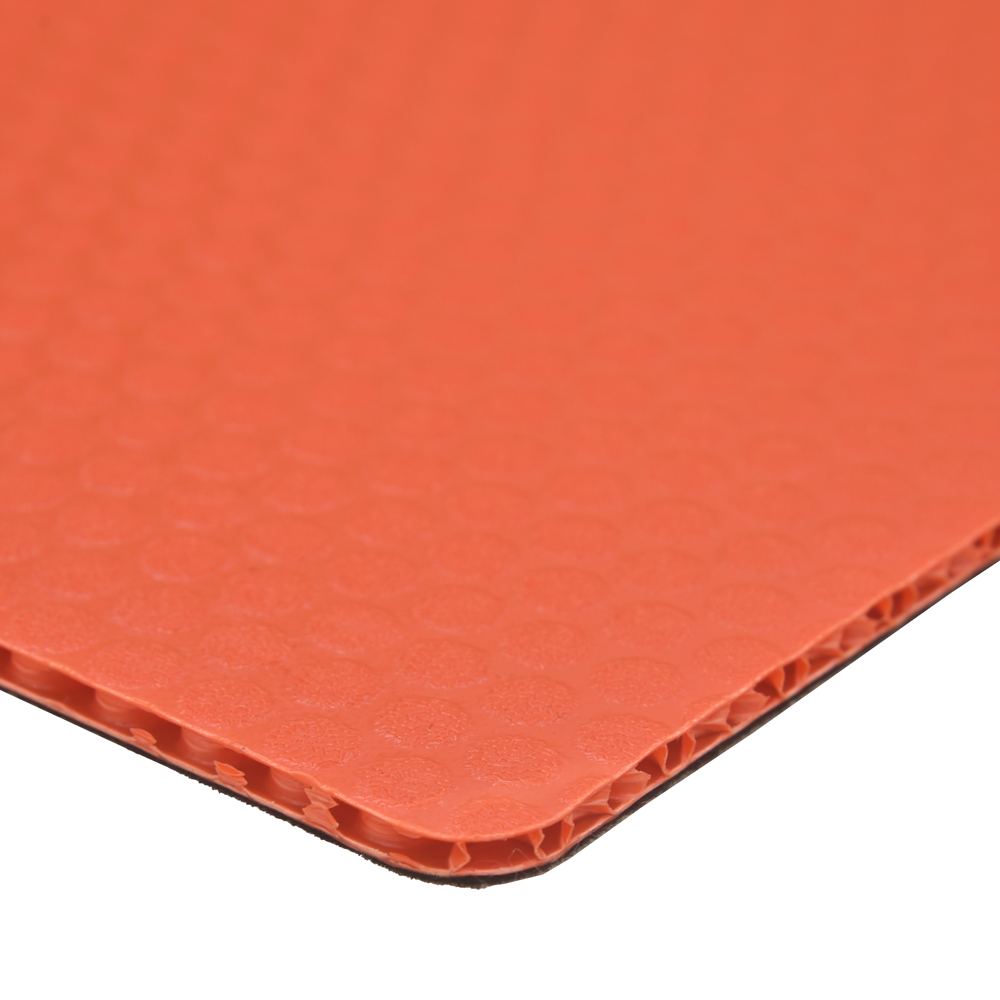
Polished concrete is one of the few finishes that is genuinely hard, which is exactly why it gets specified and also why people assume it does not need much protection. It does not dent easily and it does not stain from a spill that is cleaned quickly. What it does do is develop a fine grey haze and a pattern of micro-scratches that dulls the polish, and by the time that is visible it is a grind-and-repolish job rather than a clean.
What actually dulls the polish
Concrete is a composite: hard aggregate in a softer cement matrix. Anything abrasive that gets dragged across it cuts the matrix faster than the aggregate, and the surface loses its flatness at a microscopic scale. The result is not a scratch you can point at, it is a loss of reflectivity across the whole area. That is why a floor can look fine under site lighting and look grey the moment the building is handed over and the lights are changed.
Plain sheet on polished concrete
Corrugated sheet keeps mud, paint and plaster off the slab and costs very little. It does not stop micro-abrasion, because it slides, it carries grit on its surface rather than absorbing it, and its flutes concentrate contact into lines. Under foot traffic over several weeks, sheet on polished concrete produces a faint striped dulling that follows the flute direction. It is cosmetic rather than structural, but on a client-visible polished floor it is a snag item.
Felt-faced panel on the same floor
Two differences. The fibrous face holds grit inside itself instead of dragging it, and it has enough friction against the slab that the panel does not creep. Both matter over weeks rather than days, which is why the difference is invisible on a two-week job and obvious on a six-month one. The panel is also stiffer, so it does not dip into small hollows and rub there.
Where felt-faced protection is a waste of money
On a slab that is going to be covered anyway. On a slab that is going to be ground and sealed after the fit-out rather than before. And in areas with no foot traffic, where the mechanism that causes the damage never occurs. A warehouse slab in a shell-and-core job needs dust protection at most, and a felt face there is spending money on a problem that does not exist.
Mixing the two on one floor
The usual sensible answer: felt-faced panel on the areas the client will actually see and judge – entrance, lift lobby, main corridor, showroom – and plain sheet over the rest. The visible area is often under a third of the slab. That split gets the handover result without the cost of treating the whole floor as client-facing, and it is the basis of most of the specifications we quote against. More on finish-specific risk in protecting polished concrete during handover.
One thing to check on delivery
Felt faces differ. A lightweight decorative fleece bonded for appearance will mat down and hold very little grit; a needled industrial felt bonded for abrasion resistance holds a lot and survives being walked on. They look similar in a sample book and behave completely differently after a month. Ask what the face weighs per square metre rather than what it looks like.
What we can do
We supply PP honeycomb panels with a needled felt face, and we will state the face weight rather than leave it to be assumed. Tell us the floor finish and how long the protection stays down, and we will tell you honestly whether a felt face pays for itself on your programme or whether plain sheet is the sensible buy.