
Cartridge and bag filter media is the expensive part of a dust collection system and the part with the least tolerance for coarse material. Loading it with coarse dust is the most common reason cartridges are replaced early, and a washable pre-filter stage ahead of them is usually the cheapest correction available.
What coarse loading does
Cartridge media is a pleated fine medium with a large surface area in a small volume. It captures efficiently and it has limited depth. Coarse material bridges the pleats, which removes effective surface area far faster than the mass of the material would suggest – a little coarse loading can take out a disproportionate amount of capacity.
Once bridged, the cartridge’s pressure drop rises, the cleaning pulse works against a mat rather than a surface, and the differential stops recovering between pulses. At that point the cartridge is effectively finished well before its medium is spent.
What the pre-filter takes
The coarse fraction: grit, swarf, larger dust agglomerates, fibrous material, and in woodworking the stringy material that bridges pleats particularly fast. That is most of the mass and the easy part to catch, which is what makes the arrangement economical.
The pre-filter should not be asked to do fine capture. It should be coarse, open and washable, and its pressure cost should be small compared with what the cartridges cost to run.
Where to put it
Ahead of the cartridge stage, with space between them so velocity evens out. In a dust collector the usual arrangement is in the dirty air inlet or in a drop-out chamber ahead of the cartridge section. Where there is an existing inlet chamber, that is often enough space.
Access decides whether it gets serviced. If reaching it means dismantling ductwork, it will not be washed. Where there is no access, adding one is part of the job.
Where pre-filters fit in heavier industrial duty is covered in pre-filters in industrial dust collection.
Signs the pre-filter is earning its place
The clearest one is the cartridge differential. If it now climbs more slowly and recovers better between cleaning pulses, the pre-filter is working. Compare like with like – the same production, the same season – because dust loading varies enough to confuse a short comparison.
The second sign is what the pre-filter catches. If it comes out of service heavily loaded on every wash, it is removing material that would otherwise have reached the cartridges. If it comes out nearly clean, either the loading is low or it is in the wrong place.
Where a pre-filter does not help
Where the dust is fine. If the material reaching the collector is already fine, a coarse pre-filter will pass most of it, and the cartridges will load as before. Adding a coarse stage in that case adds resistance and a maintenance task for no gain.
And where the collector already has an effective internal stage or drop-out chamber doing the same job. Check what is there before adding anything.
Sizing the pre-filter
Give it as much face area as the plant offers. At the loading seen in dust collection, face area is what keeps the washing interval tolerable, and it is usually available in an inlet chamber or a drop-out box that is already there.
Undersizing is the most common mistake and it produces a pre-filter that needs attention every few days, which is when the programme gets abandoned. A larger panel washed monthly is a different proposition from a small one washed twice a week.
What we can do
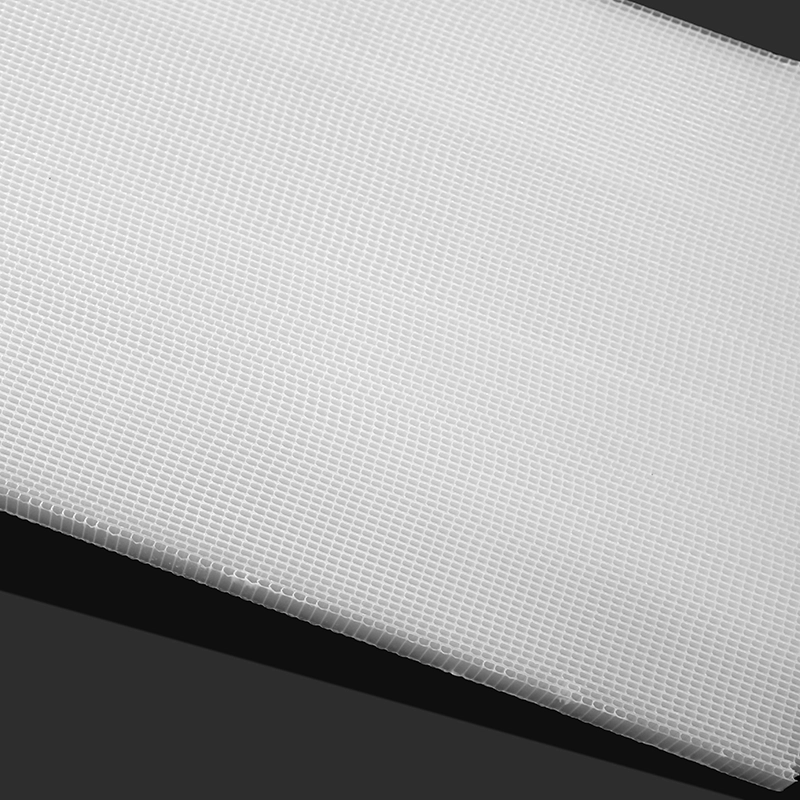
We supply reusable PP honeycomb pre-filter panels for dust collectors, cut to the inlet or chamber dimensions. Tell us the airflow, what the process generates and where the panel can be reached from, and we will tell you what will work – and whether your loading is the type that washes out.