
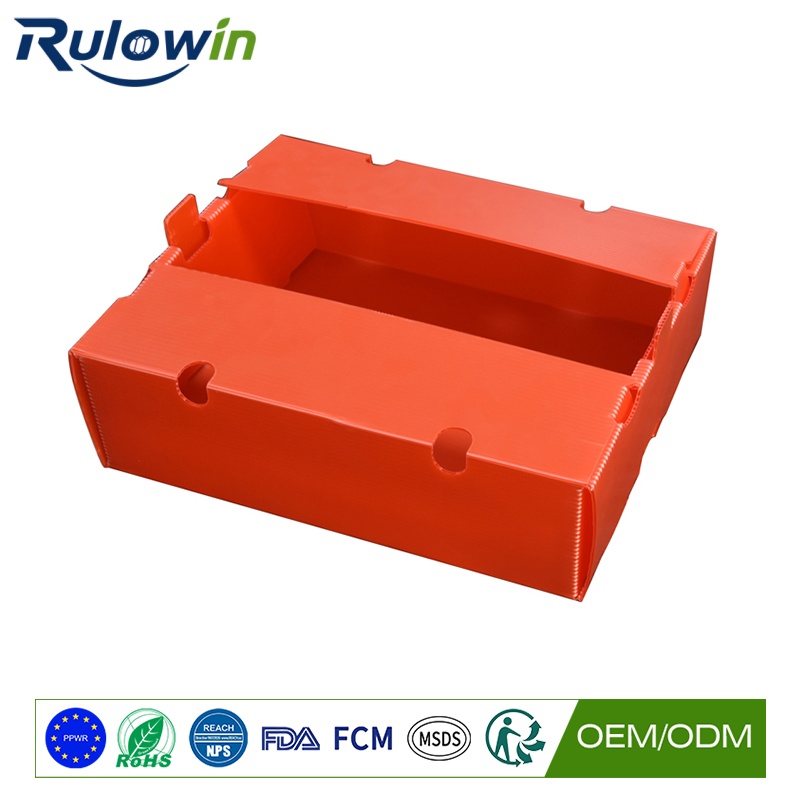
Seedling and plant trays get transported in produce crates constantly, because the footprint is right and the crates are cheap. It mostly works. Two things go wrong, and both are geometry rather than material.
Problem one: depth
A crate deep enough for twenty kilos of tomatoes is much deeper than a seedling tray. Trays dropped into a deep crate sit at the bottom, and a second layer of trays goes on top of them rather than on a shelf – which crushes the first layer.
The options are a shallower crate, a divider that creates a second level, or accepting one layer per crate. Which is right depends on how much you move. One layer per crate is the low-risk answer and it uses more crates.
Problem two: support
A tray spans the crate base, and the crate base is vented. A tray with a flexible base sags between the vents, and seedlings in a sagging tray get tipped out. Check that the tray has enough rigidity to span the vent pattern, or use a crate with a smaller vent aperture.
Solid-wall and solid-base crates exist and are the safer choice for trays that are not rigid. The trade-off is airflow, which matters if the plants are being transported warm.
What the vents are good for
Airflow, which plants need, and drainage, which matters if they have been watered before transport. Both are genuine advantages over a closed container and both are why the produce crate is a reasonable choice here at all.
Where the vents are a problem is small plugs falling through. A liner or a tray with a solid base solves it.
Stacking loaded crates
Lower than for produce. A crate of seedlings cannot take the weight of another crate of seedlings on top of it, whatever the crate is rated for – the contents are the constraint, not the box.
If you must stack, a lid or a divider that transfers the load to the crate rim rather than to the contents is the answer. Stack height limits for produce are discussed in how to stack fruit crates so berries do not bruise, and the principle transfers.
Hygiene
Crates carrying plants carry soil, and soil carries pathogens between batches. If the same crates go back into food production, that is a real concern. Either keep a separate fleet for plants or wash between uses, and do not assume a rinse is enough.
Light, water and the journey
Seedlings in a closed stack go without light for the duration, and a long journey in the dark sets them back. If the trip is more than a day, that matters more than the crate choice.
Water before loading rather than after, so the crates are not carrying free water – and check the vents drain rather than pool. A tray standing in water for a day loses more plants than rough handling does.
On a trolley
Crates of trays on a trolley need a shelf per layer, not crate-on-crate. The trolley is the cheap fix for the depth problem described above, and it is worth building once.
What we can do
We make PP crates for fruit and vegetables in depths and vent patterns that suit trays as well as produce. Tell us your tray size and how many you move – we will tell you which crate carries them safely, including when one layer is the honest answer.