
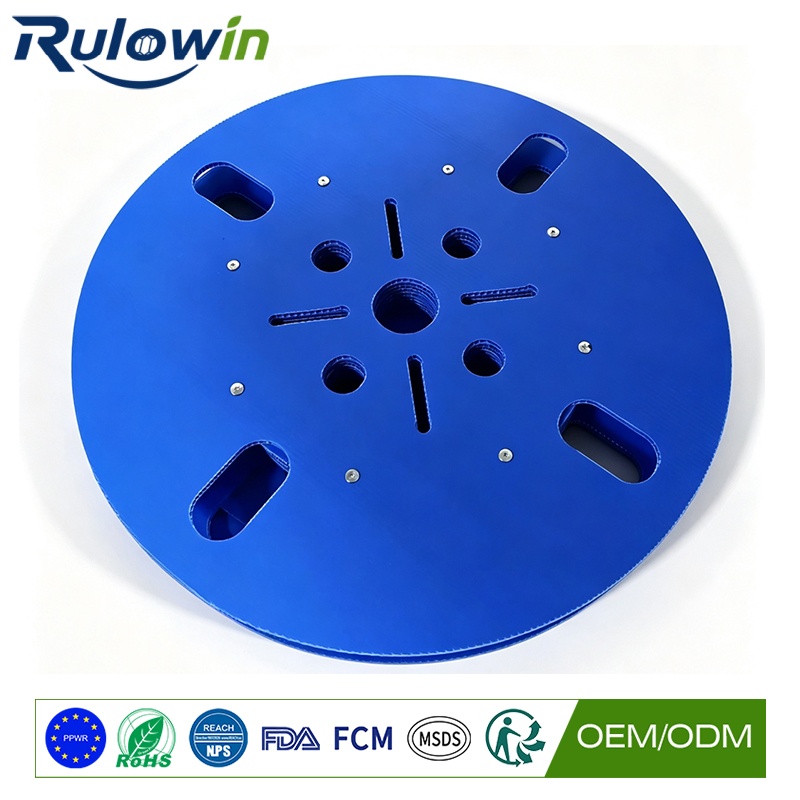
An empty reel is an obvious cable dispenser, and for heavy cable it is a good one. For light flexible cable it is mediocre, and the reason is not the reel – it is what the reel is sitting on and whether it is allowed to rotate freely or is braked.
Where it works
Heavy cable on a proper payout stand. The reel rotates, the cable comes off the top or the bottom, and the stand provides the axle and some friction. That is the intended arrangement and it works well.
Second-best: a reel lying flat on its flange with cable pulled off vertically from the middle. This works for stiff cable that does not tangle, and it is the common site improvisation. It works better than it should.
Where it does not
Thin, flexible cable pulled off a freely rotating reel. The reel over-runs, the cable spills off the side, and it tangles. The fix is a brake or a controlled payout, not a different reel.
Also poor: a reel on a fixed bar with no bearing, dragged round. It works, it wears the bore, and eventually the hub splits. Fit matters; the dimensional language is in reel terms: hub, flange and bore explained.
What to use as an axle
Something that fits the bore without forcing it. A bar much smaller than the bore lets the reel wobble and the bore wears into an oval. A bar larger than the bore should never be forced in – that is how hubs crack.
If you are making a workshop dispenser properly, a stand with a bearing is worth the money, and it converts an improvisation into something that works every time.
Dispensing from the top or the bottom
Top for stiff cable, bottom for flexible cable, generally. Pulling from the bottom of a reel lying flat tends to feed more cleanly because gravity keeps the wraps in place.
Reusing reels that came with cable
Fine, with the usual caveat about checking the hub and the bore before putting a load on them. A reel that has been in service and then stored outside has two potential problems and both are covered in can cable reel flanges warp in direct sunlight.
Over-run, and running several at once
A freely spinning reel over-runs and spills. The workshop fix is friction rather than a brake – a strip of felt or a pad bearing on the flange is enough for most cable, and it is adjustable by moving it.
Several reels on one axle works if the bores match and the cable is the same. Different cable types on one axle pull at different rates and tangle against each other, which is why it usually ends badly.
Mixed reel sizes
Keep a spindle that fits your smallest bore and sleeve up for the larger ones, rather than the other way round. Stepping down is easy; forcing a large arbor into a small bore is how hubs crack.
And what to avoid
Do not lay a reel flat and pull cable off the side of the coil. It twists the cable on every turn, and twisted cable is the thing that tangles later regardless of how carefully it was stored.
What we can do
We supply PP fiber cable reels and will tell you the bore size and what stand fits it. Tell us what cable and what you are dispensing from – if a reel is the wrong tool, we will say so rather than sell you one.