
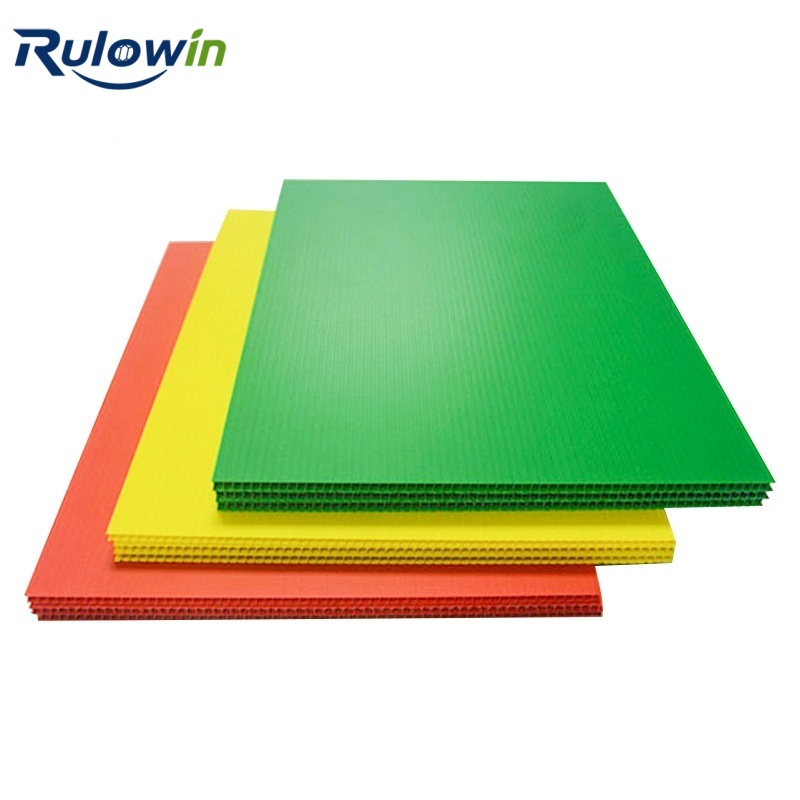
Layer pads separate one course of product from the next on a pallet. The choice between cardboard and polypropylene sheet looks like a straightforward cost decision and is mostly a moisture decision, which is why export is where the two diverge hardest.
What a container does to cardboard
A sealed container crossing an ocean through a temperature range will condense water. It is ordinary and unavoidable. Cardboard in that environment loses compressive strength steadily, and a layer pad that has lost half its strength is a layer pad that lets the course above settle into the course below.
The failure is not dramatic. Nothing collapses in an obvious way. The pallet arrives slightly lower than it left, the bottom course is deformed, and the receiver files a claim that nobody can attribute to a specific event.
What polypropylene does instead
It does not care about humidity at all. It keeps its stiffness wet, it does not wick, and it can be wiped down and reused. If the pads come back – which in a domestic or regional loop they often do – polypropylene wins on cost per trip within a handful of turns.
The honest counter: if the shipment is one-way and dry, cardboard is cheaper and there is no argument. A domestic pallet moved warehouse to warehouse in a week is a cardboard job.
Where PP loses
Friction. Polypropylene sheet is slippery, and a stack on a smooth PP pad will shift more readily than one on cardboard. If your pallets are not wrapped tightly, or the load is light and tall, this is a real consideration – and the fix is a textured or embossed face, which we can supply, rather than going back to cardboard.
Price, obviously, and the fact that cardboard can be baled and sent to a paper recycler at the receiving end. In some supply chains that disposal convenience is worth real money.
The middle answer
Plenty of operations use PP on the bottom two courses – where the load and the moisture are worst – and cardboard above. That is not a compromise born of indecision; it is usually the cheapest configuration that stops the bottom-course damage, which is where nearly all of the claim value sits.
If you are weighing this up, the useful number is the cost of one claim against the price difference across a pallet of pads. It is usually not close. And if you want to know what to look for when the PP sheets turn up, we covered how to check corrugated sheet quality on a delivery.
Disposal at the receiving end
One advantage of cardboard that is easy to overlook: the receiver can bale it with the rest of their paper waste and it disappears. A plastic layer pad arriving at a customer who has no plastic stream becomes a small problem they did not ask for, and in some supply chains that is enough to keep cardboard.
Polypropylene is readily recyclable where there is a collection for it, which is increasingly common. It is worth asking your customer what their receiving site actually does with plastic before you switch them – it is a five-minute conversation that occasionally changes the answer.
What we can do
We supply PP corrugated sheet cut to pallet footprint, in plain or embossed faces. Tell us the pallet size, the load per course and whether the pads are coming back, and we will quote it against what you are paying for cardboard now – including the honest answer when cardboard is the better buy.