
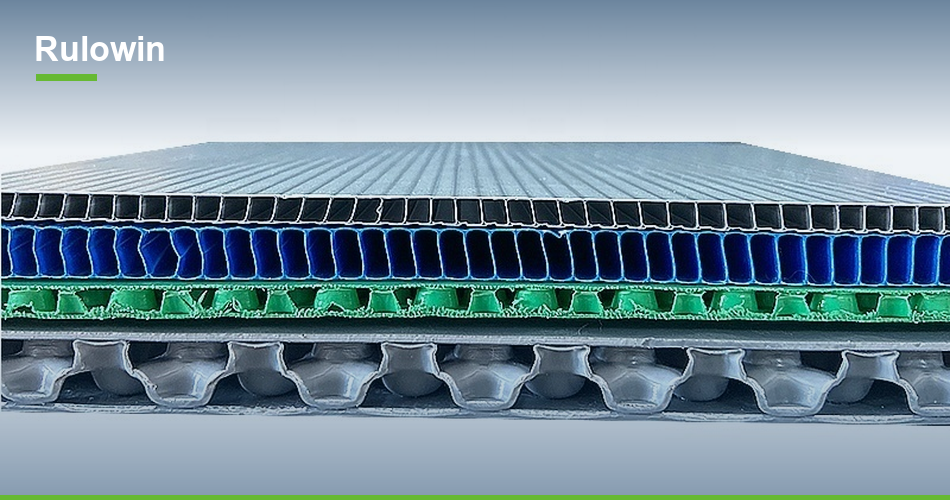
How Each Structure Uses Resin
A solid PP sheet of 3 mm uses roughly 2,700 grams per square meter of resin, all of it doing nothing but adding mass to the stack. A corrugated layer pad of the same thickness uses about 900 grams per square meter because the fluted core removes two-thirds of the material while keeping most of the stiffness needed to separate layers of goods in a pallet.
For simple separation between stacked goods, the layer pad is the material-efficient choice and should be the default unless a specific duty requirement forces the solid option for a technical reason that the pad cannot meet. The resin saving also means lower freight, because the pad is lighter on every trip and the saved weight compounds across the hundreds of trips the pad makes in its service life before retirement and recycling.
When Solid Sheets Earn Their Weight
Solid sheets win where surface flatness and puncture resistance matter, such as a cutting bed or a divider behind sharp castings that could burst a flute with a single point load. They resist point loads that would tear a corrugated web and create a clean, continuous face for printing or lamination that a fluted surface would distort and make unreadable on the line.
Rulowin recommends solid sheets only where the duty cycle justifies the extra 1.8 kg per square meter, because that mass shows up as freight cost on every single trip the sheet makes from plant to plant. In practice that means a small number of sheets at the top and bottom of a stack, with corrugated pads doing the bulk of the separation work in between the layers of product on the pallet.
Cost and Recycling Comparison
| Attribute | Corrugated Pad | Solid Sheet |
| Weight per m2 | 900 g | 2,700 g |
| Relative cost | 1.0x | 2.4x |
| Best use | Layer separation | Puncture zones |
| Recycle yield | 92 percent | 90 percent |
Hybrid Approach for Optimized Fleets
Many Rulowin clients use corrugated pads for 80 percent of layers and reserve solid sheets for the bottom and top where fork tines strike and where the stack needs a perfect reference plane for the wrap and the next pallet. This hybrid trims resin use 55 percent versus an all-solid stack while still protecting the load ends from the abuse that concentrates at the contact surfaces with the pallet and the next pallet above it during transit on a rough road.
The hybrid also simplifies procurement, because the buyer stocks one pad type in volume and a small quantity of sheet for the ends, rather than committing to solid sheet everywhere at a much higher cost. Over a year that purchasing discipline produces a measurable saving on the packaging budget while keeping the protection level the product actually requires for safe arrival at the customer’s dock.