
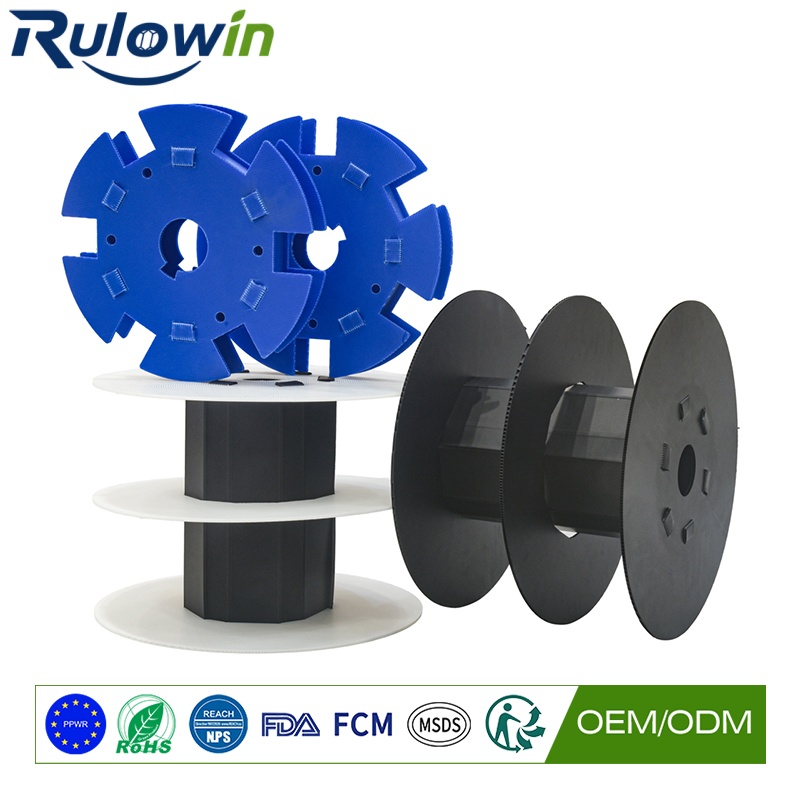
The reel arrived at the port looking fine. It was only when the crew broke down the pallet that somebody noticed the flange had gone soft at the bottom, where it had been sitting in an inch of water that had condensed inside the container and run down the wall. The cable on it was fine. The next one was not.
Container rain is not an exotic event — it is routine on any route that crosses a warm, humid stretch with a cold night at either end. Water condenses on the inside of the container roof and drips onto the cargo, continuously, for days. Anything made of wood is going to absorb some of it.
What water does to a plywood reel
Three things, in rising order of cost:
- It swells. Plywood takes up moisture across the grain and the reel goes slightly out of round. A reel that is no longer round runs out of balance and the payoff tension varies once per revolution.
- It softens and delaminates. The ply layers separate at the edges, and those edges are exactly where the cable sits.
- It sheds. Raised grain, splinters and loose staples abrade the outer layers of cable — the layers that get paid off first, on the customer’s machine.
None of this is dramatic enough to fail an incoming inspection. It shows up as a slightly higher rejection rate and a customer who cannot quite explain what is wrong.
What polypropylene does instead
Nothing. That is the whole argument. A PP hollow board spool does not absorb water, does not change dimension when it gets wet, does not delaminate, and has no fasteners to work loose. It can sit in a puddle for a week and go straight onto a payoff stand.
The caveats are worth stating, because the answer is not always plastic:
- Stiffness per unit weight. Plywood is stiffer. For very heavy cable on a short domestic run, wood remains a reasonable choice.
- Field repair. A wooden reel can be knocked back into shape with a hammer and a plank. A cracked plastic flange needs a replacement part.
- One-way shipments. If the reel will not come back, you are paying for a reuse benefit you will never collect.
Where the switch pays
Three conditions make it a straightforward decision: the route is long or humid, the product is sensitive to tension variation or surface damage, and the spools come back. When all three are true, the comparison is not close.
When only one is true, it depends which. Humid route with cheap, robust cable: worth it, because a swollen reel still wrecks a payoff. Sensitive product on a short dry route: probably worth it for the tension consistency alone. One-way export of heavy cable: keep buying plywood.
If you are staying with wood
Two mitigations are worth the money. Wrap or coat the reel so it does not take up water directly, and use enough desiccant for the route — the volume of water involved is larger than most people expect, and a few kilograms of desiccant is cheap next to a rejected reel of cable.
And inspect on arrival, before the reel goes near a machine. Check roundness by eye against a fixed reference and run a hand over the flange faces. Two minutes at the dock beats an argument three weeks later.