
Film wins every comparison made at the point of purchase and loses a fair number of them at the point of removal. The material is cheap, the application is quick, and the cost that nobody prices is the labour of getting it off a surface that cannot be scratched. On a long programme that removal cost is the whole comparison.
Adhesives are rated for a period, not indefinitely
Protective film uses an adhesive formulated to release cleanly within a stated window, commonly measured in weeks from application. Inside that window it peels. Past it, the adhesive continues to bond and starts to cross-link, and removal becomes a scrape-and-solvent job. The tolerance varies by product and by temperature: a warm atrium in direct sun shortens it considerably, which is why two identical films on the same building can behave completely differently depending on which elevation they are on.
Coated glass restricts what you can use to remove it
This is where a removal problem becomes a damage problem. Low-emissivity and solar-control coatings sit on the glass surface, and the solvents that dissolve aged adhesive can attack the coating or creep into the laminate edge of a sealed unit. Once that happens the pane is replaced, not cleaned. Before anyone reaches for a solvent, the coating type has to be known – and on a refurbishment it frequently is not, because the original specification has been lost.
Who is contractually responsible for removal
Film is usually applied by the glazing subcontractor and removed by whoever is doing the final clean, who did not choose it and did not price for it. That gap is the source of most handover disputes on glazed surfaces. The fix is boring and effective: name the party responsible for removal in the same document that specifies the film, and give it a date. A removal date written at specification stage is the single cheapest protection available.
Where the board alternative costs more and still wins
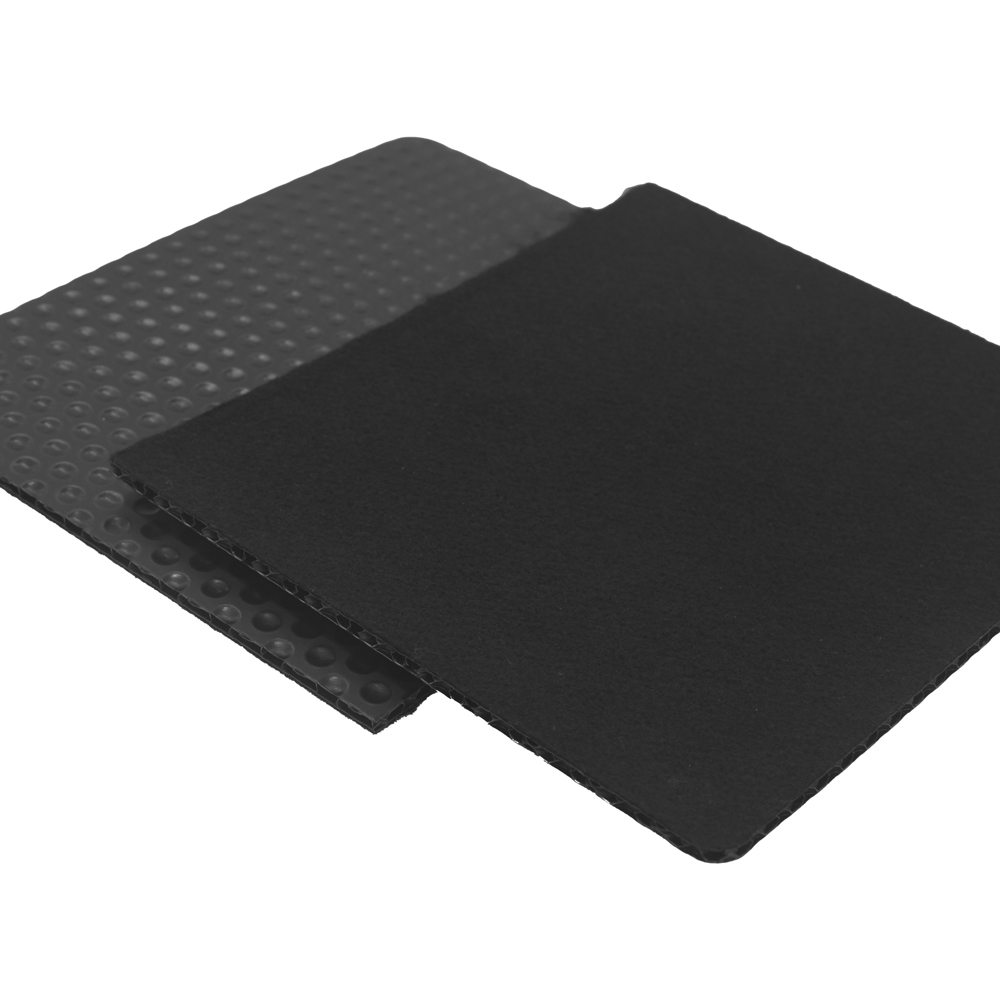
A standoff panel costs more per square metre, needs mechanical fixing and will not follow a curve. What it does is come off in minutes without a solvent, which removes the entire removal-risk category. On a programme where the practical completion date is fixed and the removal window is short, paying more for the material is often buying schedule certainty rather than protection quality. On curved or complex glazing the panel simply does not fit, and film is the only realistic answer – which is exactly when the removal date matters most.
Practical controls if film is the choice
Record the application date on the film itself or in the site diary, set a removal reminder well inside the rated window, and do not let decorative work run past it. Where a project is slipping, re-film rather than extend – fresh film over old is worse than either alone, because the aged adhesive underneath is still there. Keep a spare roll of the same product so a damaged section can be replaced with a matched adhesive rather than a different one.
Adhesive residue and what it costs
Film left beyond its rated removal period bonds to the glass or the coating, and removing it takes a scraper and a solvent – and on coated glass a solvent is the last thing anyone should be reaching for. Ask what the film’s removal window is and write the removal date down. Most film damage is not the film, it is the film that stayed on too long.
The two lines that belong in the submittal
If film is going on glazing, the submittal should carry the product name, the rated removal period, and the application date. That is two lines of information and it is what turns a removal dispute into a straightforward check. Most glazing submittals carry the product name and nothing else, which means nobody can tell later whether the film was within its window.
The second line worth adding is the coating reference. On a new-build the glazing schedule has it; on a refurbishment it usually does not, and somebody has to go and look at the spacer bar or the glass stamp. Without it, whoever removes the film is guessing whether solvent is safe, and the guess is made under time pressure at the end of a job. Where panels are used instead, the equivalent line is the standoff detail – how far the panel sits off the glass – because that is what keeps air moving behind it and stops the surface sweating during a drying-out period. The wider problem is described in protecting glazed facades and shopfronts during fit-out.
What we can do
We supply PP honeycomb board with a standoff detail for flat glazing and polished metal. Tell us the coating, whether it is in sun and how long the protection stays on, and we will say whether board or film is right. The comparison is set out in shrink wrap versus felt panels on glass and metal.