
Glass does not get repaired. A scratched pane gets replaced, which involves removal, glazing, sometimes a crane or an abseiler, and often a long lead time for a unit that will not match its neighbours perfectly. Against that cost, protecting glazing properly is almost always worth doing properly.
Contact with glass is the problem
Most glazing damage during fit-out comes from contact: scaffold tubes stored against the facade, ladders rested on it, cleaning equipment dragged across it, or protection itself rubbing with grit trapped behind. Once grit is between protection and glass, every gust becomes abrasion.
Do not fix through or onto the glass
Fixing anything to the glass itself risks damage to coatings, seals and the unit edge, and often voids glazing warranties. Protection should be fixed to surrounding structure – frames, mullions, scaffold – and held clear of the glass surface. Where panels must bear against something, bear on the frame rather than the pane.
Manifestations and coatings
Modern glazing carries applied films, low-emissivity coatings and printed manifestations, some on the inner face and some within the unit. Applying adhesive or tape to a coated surface can pull coating off on removal. Assume every pane is coated unless you know otherwise, and test any adhesive somewhere inconspicuous first.
Clean before covering, inspect during
Anything on the glass when protection goes on stays there for weeks. Clean first, then cover, then inspect periodically because protection that has shifted outwards is rubbing rather than shielding. A monthly look during a long programme catches the ones about to cause problems.
External versus internal protection
External events during the build – scaffolding, rendering, paint overspray – need external protection, which brings wind loading and public interface considerations with it. Internal events – follow-on trades, cleaning, materials handling – usually need something lighter and more often removable. Specify the two separately rather than one product doing both jobs badly.
Lead time as an argument
If a unit does get broken, replacement can take weeks, and a temporary screen meanwhile is a visible defect to everyone who walks past. Framing the protection cost against replacement cost and lead time is usually enough to get it into the preliminaries rather than cut from them.
Overspray and render splash
Paint overspray and render splash are the most common causes of glazing damage on external works, and both are invisible at the time. By the time they are noticed, the material has cured and removal is abrasive – which itself marks coated glass. Prevention is simply distance and covering during those specific operations.
Tell the relevant trades when those operations are happening and cover the affected glazing rather than the whole facade. It is rarely necessary to protect everything permanently; protecting during two specific days of works deals with most of the risk.
Internal works still matter externally
Damage to shopfront glazing often comes from inside: materials stacked against it, equipment pushed past it, cleaning carried out by people unaware of how easily the coating marks. The internal side of front-of-house glazing deserves as much attention as the street side, and usually gets none of it. External exposure brings the fixing and wind questions covered in external hoarding panels.
What we can do
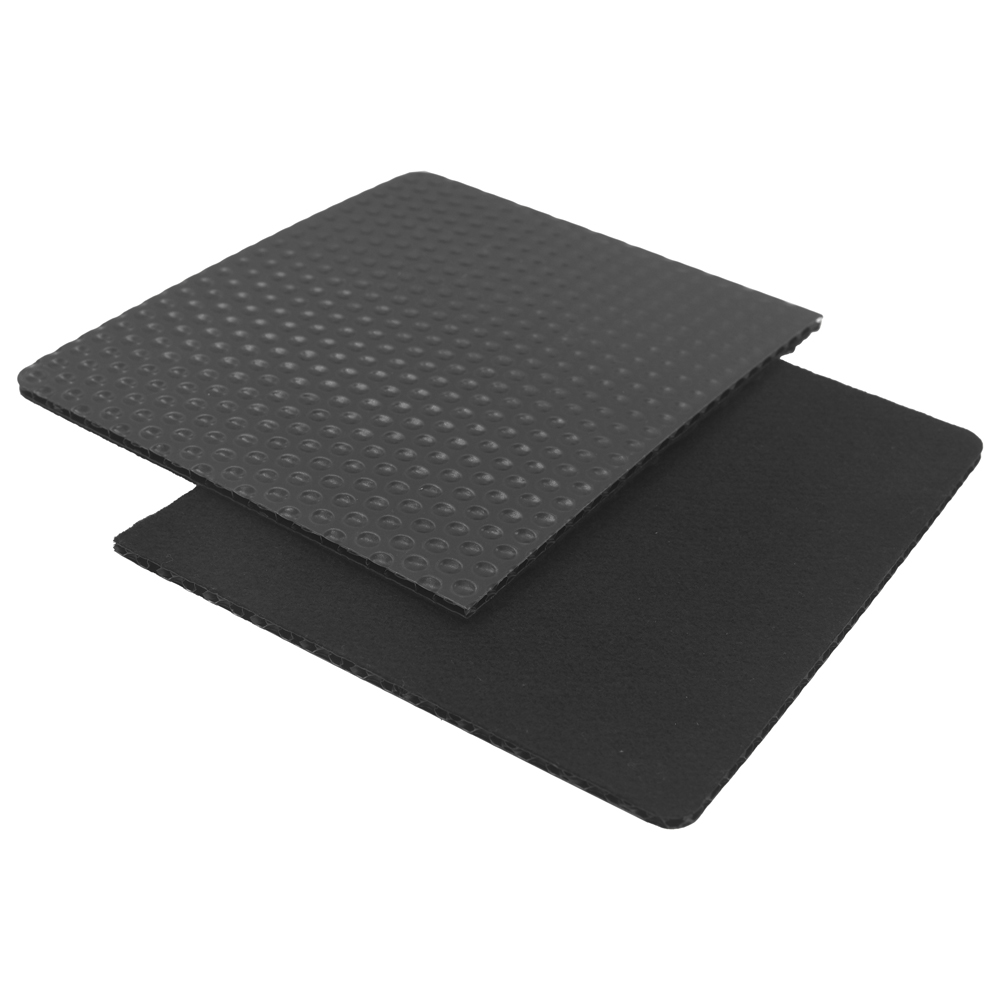
We cut honeycomb protection panels to clear glazed openings with fixing points on surrounding structure, and we advise against contact with the glass anywhere in the detail. Send the opening sizes and what fixing points exist and we will propose a layout – including where we think scaffold-mounted protection is the better answer.