
Floor and stair damage claims usually turn on a question nobody can answer after the event: was that there before? Half an hour with a phone at two specific moments settles it, and it is the cheapest insurance on any job with a client-facing finish.
When to take them
Two sets. The first immediately before protection goes down, which records the condition of the floor as handed over by the flooring contractor. The second immediately after protection comes up, before any cleaning, which records what the works did. A third set after cleaning is useful where the difference matters.
What to photograph
Whole rooms from the doorway, then close-ups of the vulnerable parts: entrances, thresholds, stair nosings, the perimeter line, and anywhere two finishes meet. Include something for scale and something for location – a door number, a room name – because an unlabelled close-up of a scratch is useless six months later.
Lighting
Raking light shows surface damage that flat lighting hides. Photographing a floor with a window behind the camera shows it at its best; photographing it with the light coming across it shows the truth. Do both, and be consistent between the before and after sets or the comparison is meaningless.
The stair nosings specifically
Every stair claim is about a nosing. Photograph each flight from the bottom and the top, and each nosing close up, before the cover goes on. It takes five minutes per flight and it is the single most valuable set of images on a job with a finished stair.
Where to keep them
Wherever the rest of the project records live, tagged by date and area, and sent to whoever needs to see them at the time rather than held back for a dispute. Photographs produced for the first time during an argument read as defensive; photographs shared at the time read as good practice.
Video as well as stills
A slow walk through each area with a phone, in raking light, records more than a set of stills and takes less time. It captures the overall condition, the sheen and the light behaviour, none of which survive in a close-up. Thirty seconds per room is enough, and it is the most useful evidence there is on a dull-traffic-lane dispute.
What the photographs are actually for
The purpose is not to build a case against anyone; it is to answer one question later – was that there before. Most floor disputes disappear when the answer is available, because the argument is usually about the unknown rather than about the defect. Shared at the time, the images also get the flooring contractor to fix their own damage early, which is the outcome everyone wants and the reason to send them rather than file them.
How many is enough
Two per room is plenty: one from the door showing the whole floor, one close-up of the highest-risk spot. Across a twenty-room job that is forty images and under an hour. Over-photographing produces a set nobody looks at, which is worse than a small set that gets reviewed.
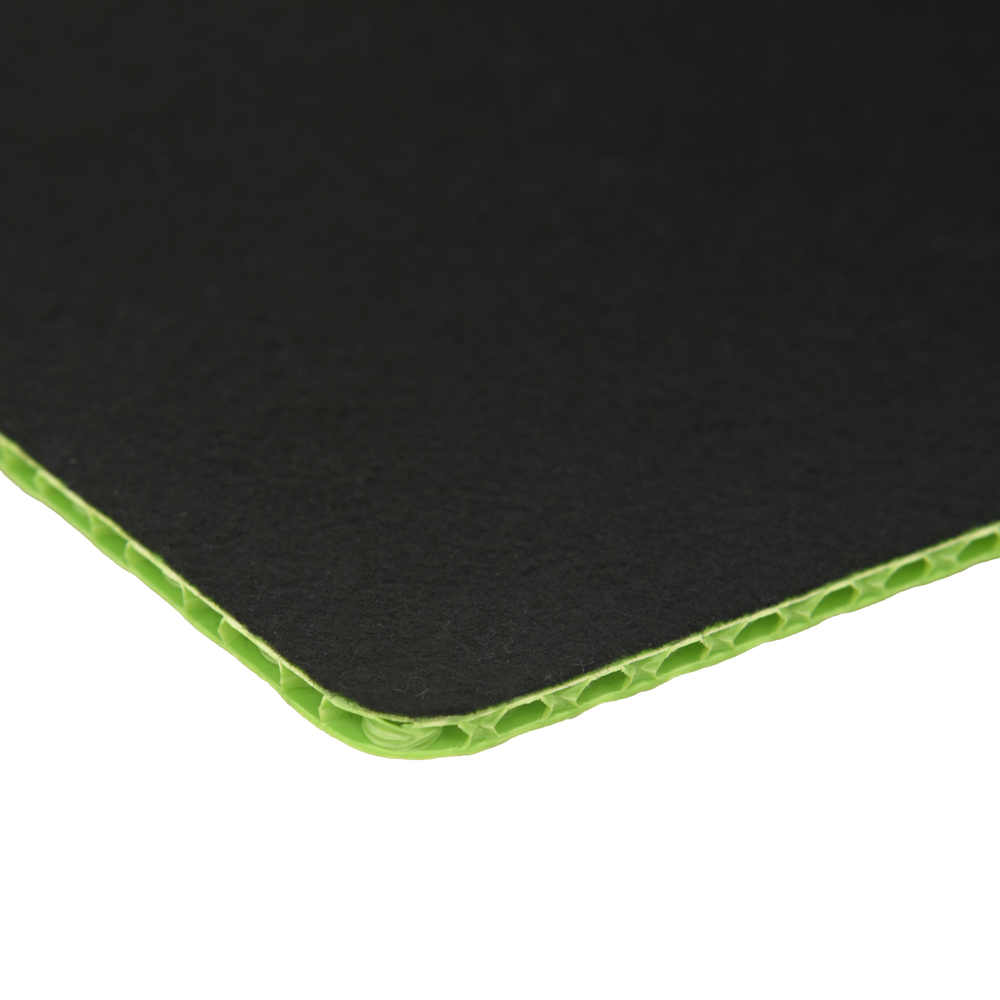
A reusable PP honeycomb panel lifts cleanly for these photographs, which makes the before-and-after set easy to take. A taped corrugated PP sheet does not, and that is one more reason to record condition before anything goes down.
What we can do
We supply protection panels, but the honest advice is that the photographs matter more than the product when something does go wrong. Tell us what the finishes are and we will point at the areas worth recording. The handover argument is discussed in what clients actually notice at floor handover.