
Handover snagging on floors follows a pattern that has very little to do with the total area protected. Clients walk in, look at the entrance, look along the light, look at the stairs, and look at the edges. That is where the protection effort should be concentrated, and it is usually not where it goes.
The entrance, first
Everyone judges a building in the first three metres. The entrance floor gets the most traffic and the most grit and it is the area most likely to be marked. It is also often the last area to be protected, because it is the working entrance. Protecting the entrance early and re-laying it often is worth more than protecting the back rooms perfectly.
Raking light along the floor
A floor looks flat under downlighting and shows every scuff in raking light from a window. Clients do this instinctively – they stand and look along the floor rather than down at it. That is the view to check before handover, and it is the view that reveals the dull traffic lane that downlighting hides.
Stair nosings
A stair is judged nosing by nosing. One chipped nosing on an otherwise perfect flight is a snag item, because the eye goes straight to it. This is why the nosing profile is the highest-value item on a stair, and why nose-by-nose photographs before and after are worth taking.
Edges, perimeters and junctions
The line along the skirting, the strip either side of a threshold, the junction between two finishes – these are where damage concentrates and where the eye goes. A floor with a perfect middle and a damaged perimeter reads as damaged. Protecting the perimeter properly is disproportionately valuable.
What nobody notices
The middle of a large room under diffuse lighting, plant rooms, service corridors and anywhere the client will not stand. Protecting those to the same standard as the entrance is wasted budget. Knowing which areas get judged is the single most useful input to a protection specification, and it usually comes from the client’s own priorities rather than from the drawings.
The lift lobby is second only to the entrance
The lift lobby is where people wait and look, it is usually a hard reflective surface, and it takes the highest traffic per square metre in the building. After the entrance it is the second most judged floor area on almost every project, and it is frequently protected last because it is also the working route.
Sheen, and why cleaning changes it
A floor that has been covered often has a slightly different sheen from one that has not, and a clean removes most of it. Clients read that difference as damage. Cleaning before the walkthrough, and doing it across the whole area rather than patchily, removes a category of comment that has nothing to do with the condition of the floor.
What to say in advance
Where something is going to be visible – a repair, a joint line, a colour difference that will even out – say so before the walkthrough. An explained item is an accepted item; a discovered one is a defect. It is a conversation, and having it early is the cheapest snagging tool there is.
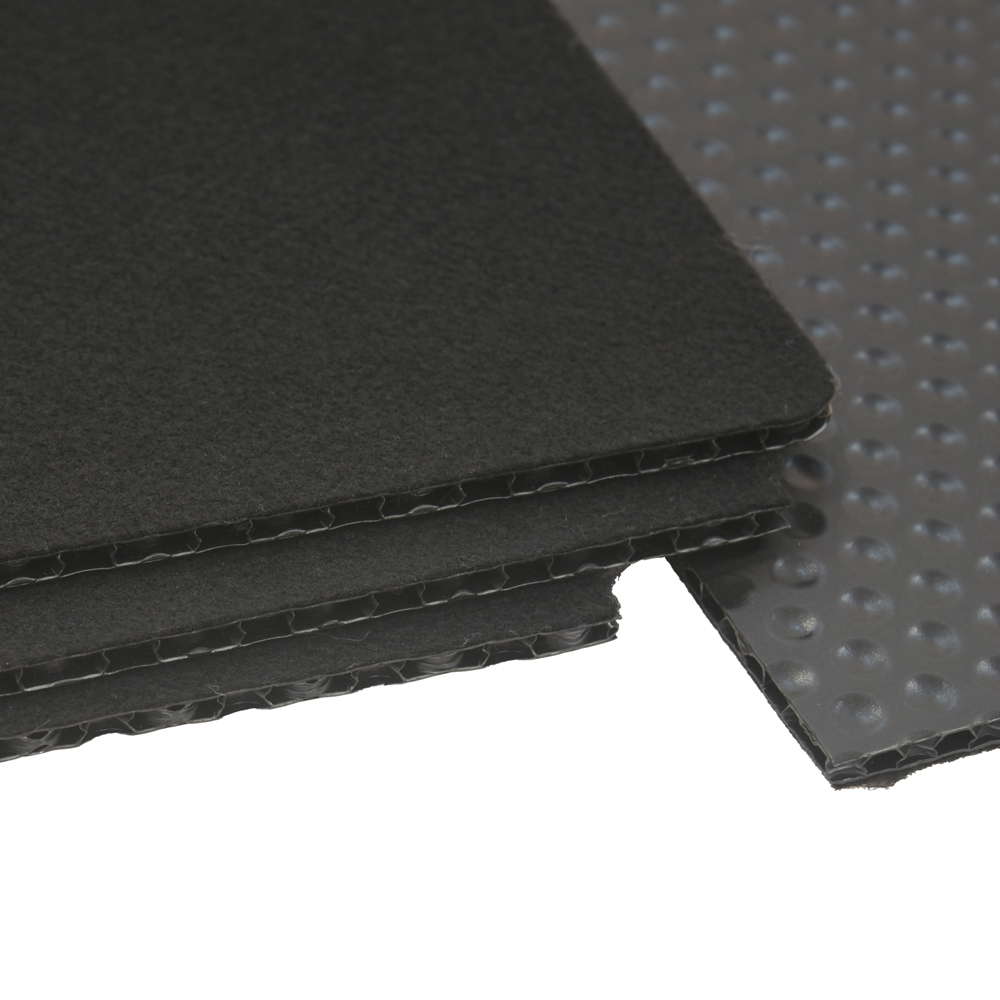
A reusable PP honeycomb panel costs a small fraction of a refinish and it is the only product that both holds grit and survives a long programme. Corrugated PP sheet costs less again but will not last, and a cover that has worn through is worse than none.
What we can do
We supply protection panels and will help concentrate the specification on the areas that get judged. Tell us which areas the client cares about and we will size the order to those rather than to the floor area. Recording condition is covered in photographing floors before and after protection.