
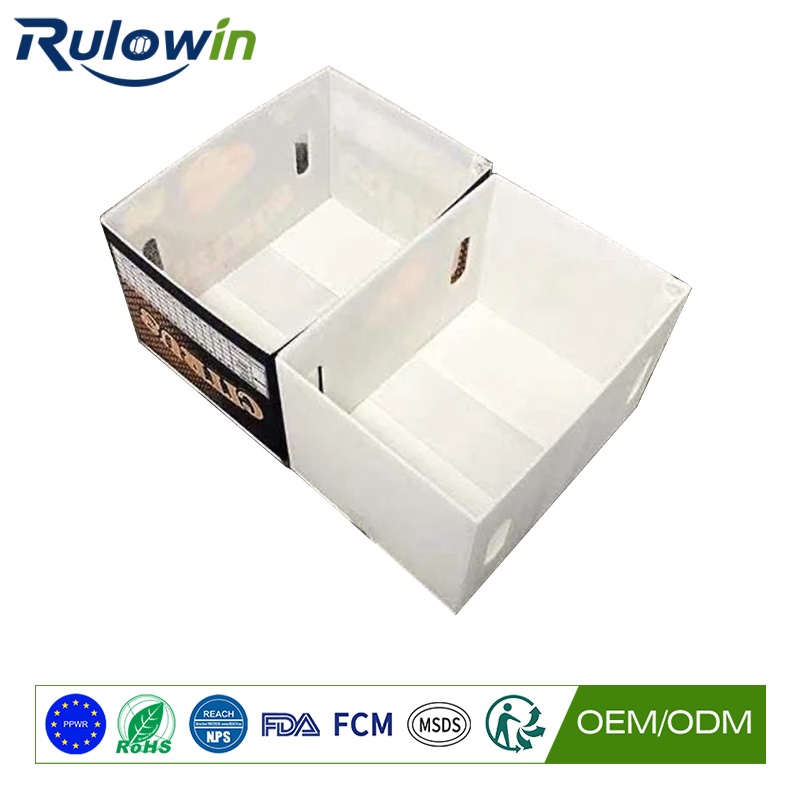
Produce is one of the easier places to make reusable crates pay, because the cycles arrive quickly. A crate working through a packing house and back several times in a season does not need years to justify itself – it often pays back within one. The two variables that decide it are cycles per season and return reliability.
Cycles per season, not years
A crate that makes six trips in a season against a single-use box costing a sixth as much has broken even before the season ends. That is the arithmetic that makes produce different from slow industrial loops, where payback is measured in years.
Work it out on your actual season length and throughput. A short, intense season with high turnover is the best case; a long, slow one is less favourable than it looks, because the capital sits idle.
Return reliability
The whole calculation assumes the crate comes back. In a grower-to-retailer flow the crate often goes to a distribution centre and has to be collected, and that collection is either already happening or has to be paid for.
Ask where the empty crates physically end up, and whether a vehicle already goes there. If the answer is yes and regularly, the return is close to free. If it is no, price the collection before proceeding – it can be the largest line in the model.
What to include on the cost side
Washing, if the crate handles produce directly and is reused across batches – and the water and labour that go with it. Storage of empties at the packing house, which is a real space cost during the season. And attrition, which in open produce loops is significant: crates go home with pickers, end up at the wrong site, or get broken at a distribution centre.
Buy a buffer for the attrition rather than pretending it away. A fleet sized for the peak plus a loss allowance performs far better than one sized exactly.
What to include on the saving side
The single-use boxes you stop buying, at your actual volume and price. Their disposal cost, which in produce is not trivial given the volume and the wet contamination. And, where it applies, the reduction in product damage – worth including only if you have measured it, and otherwise leaving out.
Where it does not pay
Export flows where the crate will not come back. Very short seasons with low throughput. And applications where the crate leaves with the product to a customer who does not participate in a pool.
Sizing the fleet for a season is covered in working out crate fleet size for a season, and pooling arrangements in setting up a crate pooling programme.
What the numbers usually look like
In a closed grower-to-retailer loop with a regular return, crates commonly pay back within a season to two seasons. In an open loop where empties are collected ad hoc, the same crate can take considerably longer, and in some cases does not pay back at all.
The variable is not the crate. It is whether there is a vehicle already going the right way.
Two things that shorten it
Buying to the season length rather than to a maximum life – a crate specified for the trips you will actually get is cheaper than one specified for the trips it could survive. And sizing the fleet with a loss allowance rather than to the exact peak, because a fleet that runs short gets supplemented with single-use, which silently doubles your cost.
Sizing is worked through in working out crate fleet size for a season.
What we can do
We make PP crates for fruit and vegetables and will run the payback with your season length, throughput and return arrangement. Send us the single-use box you use now and what you pay for it – we will tell you the payback period, including when the honest answer is that single-use is the better buy.