
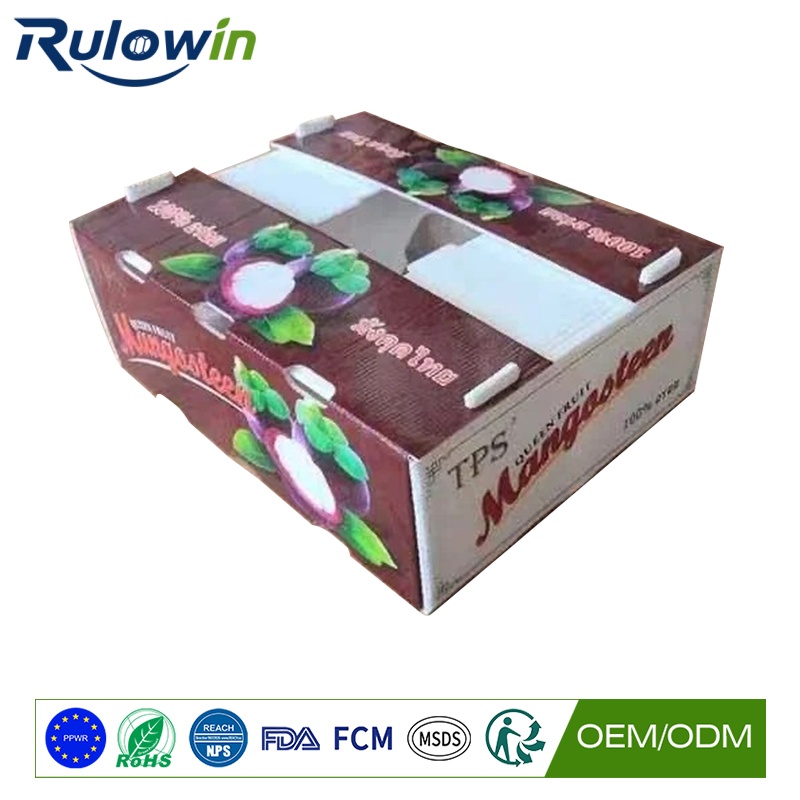
A crate pool – where crates move between several parties rather than back to one owner – is the standard model in fresh produce, and it is also the model where crates disappear fastest. The difference between a pool that works and one that bleeds crates is mostly about who is accountable.
Why crates leave a pool
Three reasons, in descending order of frequency. They are on a one-way leg and nobody collects them. They are being used for something else – storage, at a grower’s yard, for a different crop. Or they are being kept because nobody is counting.
Note that breakage is not on the list. In most pools the dominant loss is attrition, not damage, and treating it as a durability problem is the wrong investment.
Start with identity
Crates in a pool need to be identifiable: a colour, a moulded mark, a printed code. Without it there is no way to have the conversation about whose crates they are, and without that conversation there is no return.
Moulded or embossed identification lasts; printed fades and labels lift off polypropylene. Specify the identification at tool-making time, because retrofitting it is expensive.
Then the counting point
Somewhere in the loop, crates get counted. Usually at the packing house or at the distribution centre – wherever there is already a weighbridge or a goods-in process. A pool with no counting point is a pool with no data, and you cannot manage what you do not count.
It does not need to be sophisticated. A tally of crates in and out per week is enough to see the trend and to have an evidence-based conversation with whoever is holding them.
Set the rules before the crates
Who pays for a crate that does not come back, and how is it settled. This is the conversation people avoid and it is the one that makes or breaks a pool. It is much easier to agree at the start than to litigate after a season.
Also worth agreeing: who repairs, who washes, and what condition a crate has to be in to re-enter the pool. Ambiguity here means damaged crates circulate.
Choose the crate for the pool, not the crop alone
A pooled crate takes more handling than an owned one, and it gets handled by people who do not own it. That argues for a slightly heavier section and a tougher resin than a closed-loop crate needs. It also argues for a design that stacks and nests well, because both happen in a pool.
We covered lifespan against loss in how many trips a PP crate survives.
What makes crates come back
Two mechanisms, and the first is stronger. Collection is built into a delivery – the driver who drops off takes empties – so returning requires no decision by anyone at the receiving site. Where this can be arranged, return rates are high.
The second is a deposit or a charge, which works but creates administration and occasional friction. It is worth having as a backstop and it is worse than the first as a primary mechanism, because it depends on someone enforcing it.
If neither can be arranged, the pool will leak, and it is better to own the crates or hire them than to run a pool that does not hold.
What we can do
We make PP crates for fruit and vegetables with moulded identification and pool-appropriate wall sections. Tell us who is in the pool and what the lanes are, and we will specify – including being honest when a pool is not going to hold together.