
A protection panel that does not lie flat is worse than no protection, because a raised edge catches boots and wheels, funnels grit and water underneath, and gets kicked out of position within a day. Curling is also the complaint that brings panels back off site more than any other. It is a manufacturing property with identifiable causes, not something that happens at random.
What causes a panel to curl
Three causes, and they are distinguishable by looking at the panel. Uneven skin thickness or uneven cooling in manufacture leaves built-in stress, and the panel curls as soon as it is cut – this shows as a consistent curl on every panel in a batch. Storing panels on edge for months lets them take a set, which shows as a bow along one axis. And absorbed moisture in a material that can absorb it – MDF, cardboard, some fibre-faced boards – swells one face and produces a curl that changes with the weather. Polypropylene does not do the third one at all.
Why a two-face panel is more susceptible
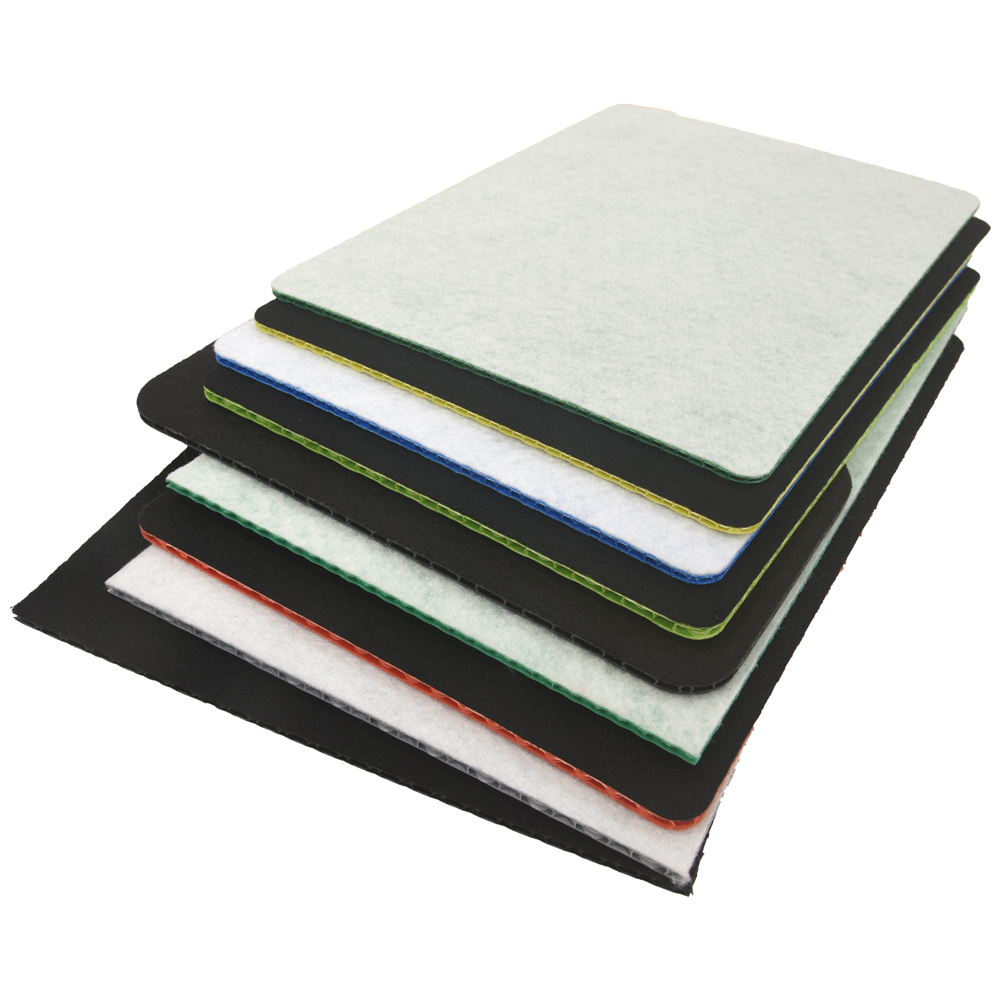
A panel with a felt face one side and an embossed face the other is asymmetric by construction. If the two faces have different shrinkage or different stiffness, the panel will curl toward the stiffer or more highly stressed face as it cools or as it ages. That is a manufacturing control problem, and it is the first thing to check on a felt-faced panel: lay one on a flat floor and look at whether all four corners touch.
How flat is flat enough
For floor protection, the practical test is simpler than a standard. Lay the panel on a flat surface and check the corners. One or two millimetres of lift at a corner is fine and will settle under traffic. More than about five millimetres at a corner will not settle, will catch a trolley wheel and will trip somebody. That is the threshold worth specifying, and it is measurable on delivery without any equipment.
What to do about panels that arrive curled
Store them flat, weighted, for a day or two before laying – mild curl from storage recovers, curl from manufacturing stress does not. Lay the curl downward where possible, so the corners are held down rather than lifted. And reject panels that curl more than a few millimetres after a day of flat storage, because they will not improve on site. Checking flatness on delivery is described in checking panel flatness without a granite table.
Joints and the curl interaction
Two panels that each curl by three millimetres at the meeting edge produce a six millimetre step, which is a genuine trip hazard and the number one complaint on protected floors. Butting panels tightly does not fix it; the fix is flat panels, or a joint detail that bridges the step. On routes used by trolleys or by anyone carrying something, lay the joint lines across the traffic rather than along it so wheels cross rather than run along a step.
What we can do
We supply honeycomb protection panels with balanced faces to keep them flat, and we check corner lift before dispatch rather than after a complaint. Tell us how the panels will be stored and for how long, and we will specify accordingly – including telling you when a cheaper panel will do because the job is short and flat storage is available.