
Pallet pooling works because the pallet is a standard unit that a third party owns, inspects and moves. Returnable packaging works because the box is a specific unit that you own and move. Running both through the same load introduces a conflict that is easy to miss until the boxes start disappearing.
Where the conflict sits
The pallet goes back into the pool at the far end. The box has to come back to you. If the two travel together on the same return leg, that works. If the pallet’s return route and the box’s return route are different, the box goes wherever the pallet goes, which is usually a pallet depot.
The handover problem
At a goods-in bay, the pallet is somebody’s property and gets handled accordingly. The box is yours and is usually somebody else’s problem. Where the process does not say what happens to the box, what happens is that it sits in a corner until somebody clears it, and clearing it means disposal.
Ways round it
Keep the boxes on your own pallets rather than pooled ones for the return leg. Agree the box return at the same time as the pallet return and write both into the same instruction. Or accept a pallet-free return, where the empties travel collapsed and are not tied to a pallet at all.
What the counts should show
Boxes out, boxes back, and the difference. If the difference is not visible weekly, it will not be visible at all, and the fleet will quietly shrink while the invoices stay the same.
What to agree before the first shipment
Who loads the return. When. Where the empties are held. Who counts them. Four questions, and every returnable programme that works has answered all four in writing.
What to write into the instruction
Four things, on the same sheet as the packing instruction: what happens to the box at the far end, who loads the return, when, and where the empties are held. Where any of the four is missing, the box is lost and the reason is the process rather than the packaging.
Where the partner cannot take on the return, the lane needs a different arrangement – a pallet-free return, a collection on a scheduled run, or a one-way box. Discovering that after the fleet has shipped is the expensive way to find out.
Making the loop explicit
Write the box return into the same instruction as the pallet return, with a named person, a timeframe and a holding location. Where the two are documented separately, the pallet’s route wins, because it has an owner and the box does not.
Then count weekly. Boxes out, boxes back, and the difference by lane. Where the difference is not visible per lane, the loss cannot be traced to its cause, and it will be treated as normal attrition.
What to agree before the first shipment
Who loads the return. When. Where the empties are held. Who counts them. Four questions, and every returnable programme that works has answered all four in writing. Where one is missing, the boxes accumulate at whichever end has the least space.
How to make the counts meaningful
Count at dispatch and count at return, by lane, weekly. The difference is the number that matters, and it is only visible if both ends are counted. Where a partner will not count, the fleet size becomes an estimate and the loss becomes an argument.
What we can do
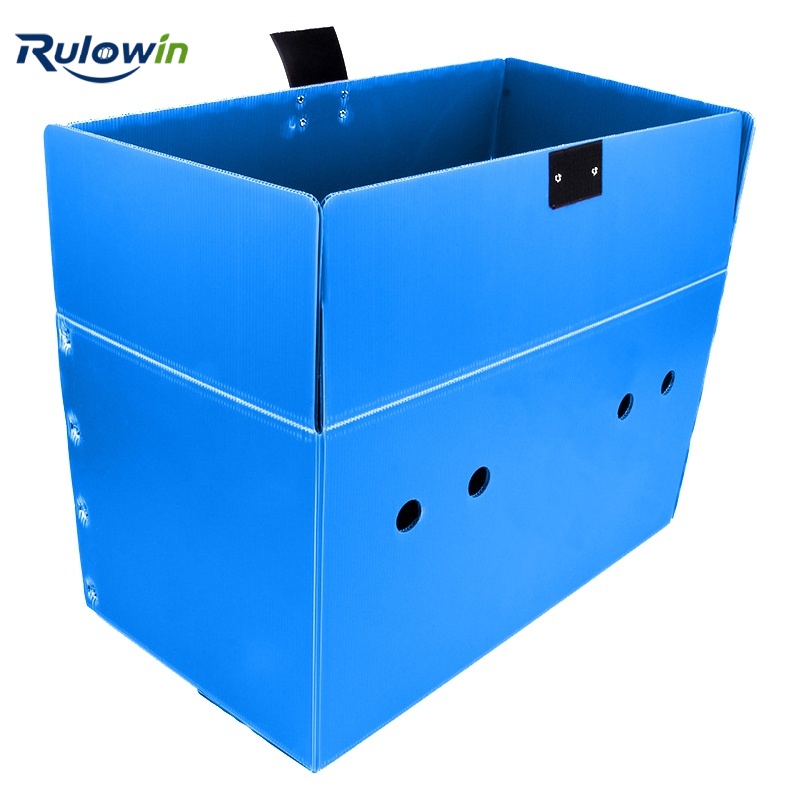
We build PP corrugated turnover boxes sized to collapse or nest for the return leg, so the empties are cheap to bring home whichever way the pallets go. Tell us how your pallets are handled. The export version of the problem is covered in one-way pallets on an export lane.