
Pallet height is usually treated as a fixed cost of doing business. It is not – it is a recurring charge against usable vehicle volume, and on a high-cube lane it is one of the largest packaging costs there is. It just never appears on a packaging line item, which is why it survives review after review.
What the height costs
A standard wood pallet is around 140 mm. In a trailer with 2.7 m of usable internal height, that is roughly 5% of the cube gone before a single box is loaded. A low-profile plastic pallet at 120 mm recovers about 0.7% – small in absolute terms but recurring on every load for years.
Where it compounds
The height matters most where the load is stacked in more than one unit. Two pallets stacked, or a pallet placed on a mezzanine, multiplies the penalty. In a container where height is the binding constraint, the pallet height can decide whether the top layer ships at all.
The low-profile alternative
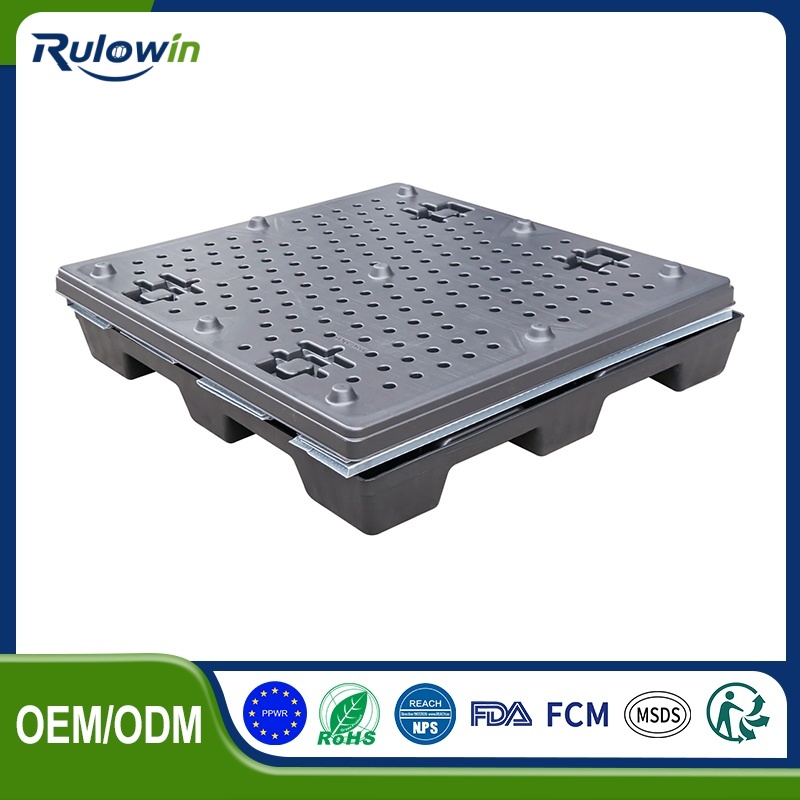
Low-profile plastic pallets, typically 110 to 130 mm, exist for exactly this reason and are widely used in retail distribution. They cost more per unit and they are less tolerant of rough handling and of being lifted by the wrong equipment. Where the lane is controlled, they pay back on cube alone.
Going without
Slip sheets remove the height entirely, which is the largest single cube gain available. In exchange the handling changes, the base has to spread load on its own, and the load loses the anchor that the pallet provided. The economics depend entirely on the lane, which is why it should be a per-lane decision.
What it does to the box specification
Choose the pallet and the entry method before specifying the box base, because both determine what the base has to do. A base designed for full deck support used on a slip sheet is the most common way a pallet-free programme fails. Say what the box will stand on and let the design follow from that.
What to measure
Usable internal height of the vehicle, pallet height, and box height. Three numbers that give the layer count exactly, with no estimating. Where the result is one layer short, the cheapest fix is usually a lower pallet rather than a shorter box.
The layer that never ships
Where a load is height-limited, the pallet’s 140 mm either removes a layer or does not. There is no middle case at the margin: either the stack fits or it loses a layer, and the difference is the cost of that layer on every load. Working out which side of the line a lane sits on is a subtraction.
Where it does remove a layer, a lower pallet is usually cheaper than a shorter box, because it does not reduce the internal volume available for the part.
What it does to the specification
Decide the pallet before specifying the box height, because the available height is the vehicle clearance minus the pallet. Working in that order means the layer count is designed rather than discovered. Where the pallet is not known, the plan is a guess with a drawing attached.
What we can do
We build PP corrugated turnover boxes to a height that works with the pallet and vehicle in use, rather than to a convenient round number. Send us the vehicle and pallet figures. The weight side of the same choice is in pallet weight against payload.