
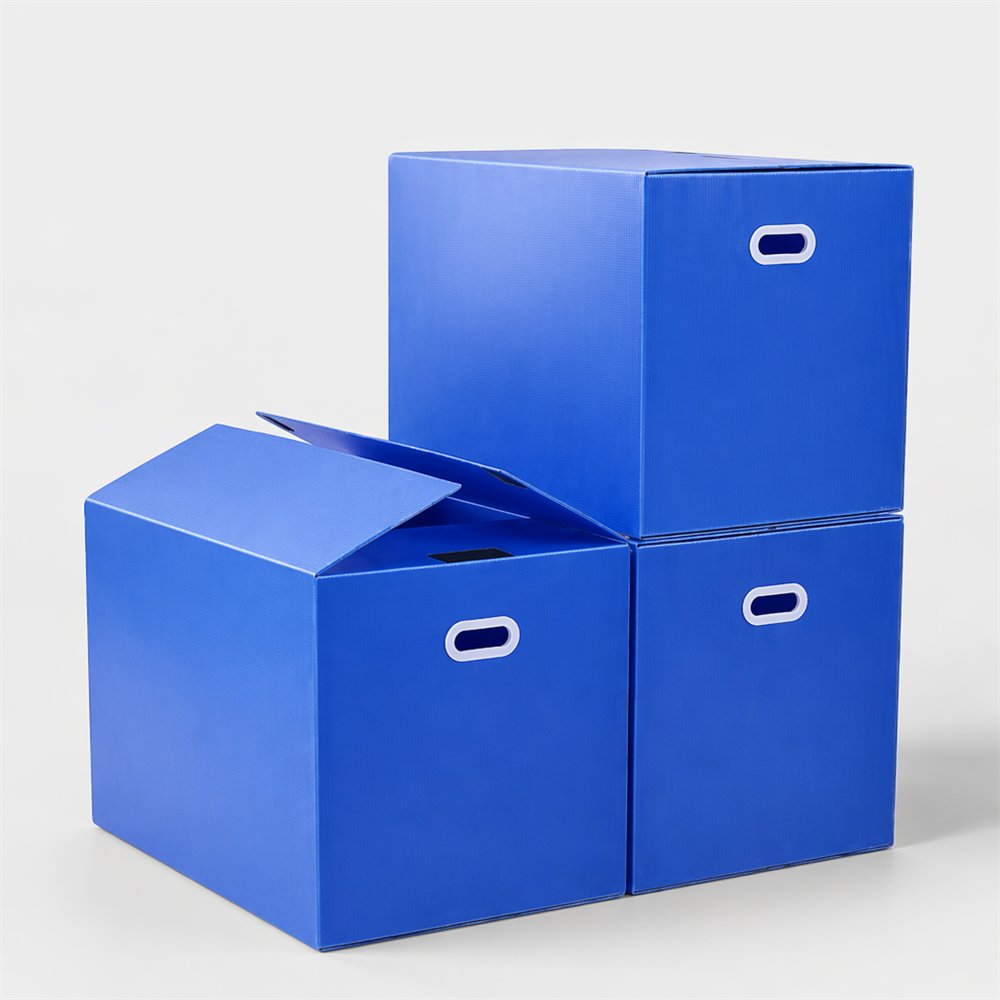
Slip sheets and returnable boxes solve the same problem from opposite directions. A sheet removes the pallet and is thrown away. A box replaces both the pallet and the carton and has to be fetched. Neither is universally right, and the deciding variable is not the unit price.
What the sheet costs
Almost nothing per unit, no return logistics, no tracking, and a small amount of storage. Against that: it provides no protection, it needs the attachment at every handling point, and it is a consumable that has to be bought forever. The cost is low and permanent.
What the box costs
A large initial purchase, a return leg, somewhere to keep the empties, and somebody to reconcile the counts. Against that: protection, containment, consistent handling, and a cost per trip that falls every time the box is reused. The cost is high and declining.
Where the lines cross
Take the box cost plus the return freight per trip and divide by the sheet cost per trip. That ratio is the number of trips at which the box has paid for itself. Below it, sheets win. Above it, boxes win by an increasing margin every trip. The calculation takes ten minutes and is the only one that matters.
The loss rate nobody knows
Fleet economics depend on how many boxes disappear, and almost no operation knows its own number before it starts. It is usually lower than the pessimists expect and higher than zero. Running a single lane for six months produces it from your own data, after which the argument stops being theoretical.
What the part needs
Where the part is fragile, finished or expensive, the box is protecting value that the sheet cannot. Where the part shrugs off a knock and is cheap, protection is not the point and the sheet’s lower cost per trip is decisive. The part’s sensitivity is an input, not a preference.
Hybrid arrangements
Plenty of operations run sheets for dense domestic lanes and boxes for export or fragile parts, and manage the two from the same store. It adds a decision at the packing station, which is manageable if the rule is simple: fragile or long goes in a box, everything else on a sheet.
Where the break-even usually falls
For a reusable box costing roughly fifteen to twenty times a slip sheet, with a return leg that costs a fraction of the outbound freight, the break-even typically sits between fifteen and thirty trips. Below that, sheets are cheaper. Above it, the box has paid for itself and everything after is saving.
The number that moves it most is trips-to-failure, and the second is the return cost. Both are knowable, and both are usually guessed. A single lane run for six months replaces both guesses with figures from your own operation.
What the pilot should measure
Trips completed, boxes lost, damage per trip, and handling time per pack. Four numbers, measured against a parallel lane running the old method. Where the pilot runs for a month, the result is usually decisive; where it runs for a week, it usually is not.
What we can do
We build PP corrugated turnover boxes and we are happy to price a single lane so you can see the real break-even trip count. Tell us the part, the volume and the route and we will send the arithmetic. Where that break-even falls is worked through in which lanes justify dropping the pallet.