
Micro-fulfilment sites and dark stores are space-constrained to a degree conventional warehouses are not. Aisle widths are set by what has to pass through them, and crates that are ten centimetres too wide push everything else out. Yet crate sizes get picked from a catalogue far more often than they get derived.
Start from the shelf, not the crate
Measure the pick face, the shelf depth available, and the tightest turn in the aisle. Crate external dimensions follow from those three. Anything else invites a future where crates do not fit the racking they were bought for, at which point the options are expensive.
The second constraint is the trolley or cart the crates ride on. Crates that fit the shelf but not the cart are the most common mistake, and it is entirely avoidable by measuring the cart first.
Nest ratio matters for storage, not just returns
A micro-fulfilment site has almost no spare space, so empty storage is a real cost. A crate that nests compactly needs half the floor area for its empties, and that difference can decide whether the picking model works at all.
Collapsible designs nest tighter than rigid ones, at the cost of build time. For high-turnover operations the build time usually dominates, which is why many dark stores use rigid crates despite the worse ratio.
Handle height and lifting
Dark store picking is fast and repetitive, which makes it an injury risk. Crate handles that can be gripped with a gloved hand at speed, and loaded weights that stay comfortably below manual handling limits, matter more here than in most environments. A slightly smaller crate picked more times is often better ergonomically and worse operationally – that trade should be made explicitly.
Stack stability at small footprints
Small crates stack less stably than large ones for the same height, particularly when loaded unevenly. Interlocking features between stacked crates solve this and should be regarded as standard rather than optional for small footprints.
Colour and identification at speed
At dark store pick rates, colour coding by temperature zone or order type is faster than reading. The colour needs to be visible in the stack and consistent, on the basis set out for colour coding without repainting. The second requirement – that it not degrade – is where most schemes fail.
Crate height versus pick ergonomics
Taller crates hold more per trip and force a longer reach to the bottom, which slows picking and increases strain. In tight stores the reach matters more than the volume, because the picker is the constraint rather than the crate. Shorter crates picked more often are frequently faster overall.
Set the height from the reach depth of the pick face rather than from capacity. Once the height is fixed by ergonomics, footprint follows from volume requirements, and the design stops being a compromise between the two.
One size, or two at most
Mixed crate sizes in a dark store create sorting work that no picking system accounts for. Two footprints cover most assortments, and the picking model gets measurably simpler the moment a third is introduced.
What we can do
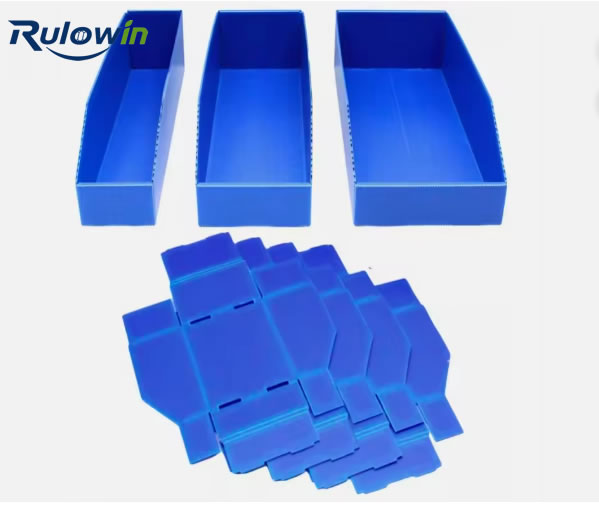
We make picking boxes in custom footprints for tight layouts and can nest them to your trolley dimensions. Send the shelf depth, the cart internal dimensions and your target pick rate, and we will size from those rather than selling you the nearest stock item.