
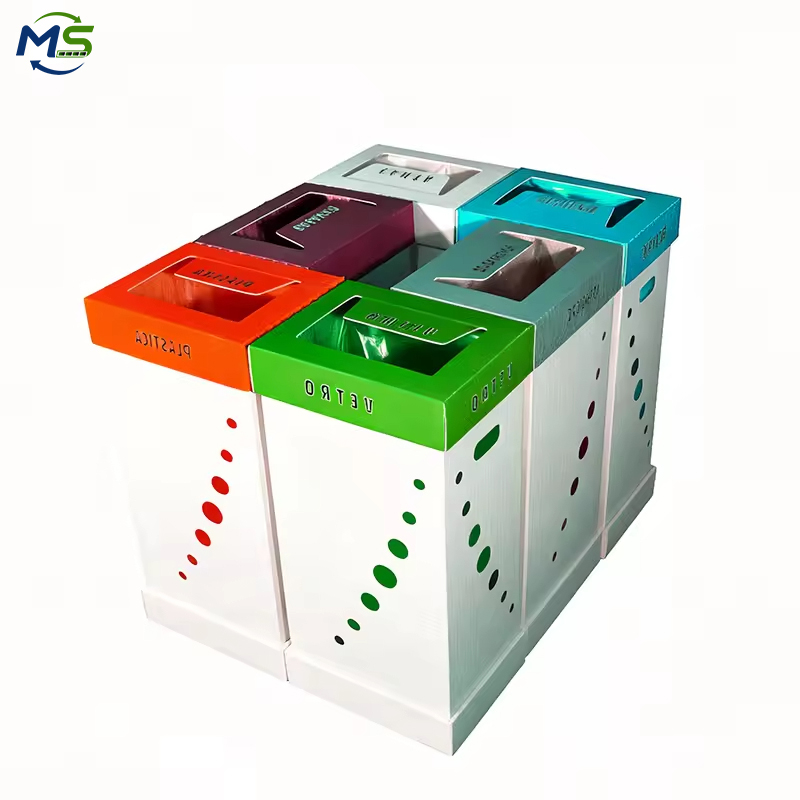
A person finds a box instantly and cannot explain how. A robot has to be told what to look for, and the things it can reliably find are edges, corners, and regions of contrast. A container that presents all three cleanly is easy to automate. One that presents rounded corners, a glossy surface and no clear edge is not, and the difference shows up as cycle time, as mis-picks, and as a vision system that has to be tuned every time the lighting changes.
Edges are the primary feature
Most industrial vision finds a straight edge and builds a position from two of them meeting at a corner. The quality of that measurement depends on the edge being sharp in the image: a well-defined change in brightness over a short distance. A rounded corner spreads the transition over many pixels and the measurement becomes uncertain in proportion. Where a container is being specified for automated handling, keeping the top corners relatively square is worth more than any amount of downstream vision tuning.
Contrast, and why glossy is difficult
A glossy surface reflects whatever is above it – the ceiling, the lights, sometimes the robot itself. The reflections move as the box moves, so the vision system sees features that are not part of the box and tries to locate them. A matte or lightly textured finish reflects diffusely and is far easier to work with. This is one of the few cases where the surface finish is a functional specification rather than an aesthetic one, and it is worth saying so in the enquiry.
Datum features beat measurement
The most reliable approach is not to measure the box at all, but to give it a feature the robot looks for – a notch, a raised boss, a printed mark, a recess of a known size. A single well-defined datum removes the dependence on edge quality, on lighting, and on colour, and it costs almost nothing to include in a tool. Where a container will be handled automatically for years, one datum feature is the cheapest insurance available. The marking options are covered in locating marks for vision guidance.
Consistency across a mixed fleet
Where a fleet contains several sizes, the robot either has to be told which size is coming or has to work it out. Telling it is far more reliable, and that means either a fixed sequence, a tag, or a size-dependent feature the vision can read. Working it out from dimensions works until two sizes are close enough to be confused, and then it fails intermittently, which is the hardest kind of failure to diagnose. Where sizes are similar, make them distinguishable on purpose rather than relying on measurement.
What the background does
A box is easier to find against a plain background. A conveyor with a patterned belt, a floor with a strong grain, or a rack with visible uprights behind the load all add candidate edges to the image. Where the background cannot be changed, the container can be – a contrasting band around the box, or a light-coloured box in a dark environment, makes the segmentation trivial. This is a two-minute consideration that saves days of vision commissioning.
Wear, dirt and the feature that disappears
A datum feature has to survive the service life. A printed mark scuffed by a conveyor rail, a notch filled with grime, or a boss worn smooth by repeated handling all degrade the very thing the robot depends on. Put datums where handling does not reach, or make them from a different material, or duplicate them so one can fail without stopping the line. A feature that works on a new box and fails after six months is worse than no feature, because the failure arrives after commissioning has signed off.
What to send with the enquiry
The robot’s approach direction, the working distance, the lighting type, and whether the background can be controlled. Four facts. With them, a container can be specified with the right finish, the right datum position and the right contrast for the installation. Without them, the container will be specified for a person’s idea of what looks findable, which is not the same as what a vision system can find.