
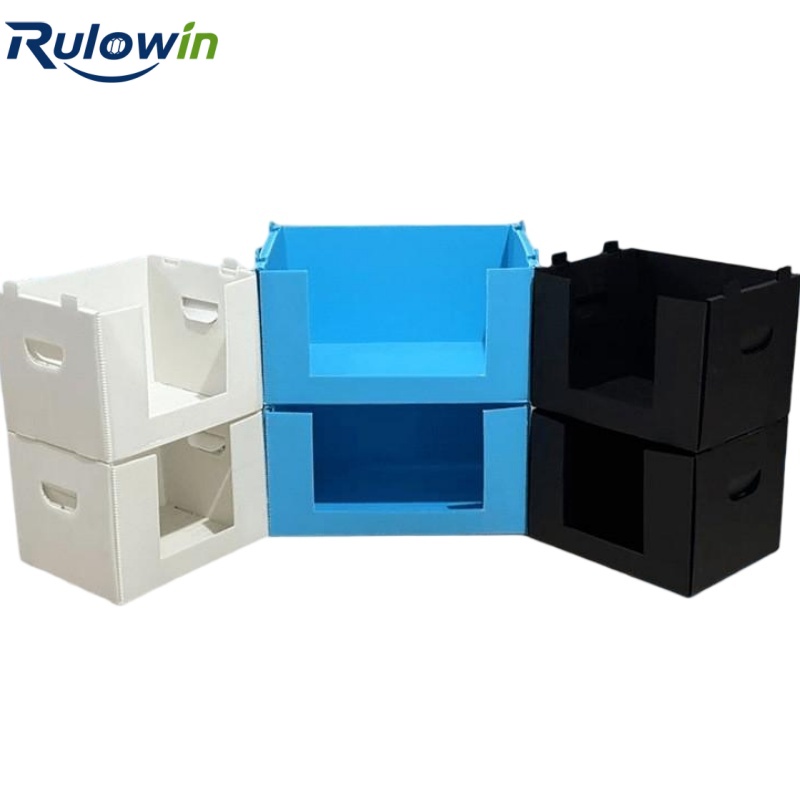
A van full of picking boxes is a van full of orders, and how it is loaded determines how long the round takes and how much arrives damaged. Three principles, and the first one is the one that gets skipped.
Load in reverse drop order
The first drop comes out first, so it goes in last, nearest the door. This sounds obvious and it is ignored constantly, because loading in pick order is faster at the loading bay and much slower at every stop after it.
If the round has a fixed sequence, load to it. If it does not, group by area and load by area, so at least you are not walking through the van at every stop.
Stack height, and what limits it
The box limits it, not the van. A loaded picking box stacked five high puts a real load on the bottom box, and a stack that is fine at two high becomes unstable at five because the centre of mass rises.
Ask what the safe stack height is for the box loaded, and treat that as the limit even if the van has headroom. A stack that collapses in transit is worse than a second trip.
Securing
Strap or net across the load from side to side, not along its length. Across stops the load from moving forward under braking, which is the direction it wants to go. A strap running front to back does almost nothing for forward movement.
Alternatives to strapping for stability are discussed in alternatives to stretch wrap for pallet stability, and the logic applies to van loads too.
What gets damaged
Boxes at the back of the van, from sliding rather than from crushing. And boxes stacked with something heavy on top of something fragile, which is a loading discipline issue rather than a packaging one.
Check the rim of the bottom box in a stack after a round. If it is deformed, the stacks are too high or the contents are too heavy for the box.
Empties
Decide what happens to empties before the van leaves. Boxes coming back should be nested as they are emptied, and there should be a defined place for them – otherwise they end up loose in the back, which is how they get cracked.
Nesting ratio and why it matters is covered in nesting vs stacking empty picking boxes.
Weight and what happens on the way back
Heavier boxes low and forward, lighter ones high and back. It is basic and it changes how the van behaves under braking more than most drivers expect, particularly a lightly loaded van.
Then the return: empties nested as they are emptied, in a defined place, so they are not loose in the back. A loose empty box in a van gets stood on and it cracks, and it is the most avoidable loss in the whole round.
And the one to check
Look at the bottom box in the tallest stack when you unload. If it is deformed, the stacks are too high for the load, and the fix is a lower stack rather than a stronger box.
What we can do
We supply PP picking boxes and will tell you the safe loaded stack height and what strap arrangement suits. Tell us your van and your drop sequence – if the boxes are not the constraint, we will say so rather than sell you stronger ones.