
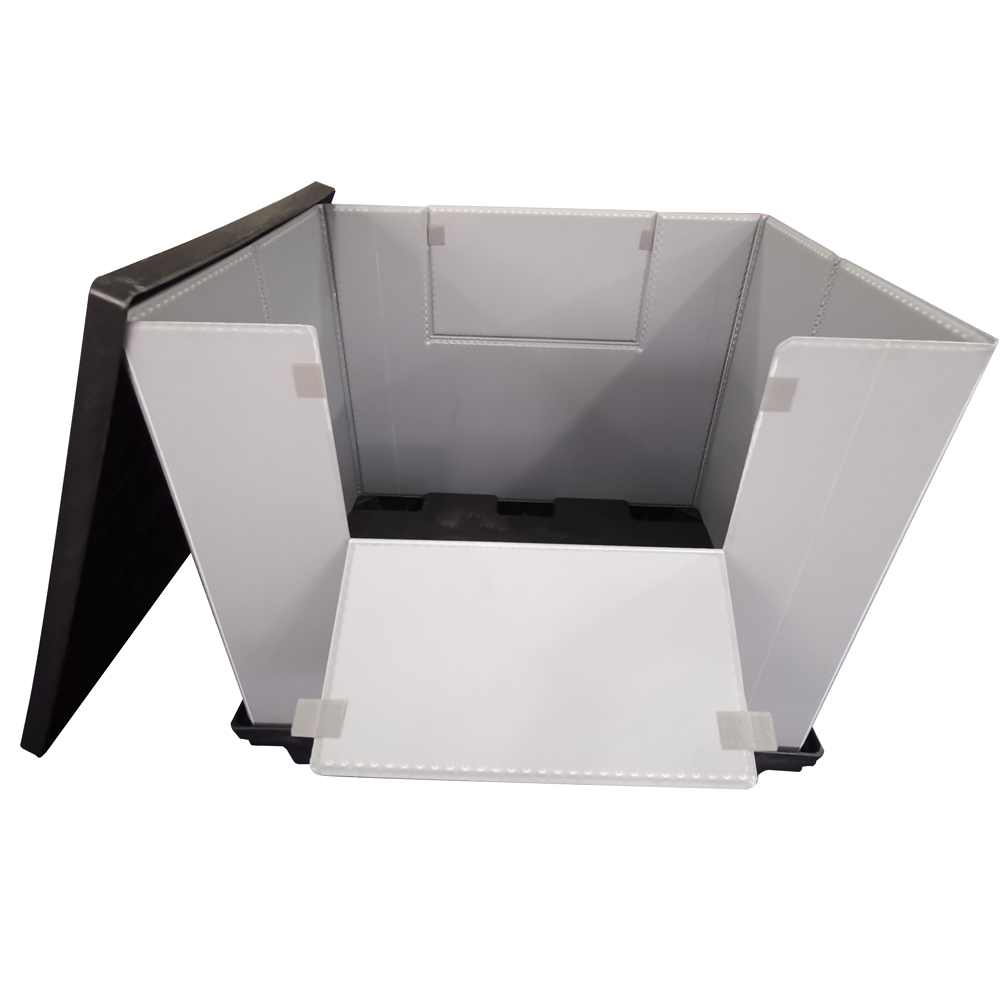
A sleeve box fleet shared across several sites has an identification problem that a single-site fleet does not: boxes migrate, and once they do nobody knows where anything is. The fix is labelling, and the technical part is easy. The organisational part is what fails.
What the label has to carry
A unique identifier, so a box can be traced. A owning-site mark, so a box found somewhere unexpected has a destination. And, if it is useful to you, a date of first use, which lets you see whether the oldest boxes are the ones failing.
That is enough. Every additional field is another thing to maintain, and fleets that try to encode product type or customer into the label end up with labels nobody updates.
Where to put it
This is the decision that matters, and it should be made once for the whole fleet. The label needs to be visible when the box is assembled and standing in a stack, which in practice means the upper part of the sleeve on one defined face.
Not on the lid, which gets separated. Not on the base, which is below eye level and gets scuffed. One face, one height, every box – including the ones already in service, which is why retro-labelling is worth budgeting for.
What survives
A label on PP needs an adhesive formulated for low-energy surfaces, and it needs to be applied to a clean, dry, unworn surface. On a new box that is straightforward; on a box that has been in service, the surface is abraded and labels lift.
Expect to replace labels periodically. Budget for it rather than treating it as a failure – a fleet where a fifth of the labels are replaced each year is working normally.
Barcodes, if you are counting
A barcode or a QR code makes counting at goods-in and goods-out realistic, and that is what tells you where boxes actually are. Whether it is worth it depends on fleet size; below a few hundred boxes, a visual mark and a tally sheet is usually enough.
The label-adhesion question for barcodes is the same, and it is discussed in do barcode labels stay on PP picking boxes.
The organisational part
Write down the convention – identifier format, placement face, placement height – and give each site a copy with photographs rather than a description. Descriptions of “the top left” get interpreted differently at every site, and photographs do not.
Then check once. One visit or one photograph from each site in the first month catches a convention that has been misunderstood, and it is much cheaper than finding out after a year of migration.
What to do when boxes migrate anyway
They will. The useful response is a reconciliation rather than a rule: each site counts what it holds periodically and reports it, and the total tells you whether boxes are accumulating somewhere.
A fleet total that does not match the sum of the sites is the signal, and it is worth chasing early – a few boxes sitting at the wrong site is normal, and fifty is a logistics problem that gets worse the longer it runs.
What we can do
We supply pallet sleeve box systems and can supply them labelled to your convention so the fleet starts consistent rather than being retrofitted. Tell us how many sites and how boxes move between them – we will suggest a scheme simple enough that it actually gets followed.