
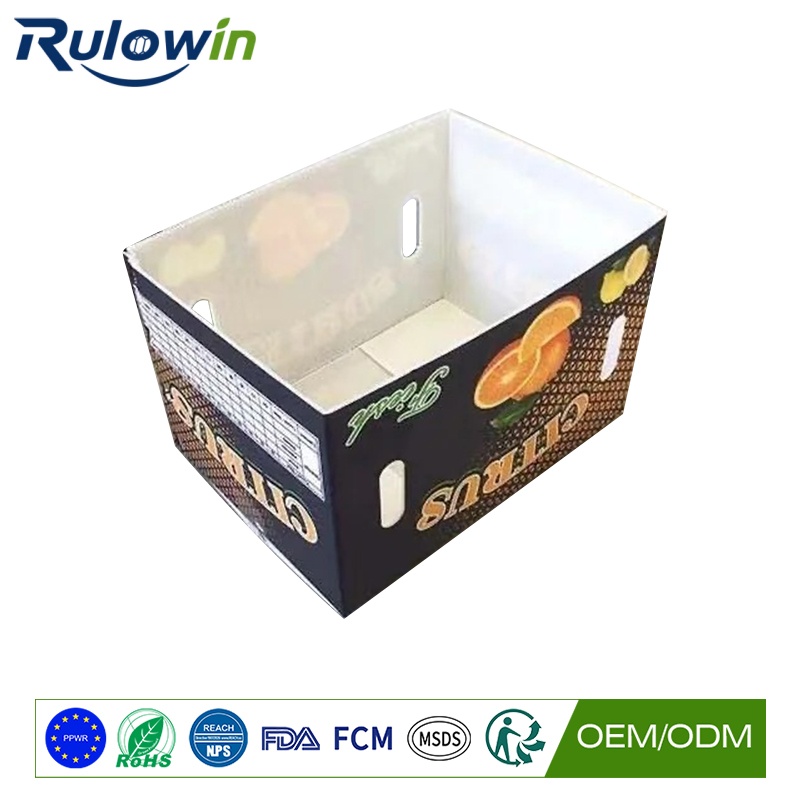
A reusable produce box will last years. A paper label lasts a trip. Traceability on a reusable fleet has to be designed as a property of the box rather than something stuck onto it, and the right method depends on what question you are trying to answer.
Three different questions
Which box is this? Asset identification. Needs to survive indefinitely and be readable by a person or a scanner.
What was in it? Batch and lot traceability. Needs to change every trip and survive the journey.
Where has it been? Loop history. Needs a record somewhere, which usually means a scan at transfer points.
These get conflated constantly, and the methods that solve one do not solve the others.
Methods for permanent identification
- Embossed or moulded numbers on the box. Permanent, readable by eye, cheap per unit, needs tooling, cannot be changed.
- RFID embedded in the box. Readable without line of sight and in bulk, survives washing, costs more per unit and needs readers. The sensible choice when you are scanning hundreds at a time.
- A durable welded plate or tag. A good middle option, replaceable if damaged.
- Laser marking. Permanent and flexible, but the contrast on PP is often poor and readability suffers after abrasion.
Methods for per-trip information
This is the harder half. Options:
- A label pocket or card holder moulded into the box. Cheap, flexible, and the card gets swapped each trip. The pocket has to drain and be cleanable.
- Direct print with a washable or removable ink. Works in some operations and is a hygiene problem in others.
- A writable surface for a wax pencil or a marker. Crude, and it survives washing poorly, but it is what a lot of field operations actually use.
- Associating the box ID with the batch in software rather than putting the batch on the box. This is the cleanest answer where scanning discipline exists, and useless where it does not.
What kills labels
Washing, condensation, abrasion from stacking, UV, and cold. In that rough order. A label that survives a dry warehouse will usually not survive a hydro-cooler and a caustic wash, which is why “just use a better label” is rarely the whole answer.
Hygiene is not optional here
Anything that can hold water or trap product residue is a cleaning problem. Label pockets need drainage, recesses need to be cleanable, and any adhesive residue left behind will collect soil. If your boxes are audited for cleanliness, design the identification with that in mind from the start.
What to do with the data
Collecting traceability data is easy and using it is rare. The two things worth actually doing with it are finding where boxes go missing, and proving what was in a box when a customer asks.
The first is a direct cost saving and it pays for the system on its own in most operations. The second is insurance – you will not need it until you do, and when you do, it is the difference between a targeted withdrawal and a broad one.
Everything else – detailed loop histories, per-box journey records – is usually collected and never read. It is worth being clear about which of the two you need before paying for a system that does all of it.
What we can supply
Our produce boxes can be supplied with moulded identification, label holders or embedded RFID. Tell us what you need to prove and how you scan, and we will tell you which of those is worth paying for – quite often the answer is a moulded number and nothing else.