
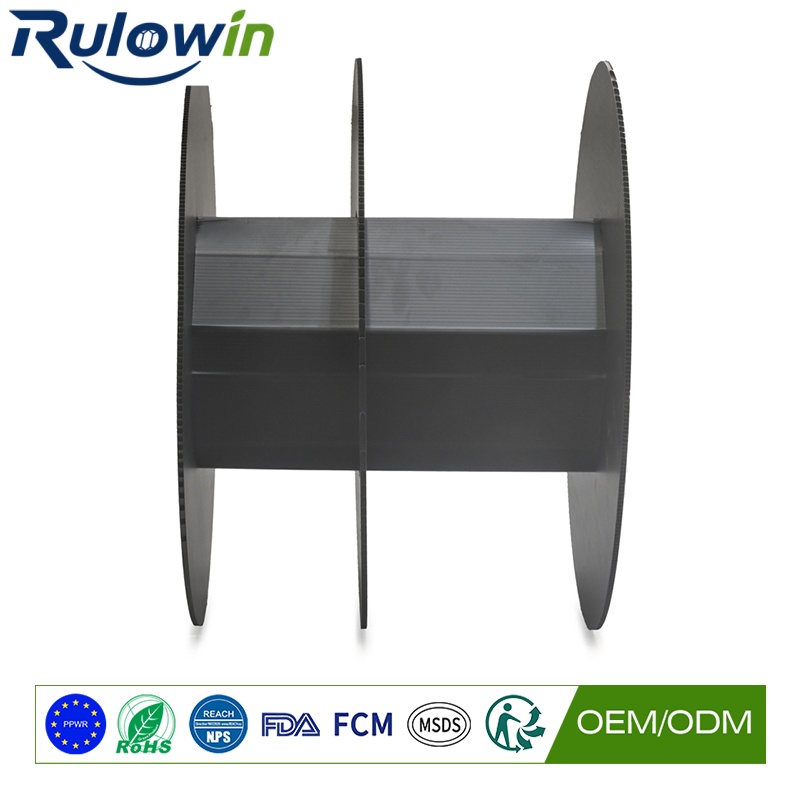
Spool records sit in the category of things everyone agrees are useful and almost nobody does. The cost is small, the benefit only shows up under pressure, and it accumulates slowly enough that it never seems urgent.
Until the day you need it. Then it is either there or it is not, and there is no way to reconstruct it.
What records are actually for
Four things, roughly in order of how often they turn out to matter:
- Answering “did the spools change or did we?” When quality drifts, the first question is whether the input changed. Without a record you cannot answer it.
- Supporting a claim. Damage claims, whether yours against a freight provider or a customer’s against you, turn on evidence. Covered more directly in our article on handling damage claims.
- Costing a reusable programme properly. Every number in the cost-per-trip arithmetic is an estimate until you have trip counts.
- Deciding when to retire. Age-blind fleets retire spools for the wrong reasons.
The minimum worth keeping
Per delivery or batch:
- Supplier, purchase order, date received
- Quantity
- Inspection result — actual measurements, not just accepted
- Who inspected
Per spool, where identification allows:
- Serial or batch ID
- Date introduced to the fleet
- Trip count, or cycles if you can count them
- Retirement reason and date
That second list is where it gets expensive to do properly, and it is worth being realistic about what you will actually maintain.
How much is worth doing
Be honest about your operation. Individual spool records with cycle counting require tagging every spool and scanning it at several points. That is a system, it costs money to run, and it fails if anyone stops doing it.
For most fleets the useful middle ground is:
- Batch-level records with dates and inspection results — cheap, and adequate for most quality questions
- Estimated trip counts by age rather than counted — good enough for cost modelling, which mostly needs plausible numbers rather than exact ones
- Retirement reasons tallied informally, even on a clipboard, which is enough to spot dominant failure modes
A system nobody maintains produces worse decisions than no system, because the data looks authoritative and is not.
Where individual records pay
- Regulated or high-consequence applications requiring traceability
- Expensive spools where retirement decisions are genuinely per-item
- Programmes with automated handling that already scans everything
- Where a customer contract requires it
The failure pattern to record above all
If you log nothing else, log why spools get retired. Tally it: cracked flange, bore wear, joint failure, lost, not returned, other.
A fleet that retires 40% of its losses to “not returned” has a logistics problem. One retiring mostly to radial flange cracks has a design or handling problem. These lead to completely different fixes, and you cannot see the difference without counting.
What it does for cost arguments
Cost-per-trip discussions are usually argued with assumptions. Real trip counts and real retirement reasons replace about half of those assumptions with data, and they tend to reveal whichever part of the model was optimistic — often the collection rate, as discussed in our article on building a reverse loop.
Format
It genuinely does not matter. A spreadsheet, a notebook, entries in whatever system you already use. The failure mode is not choosing the wrong format, it is starting and stopping.
One practical suggestion
Write the date of introduction on the spool itself when it enters service, even roughly. If records lapse or get lost, a date on the spool lets you reconstruct most of what you need. Our piece on markings covers what survives.