
Every plant that ships on wooden packaging knows the phrase. Fewer have costed it. Heat treatment, or fumigation, plus the stamp that proves it, is a line that repeats on every consignment for the life of the lane, and it brings with it a dependency on somebody else’s schedule.
What the requirement actually is
Solid wood packaging above a small thickness has to be treated to kill pests, and marked with a stamp identifying the treatment and the provider. Plywood, particle board and processed wood products are normally out of scope because the manufacturing process already removes the risk. That distinction is why a plywood crate can ship without a stamp and a softwood crate cannot, and it is the reason some lanes switch to plywood before they switch to plastic.
The cost that never gets budgeted
Treatment is charged per crate or per cubic metre, and the price moves with fuel, kiln availability and how busy the provider is. Then there is the cost of the day: crates have to be finished early enough to go for treatment and come back before loading. If a customer pulls a delivery forward, the treatment slot is what breaks, not the packing. The third cost is the stamp itself. A faded or partial mark is treated at the border the same as no mark at all.
Where crates actually get stopped
Three recurring causes. The stamp is present but illegible. The stamp is on a component that gets removed, so the visible crate is unmarked. Or the crate contains a solid wood part, a bearer or a brace, that was added during a repair by someone who did not know the rule. Repairs are where the system leaks, because the person fixing a split bearer at six in the evening is not thinking about phytosanitary rules.
The wood-free alternative in practice
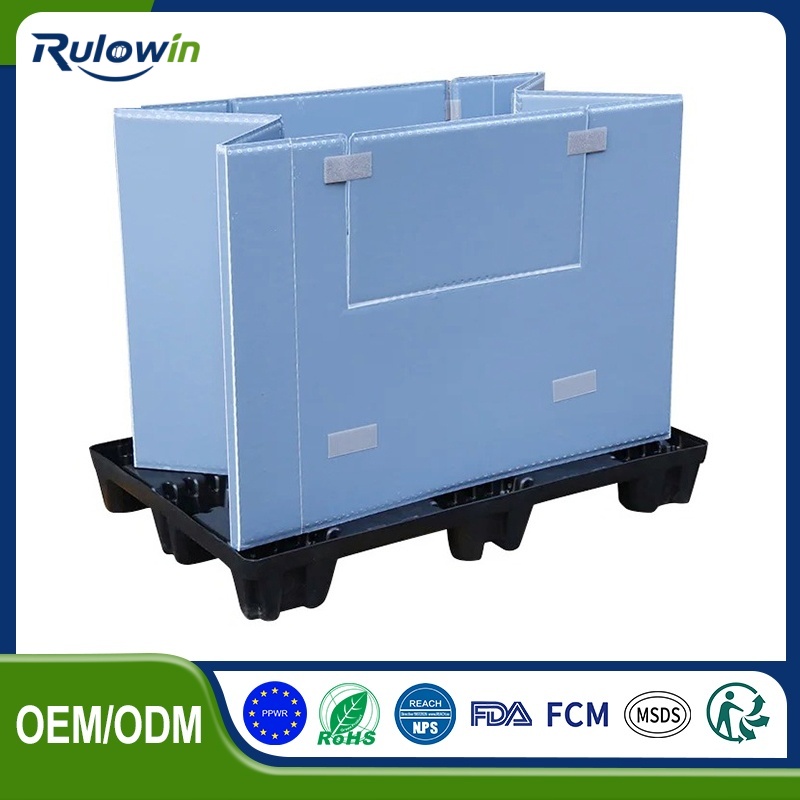
A honeycomb board box is not wood, so there is nothing to treat and nothing to stamp. That removes the scheduling dependency as well as the fee, which is usually the larger of the two benefits once a lane is running fast. The box also arrives flat or nested, which means it does not need a wood shop, a nail gun or a person who can build a crate.
When the customer insists on wood
Some destinations, and some customers, expect wood, either because their own receiving process assumes it or because the crate is meant to be a permanent fixture at the far end. In that case the honest answer is to keep wood and manage the paperwork properly. Where the requirement is only about protection, a honeycomb box does the same job without the treatment layer. Plastic packaging skips the paperwork for the same reason elsewhere: why plastic spools skip ISPM15.
A cheaper way to run the same lane
If your lane ships monthly and the packaging comes back, the arithmetic is straightforward: count the treatment invoices for a year and compare them with the cost of boxes plus the return leg. Most plants find the treatment line alone covers a meaningful share of a box fleet, before freight weight or damage is counted. Our comparison with crates generally is set out in why wooden export crates get replaced with honeycomb boxes.
Keeping the paperwork clean if you stay with wood
If you keep wood, three habits reduce the failure rate. Mark the crate after the final repair, never before. Keep one named person responsible for treatment bookings. And photograph the stamp before the load leaves, so a border query can be answered with evidence rather than a search of the loading bay.
What to ask a treatment provider
Three questions change the price and the reliability. How quickly can you take a crate in an emergency. What is the turnaround in your busiest month. And what happens if a mark is not legible, is it re-treated or re-marked. Suppliers differ widely on all three, and the answers determine whether your lane has a buffer or a single point of failure.
Keep a record of treatment costs per lane for a year. It is the most persuasive document available when somebody proposes a returnable alternative, and it takes a spreadsheet rather than a project to produce.
What we can do
We supply PP honeycomb board packaging for lanes that would rather delete the treatment step than manage it. Tell us the destination, the part and how often it ships; we will tell you what the box weighs, how it returns and whether the lane justifies a fleet.