
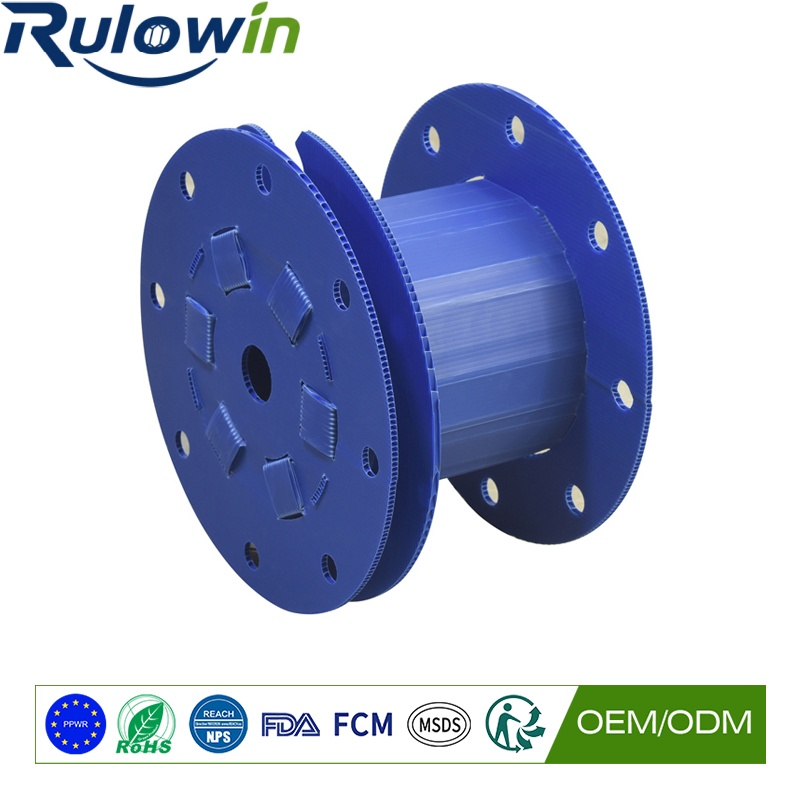
Nobody specifies a spool by its empty weight. It is not on the datasheet, it is not in the enquiry, and for most shipments it genuinely does not matter. Then somebody air-freights a rush order and the invoice makes the point better than any article can.
Where weight is free and where it is expensive
Sea freight is charged by container, and most full loads hit the volume limit before they hit the weight limit. In that case the spool’s tare weight costs you nothing directly — it is absorbed into the shipment.
Air freight is charged by chargeable weight, which is the greater of actual and volumetric. A large, light spool will be billed on volume, but a dense, heavy one will be billed on mass, and there the tare weight is being paid for at full air freight rates. On a rush shipment of high-value cable, the spools can be a meaningful fraction of the bill.
Road transport in most of Europe is limited by gross vehicle weight, and palletised spools often hit the weight limit before the trailer is full. If your outbound trucks are weight-limited rather than cube-limited, every kilogram of spool is a kilogram of product you cannot ship on that load.
What the weight is for
You cannot simply thin everything down. The spool has to survive winding tension, which wants a stiff, heavy flange; it has to survive handling, which wants material at the rim; and it has to sit on a payoff without moving, which wants some mass low down.
The art is putting the material where it does work. Ribbing is the obvious tool — stiffness from section depth rather than mass — and a well-ribbed flange will outperform a heavier flat one at the same duty. Hollow board construction does the same thing at the core: a cellular structure with most of the volume being air.
Where you can genuinely save
- Rim section. Often over-specified because it looks like the part that takes the load. Usually the ribs do, and the rim only needs to survive impacts.
- Core wall. On a hollow board spool the core carries compression, not bending. It is frequently heavier than it needs to be.
- Solid vs hollow. Where the spool is handled by machine rather than by dropping it, a lighter construction with the same stiffness is usually available.
Where you should not save
At the bore and the flange-to-core joint. A spool that is light because the bore is thin will wallow out on the shaft and start to run eccentrically — and the resulting tension variation costs more in product than the freight ever saved.
Similarly, do not save at the rim if the spools are handled roughly. A chipped rim is a retirement event, and one premature retirement costs more than the weight saving on a hundred spools.
How to have the conversation
Give the supplier the duty — winding tension, handling method, trip count — and ask what a weight-optimised design would look like at the same duty. A decent supplier can usually take material out once they know what the real load case is, because most spools are built with margin that was never specified.
And if you ship by air even occasionally, ask for the tare weight as a line on the spec sheet. It costs nothing to know, and the first time you need it, you will want it.