
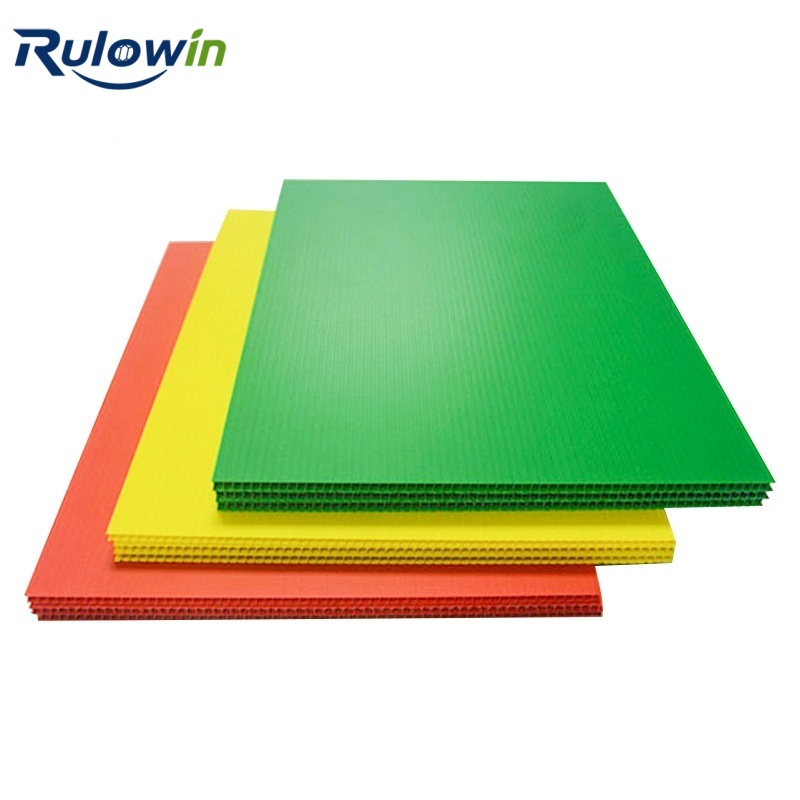
Wall thickness on a board tote or tray gets chosen by feel more often than by calculation, and the two loads acting on a wall pull in different directions – which is why a tote that copes with one often fails on the other.
The two loads
Outward pressure from the contents. Loose or granular contents behave like a fluid and press on the walls everywhere, increasing with depth. Even boxed contents lean and press. This load bends the wall between its supports – the base and the rim, and the corners.
Vertical load from stacking. A loaded tote on top of another puts its weight into the walls below, which carry it in compression. Here the flutes are doing structural work, and the flutes have to run vertically to do it.
A wall that is thick enough for one may be wrong for the other, and the usual error is sizing on stacking and discovering the bulging problem later.
What thickness does and does not fix
Thickness increases stiffness steeply in bending, so it helps the outward pressure case well. It also increases the section available to carry vertical load, so it helps stacking.
What it does not fix is geometry. A wall with a long unsupported span will bow whatever its thickness, because the span is the dominant term. And a wall whose flutes run horizontally has almost no vertical capacity regardless of thickness.
So the sequence should be: get the flute direction right, get the span right, then choose thickness.
Working out the span
The unsupported span of a tote wall is roughly its height minus whatever the base and rim provide. A tall tote with a shallow base flange has a long span and will bow; the same height with a deeper base and a rim that engages the wall has a shorter one.
Adding a horizontal feature – a rib, a rolled rim, or simply a lid that closes over the wall top – reduces the effective span and is usually cheaper than a thicker wall.
Practical starting points
Rather than a table, the useful approach is to describe the case and let it be sized:
- Light contents, no stacking, handled by hand. Thin board, provided the flutes run vertically and the box is not tall.
- Light contents, stacked three or four high. Move up a grade or add a rim detail.
- Dense or loose contents. Size for the outward pressure case, which usually means thicker walls or mid-height restraint.
- Tall totes. Add a mid-height rib or accept a thicker wall – the span is the problem, not the load.
- Washed repeatedly. Consider sealed edges regardless of thickness, because water in the flutes causes problems that thickness does not solve.
What gets forgotten
Handling. A tote is dragged, lifted by one wall, or pushed across a floor. Those are point loads, and they need material in a specific place rather than more thickness overall. Reinforcing the hand holes and the base corners does more than a heavier wall.
Fatigue. A wall that flexes every time the tote is lifted will crack at the fold or the corner in time, even if the peak load is well within its strength.
Temperature. Board softens as it warms. A tote that is fine in a warehouse can bow in a trailer in summer, and the contents load has not changed.
Testing it in ten minutes
Make a sample, fill it with the real contents, and stack to the height you will actually use. Leave it for a day – not an hour, because creep takes time – and measure the wall deflection at mid-height. Then do it in a warm place if the tote will travel warm.
If the deflection is acceptable nobody needs a calculation. If it is not, the answer is usually geometry before it is thickness.
What we can do
We make board totes and trays with the flute direction and edge treatment controlled, and we will ask about the contents and the stack height rather than just the dimensions. Tell us what goes in and how high it stacks, and we will tell you the wall grade – and where a design change would let you use a lighter board.