
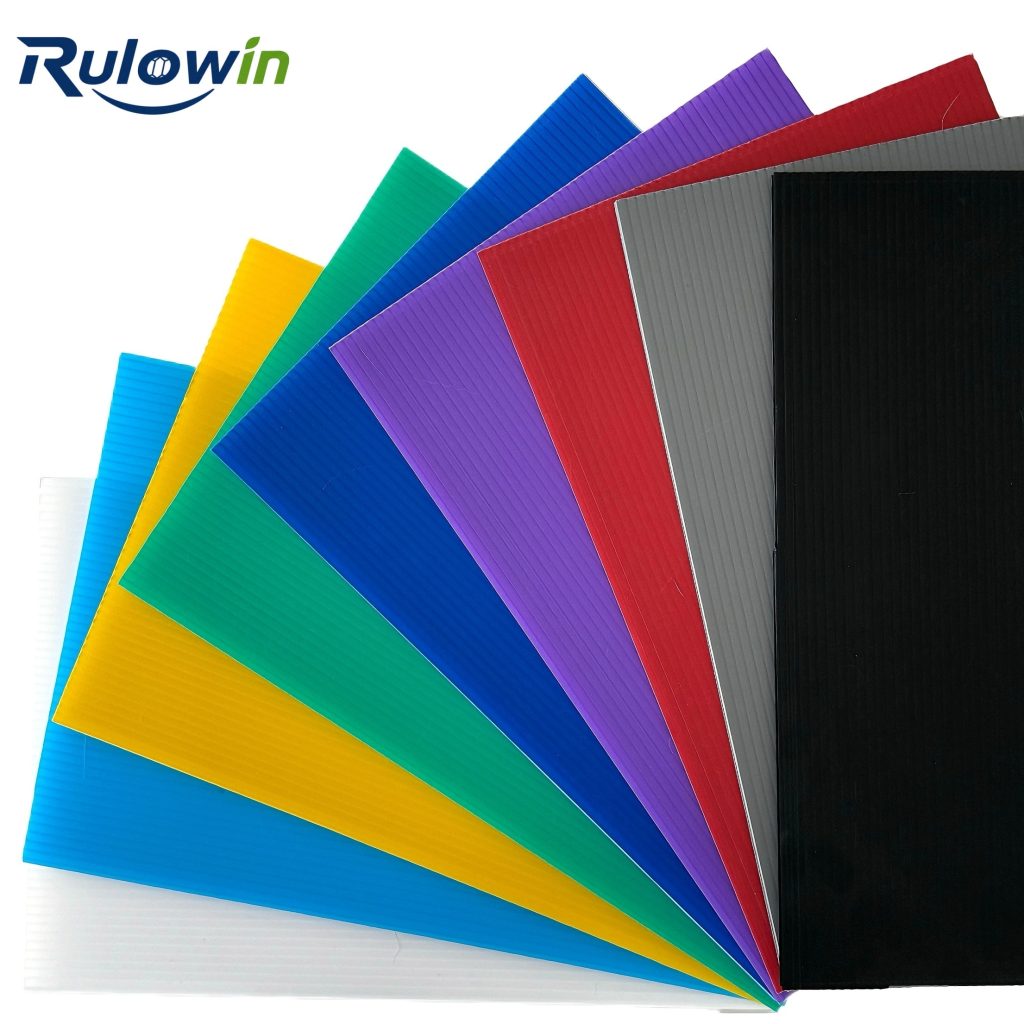
PP board totes and trays have become common as a middle option between a carton and a moulded crate: lighter and cheaper than a crate, far more durable than board. They are genuinely good at a specific range of jobs and genuinely wrong for others.
What they are good at
Internal movement of light to medium contents. Parts between workstations, components between a store and a line, garments and small goods. This is the natural application.
Collapsing when empty. Most designs fold flat, which makes the return leg and empty storage economical.
Cheap to modify. A board tote can be cut, drilled and reworked on site with hand tools, which makes it useful for short-lived or changing applications.
Being replaced incrementally. Low enough cost to buy in a rolling programme rather than as a capital project.
What they are not good at
Heavy or dense contents. A board wall has limits, and a tray of metal parts will bulge or fail. A moulded crate carries that load with a fraction of the material.
Sharp contents. Edges and corners cut through a board wall. If the content is sharp, it needs a liner or a different container.
Fully automated handling. Board totes vary more between units than moulded ones, and automated lines are unforgiving about dimensional consistency.
High-temperature washing. Folded and bonded constructions age faster than a moulded crate under an aggressive wash regime.
Long outdoor life. UV degrades untreated board, and an outdoor tote will chalk and embrittle within a season or two.
The construction decisions that matter
- Flute direction. Vertical for load-carrying walls – this is the most consequential and most frequently missed decision.
- Base construction. A single-layer base is fine for light contents and inadequate for anything with weight. A double base or a base with a reinforcing frame changes the capacity substantially.
- Corner joints. Welded corners are far more durable than taped or stapled ones, and they matter more than wall thickness in service.
- Edge treatment. A cut edge on a tote gets handled constantly and abraded by stacking. Sealing or edging it extends life noticeably.
- Grips. Rounded, reinforced, and sized for how the box is actually lifted.
Where it sits economically
A board tote costs more than a carton and less than a moulded crate, and lasts proportionally. It makes sense in a closed loop where it comes back, and it does not make sense in a one-way flow, where it is simply an expensive carton.
The break-even against a carton depends on how many trips it makes. Against a moulded crate it depends on the load – where the load is light, the board tote wins easily; where it is heavy, the crate is not more expensive over its life because the board tote will not survive.
What to test before committing
Fill a sample with the real contents, stack it to the real height, and carry it the way your operators will. Then drop it once from waist height – not to prove anything, just to see whether the base and corners survive a normal accident.
Those two minutes will tell you more than any specification comparison.
What we can do
We make corrugated PP board totes and trays with welded corners, reinforced bases and controlled flute direction. Tell us the contents, the weight and the trip count and we will tell you honestly whether board is the right material – for heavy or sharp contents, a moulded container is usually the better answer even though we could supply either.