
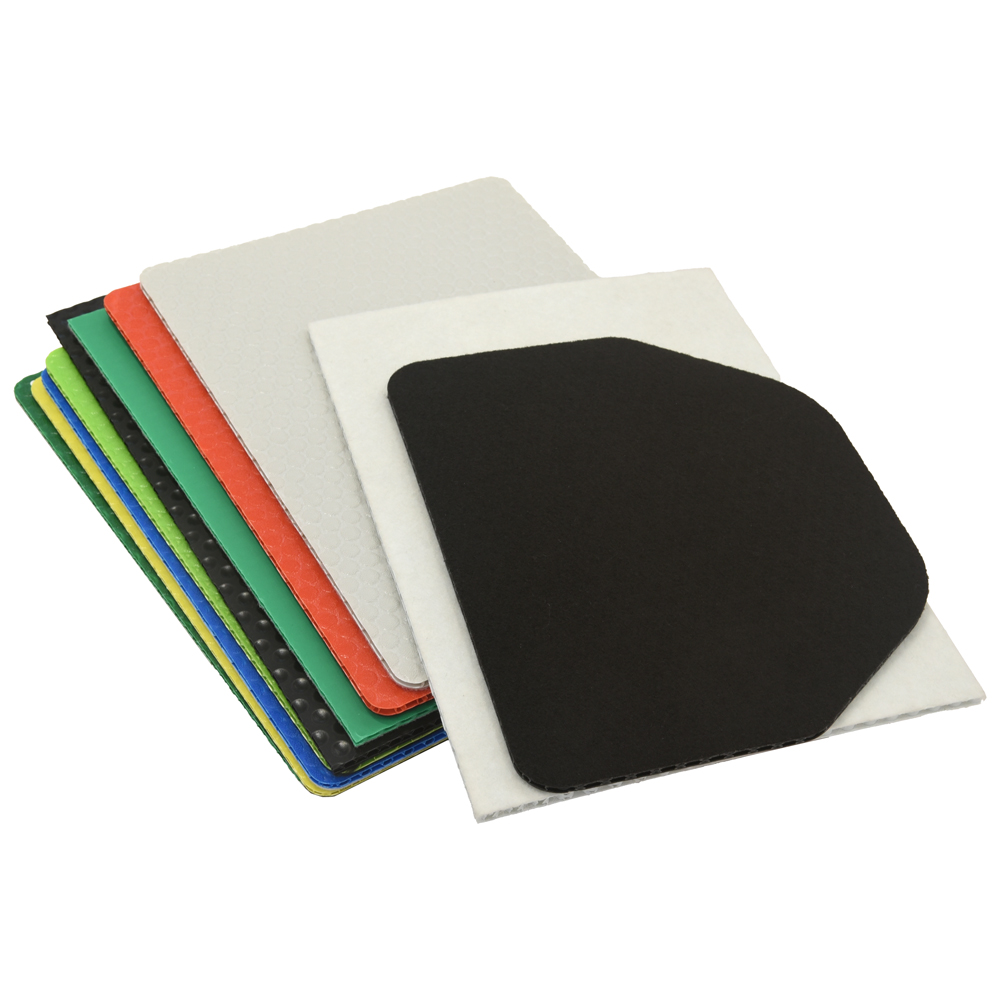
Fabricated cradles for heavy components – pumps, gearboxes, machined castings – look like a job for wood or steel until you lift one. Honeycomb panel carries high load at low weight, and for one-off or low-volume heavy parts it often beats both.
The load must go into the cells
A honeycomb panel is strong in compression across its faces and weak in any direction that loads the cut edge directly. A cradle that presents its edges to the load fails; one that loads faces in compression succeeds. Nearly every disappointing result comes from getting that wrong.
In practice this means the contact interface should transfer load squarely into the panel face, and any cut edge taking load needs a closure – an edging strip, a folded sheet section or a bonded cap.
Shear is the awkward one
Shear resistance comes from the cell walls, and it is lower than most people expect. Long spans under distributed load are fine; point loads are not. Adding a facing skin increases load spreading and dramatically improves what the panel can carry, which is why faced panels dominate heavy applications.
Cradles are custom but do not need to be unique
The temptation with one-off heavy parts is bespoke everything. In practice a modular approach – standard section sizes, standard fixing components, adjustable support blocks – covers a surprisingly wide range of parts and can be reconfigured rather than remade. The economics shift noticeably once Part Two arrives.
Fixing methods again
Anything bolted into panel needs inserts and backing plates, as set out for panel assemblies. Riveted or welded joints both work; for cradles that get repaired, rivets win for the same reason they do in boxes – your maintenance team can fix them.
Weight matters twice
Light cradles reduce freight cost and, more importantly, reduce handling effort and injury risk. A heavy part in a heavy wooden cradle needs equipment; the same part in a honeycomb cradle can sometimes be moved by two people safely. That difference drives most of the actual business case.
Where not to use it
Any application with sustained outdoor exposure without protection, any duty where the panel will be repeatedly soaked, and any case where sharp metal edges bear directly on a cut panel edge without spreading. Steel-framed stills win those; we will say so rather than quote.
Designing for the return trip
A cradle that works outbound often returns as an awkward, bulky shape that nobody wants to handle, and that is where the programme quietly dies. Nested or knock-down cradles cost slightly more to make and save a great deal on the return leg, and the return is where reusable packaging programmes succeed or fail.
If a cradle cannot be reduced in volume for the return, ask whether it should be reusable at all. Single-trip cradles for one-off heavy shipments are frequently the better answer, and it is a question worth answering honestly before the tooling exists.
Check the lifting points twice
The cradle is lighter than the part it carries, and lifting points designed for a wooden cradle load path do not transfer. Where the cradle is lifted with its load, the lifting features need designing for the combined case, not adapted afterwards.
What we can do
We fabricate cradles and stillages from PP honeycomb panel with closed edges and faced skins where loads demand it. Send the part weight, support points and how the cradle returns, and we will size it – or tell you if it should be steel.