
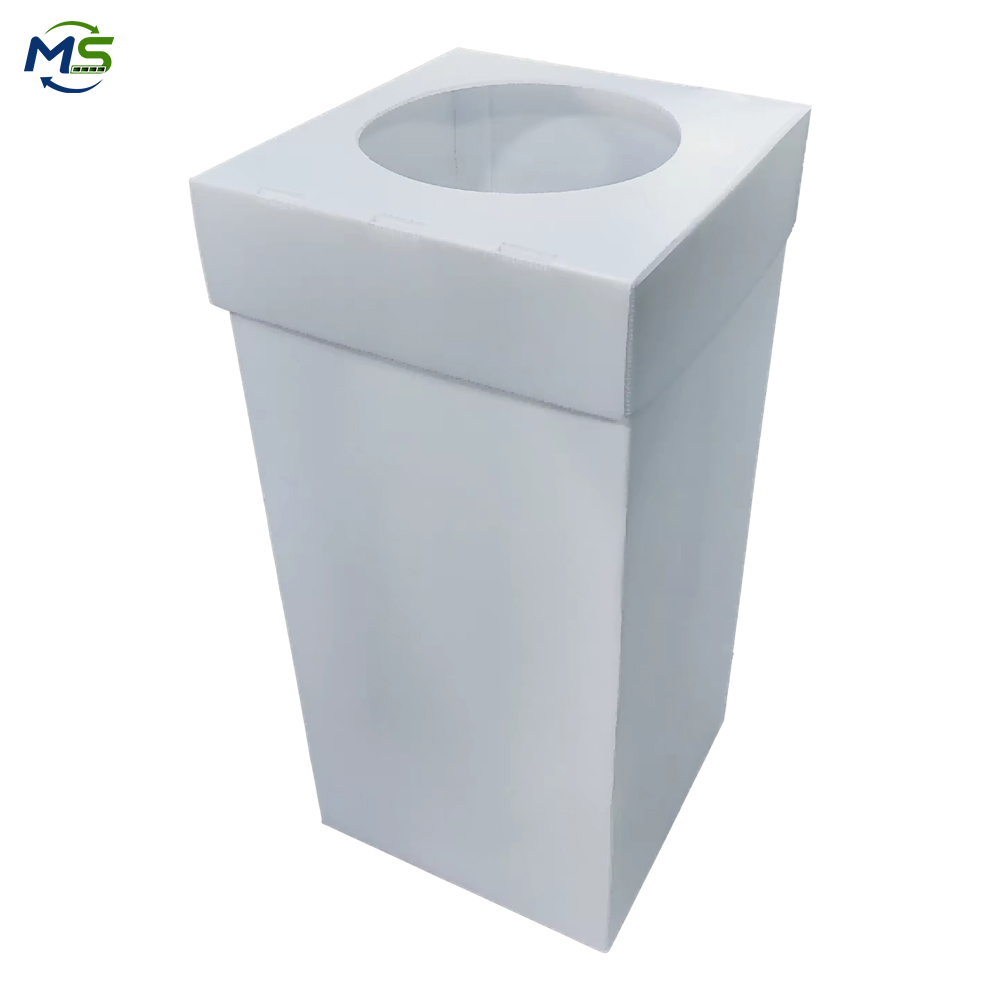
A parallel gripper lifts a container by squeezing two opposite faces. The physics is simple – friction times normal force has to exceed the weight, with margin for acceleration – and the practical difficulty is that both of those quantities vary across a fleet and over time. A gripper tuned on a new box in a clean laboratory will meet a used box with a worn surface six months later, and the margin that looked comfortable is not.
The friction number is the uncertain one
Gripper force is set by the robot program and is known. The coefficient of friction between the gripper pad and the box wall is not known, and it varies with surface finish, with contamination, with temperature, and with wear. A glossy wall and a textured wall can differ by a factor of two. Where a gripper slips, the first check is not the program – it is what the wall surface has become since the box was new.
Wall stiffness decides whether the box survives the squeeze
The gripper has to apply enough force to hold the load, and that force is applied over the pad area on the wall. A wall that deflects will bow inward, and the box will either slip – because the contact patch has moved – or deform permanently. The wall needs enough stiffness to take the grip force without deflecting more than a millimetre or two, and that usually means a reinforced panel or a rib pattern rather than a flat sheet.
Where on the wall the gripper should land
Near the top of the box, the wall is stiffest if there is a rim or a rolled edge. Near the middle, it is at its most flexible and deflection is greatest. Near the base, the walls are tied into the base structure and are usually stiffer, but the gripper may foul whatever the box is standing on. Most grippers end up engaging just below the rim, which is where the box is stiffest and where a rim, if there is one, gives a positive location.
Pad material and the mark it leaves
A gripper pad hard enough to grip reliably will mark a soft wall, and on a reusable container those marks accumulate until the box looks damaged and – more importantly – until the surface finish has changed enough to alter the friction. Softer pads mark less and grip less. Where appearance matters, or where the grip area is also a label area, the pad material and the wall finish have to be chosen together, and the grip area should be kept away from any identification feature.
Repeatability across the fleet
A gripper engages at a programmed position, which assumes the box is where the robot thinks it is and is the size the robot thinks it is. Variation in either shows up as a grip that lands partly off the wall, and a partly-engaged grip is a dropped load. This is the same tolerance issue as in width tolerance against side guides, applied to a gripper instead of a rail, and the answer is the same: know the distribution, not just the nominal.
Wear on the box, and what to inspect
Grip areas wear. On a reusable container the wear is visible as polished or scuffed patches, and it matters for two reasons – it reduces friction, and it is usually the first place a wall cracks. Where containers are handled robotically, the grip area should be on the inspection list, and a box with a polished grip patch is a box with a reduced margin. Retirement criteria based on grip-area condition are more useful than ones based on age.
What to give the robot integrator
Box weight loaded and empty, wall stiffness at the intended grip height, surface finish, and the dimensional tolerance. Four items. The weight and the tolerance are on most drawings; the stiffness and the finish usually are not, and they are the two that decide whether the grip works. Tell us the grip force and pad material and we will specify a wall construction that takes it.