
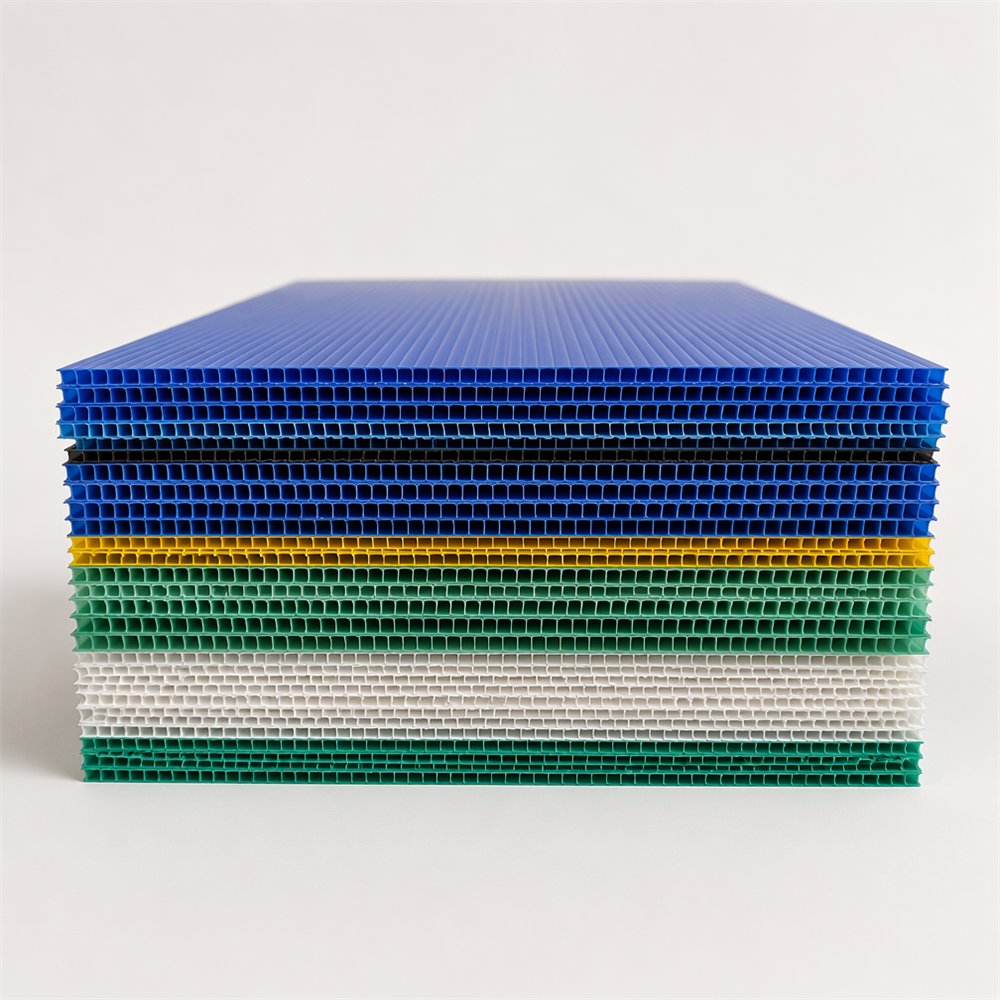
External protection runs – hoarding walkways, temporary ramps, delivery routes across a yard – have one failure mode that internal runs never see: water gets under the panel, freezes overnight, expands, and by morning the panel is sitting proud of the surface on a bed of ice. At that point it is not protecting anything and it is genuinely dangerous.
Why it lifts rather than just freezing
Free water expands by roughly a ninth when it turns to ice, and it does so in whatever space it occupies. Under a panel that means it jacks the panel up, and because it freezes unevenly the panel ends up tilted rather than flat. A tilted panel with a hard, cold, possibly frosted top surface is about the worst walking surface on a site. The same water also bonds the panel to the ground, so it cannot be lifted and re-laid until it thaws.
Drainage underneath beats grip on top
The instinct is to specify a better anti-slip face. That helps with the frost on top and does nothing about the ice underneath. The fix that works is the opposite of what internal specification would suggest: put the embossed face down, so there is a drainage and air gap between panel and ground and water has somewhere to go instead of pooling under the panel. It sacrifices the soft-against-the-surface property, which does not matter on a yard or a hoarding walkway anyway.
Weight and wind are the other two problems
A light panel on an external run lifts and moves in wind, and a panel that has moved is a trip hazard and no longer covers what it was covering. Fixing is needed: strapping to a frame, weighting at the edges, or moving up to a heavier PP honeycomb panel that the wind will not shift. And a panel that has been blown into a route is worse than no panel, because people walk around it and into whatever it was protecting them from.
What cold does to the material
Polypropylene gets stiffer and less forgiving as it cools, and a panel that flexes nicely at 15 degrees will crack rather than bend if it is dropped or driven over at minus 10. That is a real limitation and it is worth knowing: on a genuinely cold site, handle panels more gently, do not drive over an unsupported edge, and expect a few cracked panels that would have survived in summer. Most PP grades stay serviceable well below freezing for static loads; it is impact that becomes the problem.
Grit and salt do more damage than the cold
On a treated external route, the grit and salt spread for traction is harder than most panel faces and gets ground in by every footfall. Panels on external winter routes wear out several times faster than the same panels indoors. Expecting internal panel life on an external winter route is the most common budgeting error on this kind of work. The seasonal side of route planning is touched on in why site floor protection fails in week two.
What we can do
We supply PP protection panels and cut items for external runs, and we will ask about fixing and drainage before quoting. Tell us where the run is, what is underneath it and whether it freezes, and we will say which face goes down – which on external work is usually not the one people expect.