
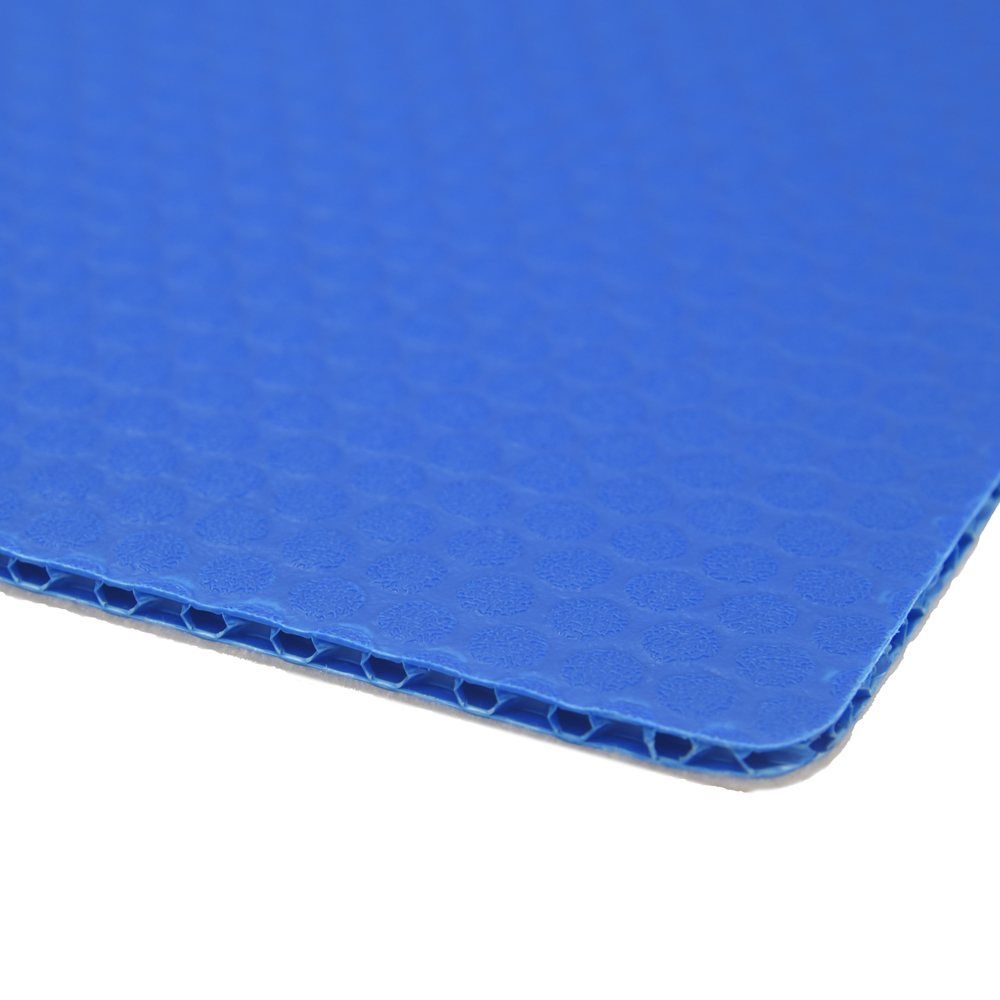
Polypropylene protection board is straightforwardly recyclable, and most of it is not recycled. The gap is not technical: it is that separating and cleaning board at the end of a job is nobody’s job, and a skip is the path of least resistance.
What makes it recyclable
It is a single polymer, it is thick, and it has value as a feedstock. Those three things make it a good recycling candidate in principle. What it needs is to be reasonably clean and not mixed with other materials – and that is where a site fails rather than the material.
What contaminates it
Adhesive tape, which has to come off. Paint and plaster, which are usually on the surface rather than in it but still count as contamination. And mixed waste, which is the real killer – board in a skip with plasterboard and timber is not recyclable at any reasonable cost.
Washing first
A washed panel is a recyclable panel. A panel covered in set plaster is a contaminated one. Washing takes water and somewhere to put it, which is why it does not happen on most sites, and it is the single thing that would change the recycling rate if it did.
What to arrange
A separate skip or container for board, clearly labelled, at the end of the programme. One container, one instruction to the site team. That is the whole system and it raises the recycling rate more than anything else.
Take-back
Some suppliers take board back, either for reuse where it is serviceable or for recycling where it is not. Ask. Where there is a take-back arrangement, the logistics are usually the supplier’s problem, which is worth a great deal at the end of a job.
What a recycler will ask
What polymer it is, whether it is clean, and whether there is any non-polymer content – a felt face, an adhesive, a printed layer. A felt-faced board is still recyclable but the face is a contaminant the recycler has to allow for, so declare it. Sending contaminated loads is how a recycler stops accepting them.
Why mixed material is the problem
A panel made from one polymer can be granulated and re-extruded. A panel with a fabric facing bonded on, a printed film, and steel staples in the edge cannot – it has to be separated first, and nobody pays for that labour. This is the single most important thing to check before you promise a client that protection will be recycled.
Ask what the felt facing is made of and whether it is the same polymer as the core. If it is polyester felt on a polypropylene core, the two have to be split. If the facing is polypropylene as well, the whole panel can go into one stream. We build panels with a polypropylene facing for exactly this reason. Tape residue is the second issue: panels that come up covered in cloth tape and adhesive are usually rejected at the gate, which is worth knowing before you specify the fixing method described in tape, adhesive and staining on finished floors.
What we can do
We supply PP honeycomb protection board and can discuss take-back on larger orders. Tell us the volume and the site locations, and we will say what is practical rather than promising something the haulage will not support. Programme-end handling is covered in taking protection panels back for reuse or recycling.