
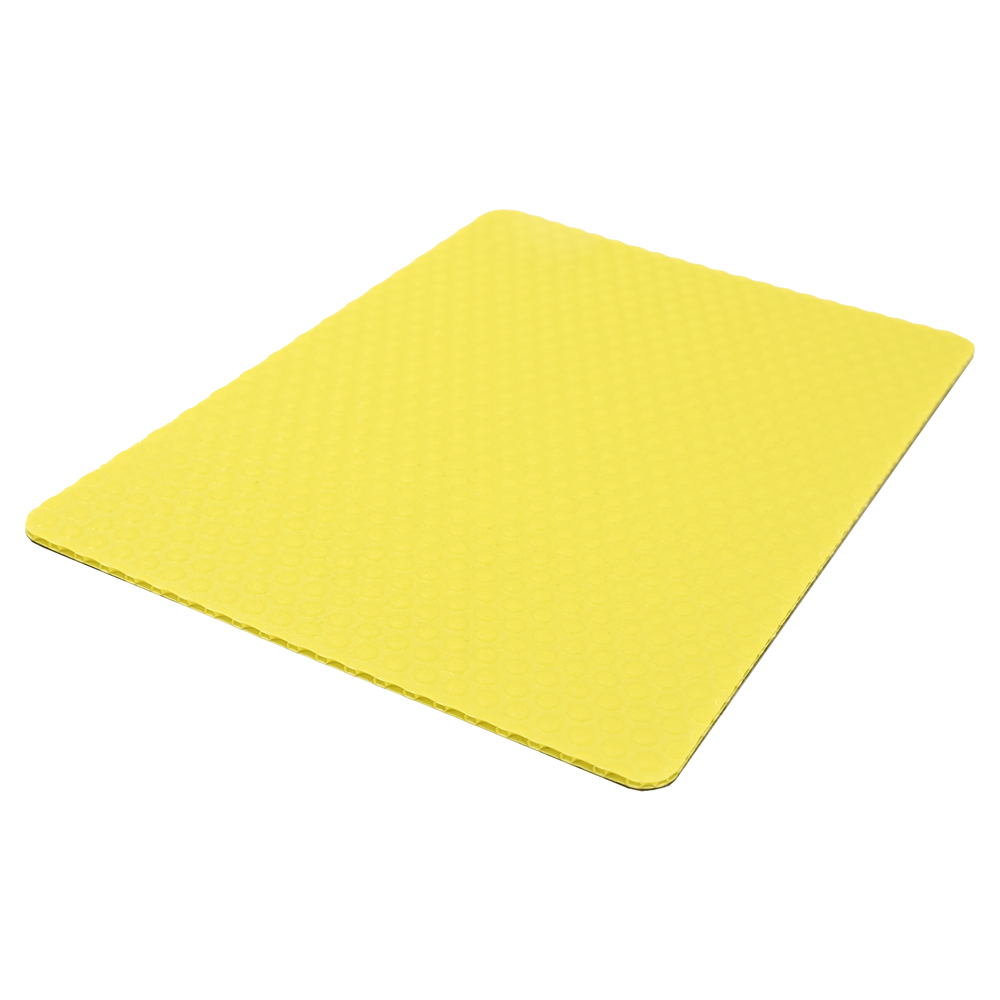
Recycled content in protection board is one of the easier sustainability wins available on a site, because the product is thick, opaque and structural – none of the properties that make recycled polymer difficult in other applications. The trade-offs are real but small.
Why it suits this product
Protection board does not need optical clarity, a precise colour, or a fine surface finish. It needs stiffness, impact behaviour and a consistent face, and post-consumer or post-industrial polypropylene delivers those well. A board with a meaningful recycled content performs very close to a virgin one in this application.
What changes
Colour consistency, mostly. Recycled streams vary in shade, so a recycled grade will not match a colour reliably batch to batch. Where colour coding matters for zone marking, that is a genuine problem; where it does not, it is invisible. Mechanical properties vary slightly more too, usually within tolerance for this use.
What to ask
What percentage, post-consumer or post-industrial, whether it is certified, and whether the percentage is by weight of the whole board or of the polymer content. That last distinction matters because a board with a felt face has a non-polymer component, and quoting recycled content against total weight understates it.
Availability by grade
Recycled content is usually available in standard grades and less often in specialist ones – anti-static and fire-retardant grades are harder to make with a recycled input because the additive package has to be dosed more precisely. Where a specialist grade is needed, expect virgin polymer.
What it is worth
On a project with a sustainability target or a client ESG report, it is a cheap and defensible line: protection board with a stated recycled content, on every site, at no cost premium. It is one of the easier items to put in front of a client.
What to do where colour matters
Specify a virgin grade for the panels that carry the colour coding and a recycled grade for everything else. That gets the recycled content where it counts for the report and keeps the zone marking legible, and it costs no more than using virgin polymer throughout. It is the kind of split that is obvious once the constraint is understood.
Virgin, regrind, and what changes between them
Two grades get offered for protection board: a virgin polypropylene panel and one containing post-industrial regrind. The visible difference is colour consistency – regrind panels are slightly greyer and vary a little between batches. The performance difference is at the cut edge and under point load, where regrind panels are a little more brittle.
For temporary floor protection that difference rarely matters, because the panel is working in compression across its whole face, not in tension. It matters more for panels that will be cut into narrow strips or folded, where a brittle edge cracks. The honest answer is to use regrind content where the panel is laid flat and virgin where it is cut heavily. We supply both and will say which is which rather than quoting the higher grade for everything. End-of-life handling is a separate question and is covered in taking protection panels back for reuse or recycling.
What we can do
We supply PP honeycomb protection board with recycled content and will state the percentage and whether it is certified. Tell us whether colour consistency matters and which grade you need, and we will say what is available. Specifier questions on this are covered in recycled content in protection panels: what specifiers ask.