
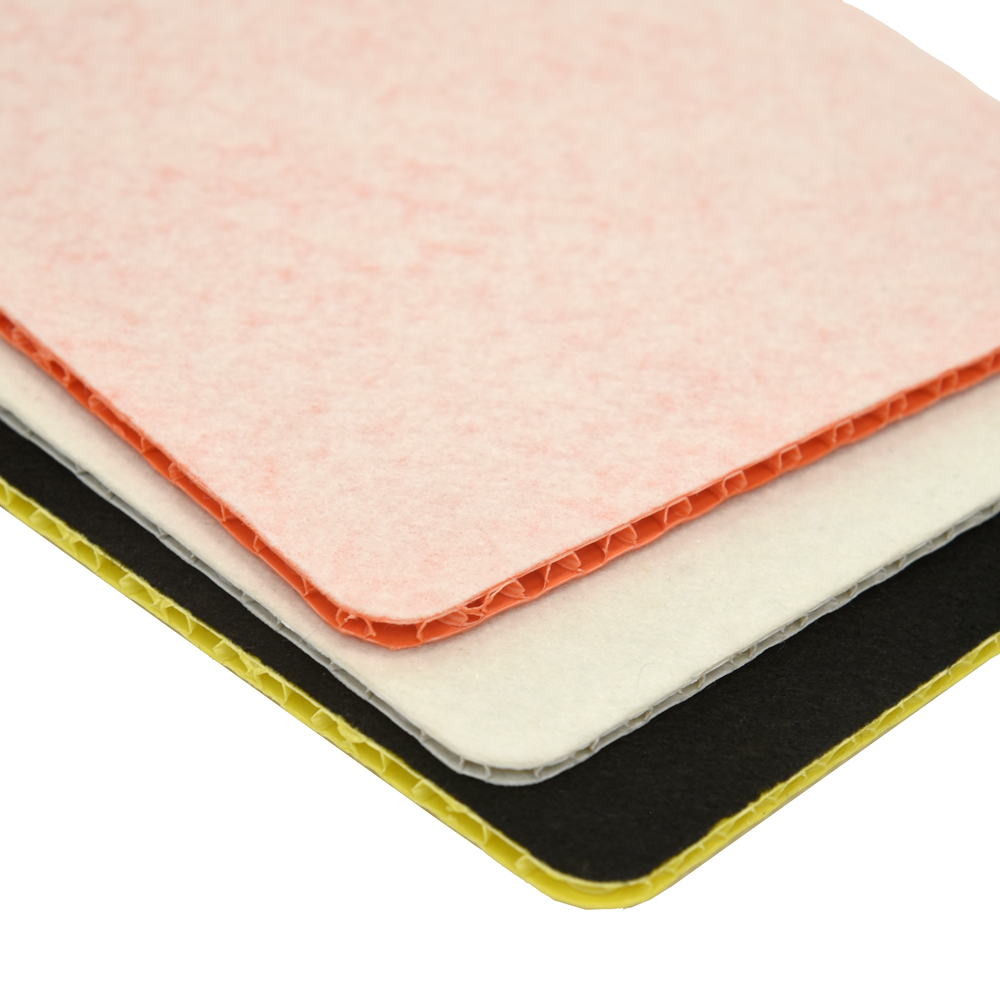
Cutting protection to fit on site is unavoidable on most projects, and it is where both waste and later failure originate. A panel cut badly has a delaminated edge that lifts under traffic, and the offcut is material paid for and thrown away – sometimes thirty per cent of what was ordered.
Pre-cut versus cut on site
Pre-cutting to a schedule is cheaper per unit and produces factory edges, but requires the drawings to be right and the site to match them. Cutting on site absorbs dimensional surprises and late changes. Most projects need a mix: standard panels pre-cut, awkward areas cut on site. Decide the split before ordering, because it changes what you buy.
Allow honestly for waste
A simple rectangular corridor might generate five per cent waste. A floor full of columns, penetrations and angled walls can reach twenty-five. Ask whoever cuts it what they expect, add it to the order rather than the estimate, and revisit it if the first phase produces very different figures.
Cut edges need sealing or protecting
An exposed honeycomb core at a cut edge takes impact badly and collects debris. Either specify edge sealing, use an edging strip, or detail the panel so cut edges sit against a wall or another panel rather than in a traffic path. Cutting and edging honeycomb panels covers the methods in more depth.
Dust and where cutting happens
Cutting plastic generates fine dust and offcuts that become trip hazards quickly. Cutting should happen outside protected areas where possible, with offcuts cleared the same shift. This sounds obvious and is routinely ignored on busy sites, which is why morning housekeeping usually includes clearing yesterday’s cuts.
Tools and safety
Hand scoring works for light sheet; circular saws and routers are used for thicker panel. Blades blunt quickly and a blunt blade tears rather than cuts, leaving a worse edge and generating more heat. Keep spare blades available rather than forcing the one in the saw.
Offcut reuse
Large offcuts become threshold strips, small runners or patch pieces for damaged areas – provided somebody is tasked with keeping them rather than binning them. A designated offcut rack pays for itself within a phase on most projects, particularly where there is a lot of cutting around penetrations.
Ordering to reduce cutting
Site cutting is rarely random – it concentrates around columns, penetrations and door openings. Sending the supplier those dimensions so panels can be notched or cut at the factory removes most of it, and factory edges are better. What remains on site should be simple straight cuts.
Ask your cutting team what they expect to throw away before ordering, then compare with what actually happened at the end of phase one. Two data points and the waste allowance stops being guesswork, which anyone who has reconciled protection at final account will appreciate.
Two cut sizes beats ten
Where site cutting cannot be avoided, limit it to two sizes where possible: a full panel and a half. Anything else tends to be cut once, used once and wasted. A layout designed around two sizes installs faster, produces fewer offcuts, and can be re-laid in other areas later.
What we can do
We cut honeycomb protection panels to schedule with sealed edges, which removes most site cutting and nearly all edge failure. Send the layout and we will quote pre-cut to size against standard sheets delivered loose, including a realistic waste figure for either route.