
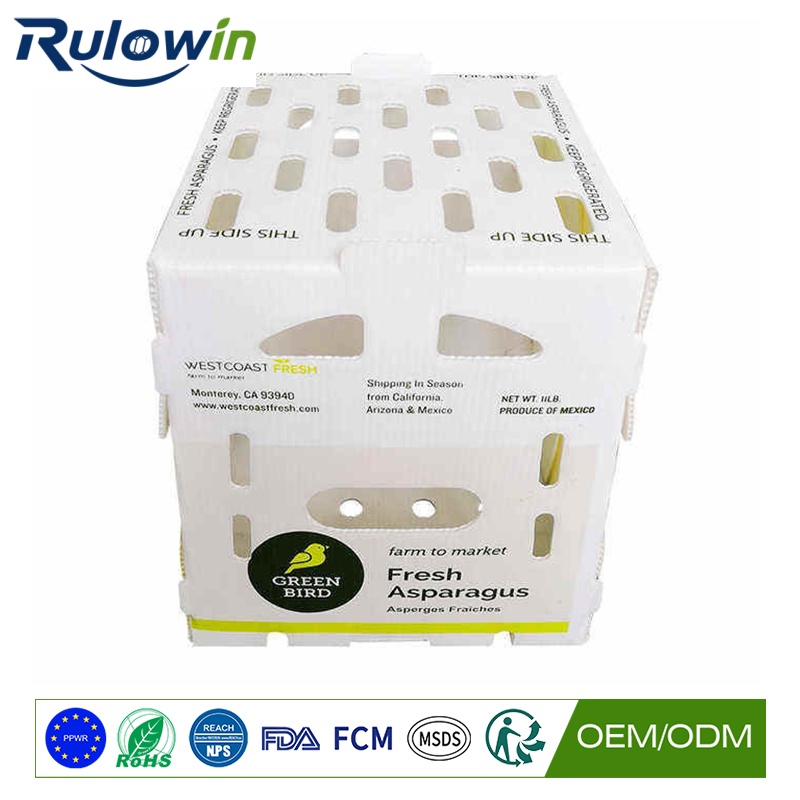
Produce is washed for good reasons – field heat, soil, residue, appearance – and it goes into the package wet. That single fact is the whole argument about cartons on a wash line, because the package is not being asked to resist a splash. It is being asked to hold a wet load for hours.
What is actually in the carton
Washed produce carries free water on the surface, and it keeps giving that water up. Some of it drains, some of it evaporates into the carton and condenses on the inside faces, and the rest runs to the base. The base is where the load is, and the base is the part of a carton with the least margin. Within an hour of filling, the bottom fluting is wet; within a shift, the bottom panel is doing very little work.
Waxed and coated board helps, and then stops
A waxed or polyethylene-coated carton resists surface water well. It resists the water that gets in through the cut edges, the score lines and the corners far less well, because those are open. Coated board also slows drying rather than preventing wetting, so a carton that gets wet through a corner stays wet. The upgrade buys hours, and on a long transit hours are not enough.
The pallet effect
One wet carton is a nuisance. A pallet of them is structural. The bottom layer carries the whole stack, and once it softens the load settles unevenly, which puts more load on the weakest corner, which softens further. Pallets that looked fine at loading arrive leaning, and the receiving point rejects them or re-stacks them by hand. That is the cost that never appears on a packaging invoice.
Ventilation makes it worse and better
Vent holes in a carton let field heat out, which is why they are there, and they also let water in from the pallet above and let the base dry a little. Whether they help depends on whether the water is coming from above or below. On a wash line it is usually from inside, which is why the vent pattern rarely solves the problem. The design question is covered in fruit box ventilation and what the holes are for.
What changes with a crate
A plastic crate does not care. Water sits in the base, drains through the drain paths, and the crate stacks the same tomorrow. It also lets you wash produce and pack it in the same container without waiting for a drying step, which is usually where the time saving is. On a line where the drying step is the bottleneck, that matters more than the crate cost.
Where the carton is genuinely fine
Produce that is dried after washing, packed dry and moved within a day, on a pallet that stays dry. Plenty of operations run exactly like that and have no reason to change. The problem is specifically the wet-to-pallet-to-transit chain, and where that chain is short the carton is the cheaper answer.
What to do if the chain is short
If produce is washed, dried and packed within the hour, and the pallet goes out the same day, cartons are usually fine and there is no case for changing. The failure needs a wet load and time under pressure – take either away and the carton behaves.
Where the chain is short but occasionally is not – a late load, a weekend hold, a delayed truck – the pragmatic answer is a crate for the loads that will sit and a carton for the ones that will not. Mixed fleets are normal on mixed operations and there is no rule that says one package has to do everything.
What we can do
We supply vented PP produce crates with drain paths in the base, sized for washed produce going straight from the wash line to the pallet. Tell us the crop and whether it is packed wet, and we will say which base pattern suits it.