
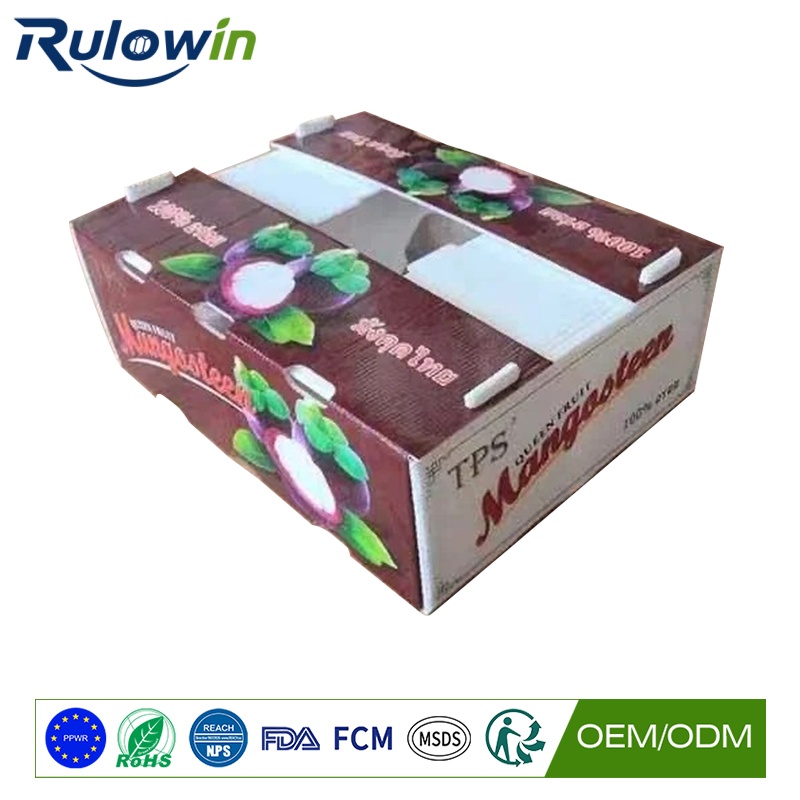
Ventilation holes in a produce box look like a detail. They decide how fast the crop loses field heat, and field heat is what most of the cold chain exists to remove. Get the venting wrong and everything downstream works harder for the same result.
What the holes are removing
Produce picked on a warm afternoon arrives at the packing house carrying a lot of heat, and it keeps generating more through respiration. That heat has to go somewhere. Air moving through the box carries it away; a sealed box holds it in and the crop effectively cooks in its own warmth.
This is why ventilation is not really about air for the product’s sake. It is about heat removal, and the two design requirements are not identical.
Air has to move through, not around
The common mistake is adding vents without considering the path. Air takes the easiest route, which is usually around the outside of the stack rather than through it. A box with generous side vents can still cool slowly if the vents are blocked by the boxes stacked against them, or if the pallet pattern leaves no path from one side to the other.
Two things matter more than vent count:
- Alignment through the stack. Vents that line up vertically create a chimney. Vents that are offset box to box do much less.
- An entry and an exit. Air needs somewhere to come in and somewhere to leave. Boxes vented only on two opposite faces can work well; the same area spread over four faces may perform worse if the path is shorter but the flow is lower.
Where more holes stop helping
Past a certain open area you are removing structure rather than improving cooling. Vent cut-outs interrupt the flutes that carry the stacking load, and a box with generous venting stacked six high will show it – usually as the top boxes dropping into the ones below.
The practical limit depends on where the vents are. Vertical slots between flutes remove less structural material than large cut-outs across them. Vents placed high on the wall, above the load path, cost less strength than ones low down near the corner posts.
Venting and moisture
Ventilation and moisture retention pull in opposite directions. Leafy produce loses water fast in moving air, and over-venting a box of salad can cost more in wilt than it saves in cooling. Root crops and hard fruit tolerate air movement well; soft fruit and leaves less so.
What we ask before quoting
- What crop, because respiration rate and wilt sensitivity differ enormously
- Whether it is cooled in the box or packed after cooling – this changes the requirement completely
- Stack height and pallet pattern, which decide whether the vents line up
- Whether the box goes through hydro-cooling or icing, which changes what the vents need to shed
The honest limitation
Ventilation in the box cannot compensate for a cooling regime that is too slow or too warm. If the crop is going into a cold room that takes three days to pull the temperature down, no vent pattern will save it. Box design is a supporting measure, not a fix for a cold chain problem.
What we supply
Our fruit and vegetable boxes are made with vent patterns matched to the crop and the cooling method, and we will ask those questions rather than sell you a standard pattern. If your cold chain is the actual problem, we would rather say so.