
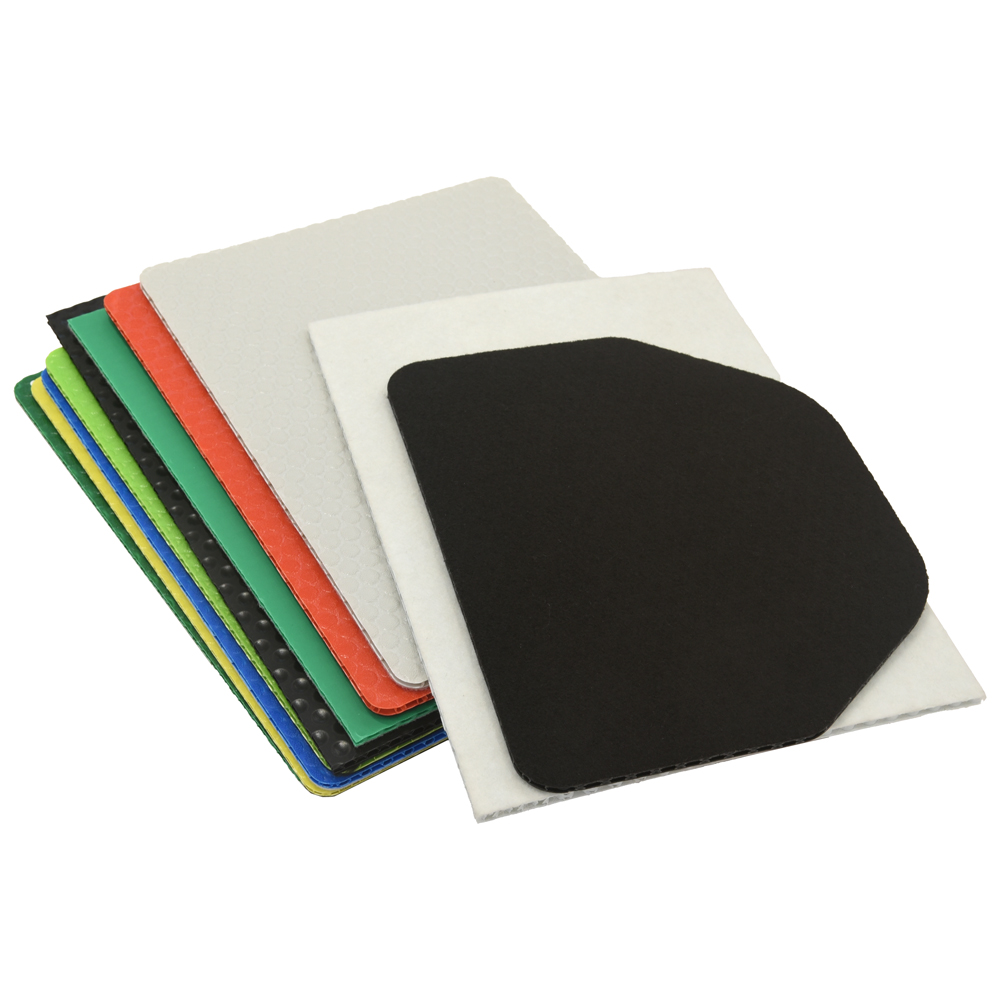
Strapping over a honeycomb panel is routine – it is how most top caps are held down – and it goes wrong in one specific way. The strap is tensioned hard, it bears on a small area, and either it crushes the panel edge or it cuts into the load underneath. Both are avoidable with an edge protector and the right thickness.
What the strap does to the panel
Strap tension is concentrated force. A panel has good compressive strength through its thickness, which means it resists being squashed flat reasonably well. What it does not resist is a narrow line load at ninety degrees to the face, which is exactly what a tensioned strap applies at a corner.
So the panel does not fail in the middle. It fails where the strap goes over an edge, and the failure is a crushed line that runs along the strap path.
Edge protectors, and why they are not optional
An edge protector spreads the strap force over a wider area of panel and takes the corner radius that would otherwise cut. Plastic or board protectors both work; the requirement is that the bearing face is wide enough and the protector does not itself deform.
This is the single cheapest thing you can do to make a strapped panel survive, and it is skipped more often than anything else in pallet building.
Thickness and span
A strap crossing a panel where there is nothing underneath is a bending load, not a crushing one. If the strap path crosses a gap – between pallet boards, over a hollow in the load – the panel needs to be thick enough to carry it, which is a very different specification from one that is continuously supported.
Plan the strap path before specifying the panel. Where the straps go determines where the panel has to be strong, and it is much easier to route a strap over a supported area than to uprate the whole panel.
Strap type matters too
Polyester strap holds tension better than polypropylene strap and stretches less, which means it stays tight on a load that settles. Steel strap is stronger still and is harder on the panel – it has a much smaller bearing area and it will cut. If you are using steel, a wider and stiffer protector is required.
Also worth noting: strap tension decays over a long transit. A load strapped correctly at the depot and checked three weeks later is often loose. If the journey is long, check tension at the far end before concluding that the panel failed.
The load underneath
Most strap damage attributed to panels is actually damage to the product. A strap tensioned across the top of a box crushes the box. If the load has any give, the strap needs to bear on the panel and the load needs to be protected by the panel rather than by the strap pulling through it.
We covered the export version of this in best pallet topper for export containers, where strapping is the detail that most often goes wrong.
What we can do
We supply PP honeycomb panels for strapped top caps and will specify thickness from where your straps actually run. Tell us the strap type, the tension and the load, and we will size the panel – and tell you what edge protector to use with it.