
Most transit damage is attributed to rough roads. Road roughness matters, but the larger forces come from the vehicle changing speed or direction, because those act on the whole load at once. A stack that is perfectly stable sitting still can be well past its tipping point under a firm brake application.
The forces on a pallet in transit
Braking applies a forward acceleration to the load, cornering a sideways one, and vertical acceleration from the suspension multiplies the effective weight. A load that is tall relative to its base sees the largest effect, which is why the top of the load moves first and the bottom of the load gets blamed.
Why the top layers go
The acceleration acts about the centre of gravity, so the higher that point sits, the greater the overturning moment for the same force. In practice the top one or two layers shift while the layers below stay put, and the load arrives leaning with the bottom boxes undamaged. That pattern is diagnostic: it says the load was too tall for its base, not that the boxes were too weak.
What containment is supposed to do
Wrap, strapping and hoods all convert a stack of separate boxes into something that resists acceleration as a single mass. Interlocking box features do the same thing without a consumable. Where containment is absent or slack, each box is free to move independently and the whole load walks, one small shift at a time.
Friction between layers
Smooth PP surfaces slide on each other more readily than people expect, particularly when they are new or wet. A layer pad with some grip, or a box surface with an embossed pattern, raises the force needed to start a shift. It is a small change and it is often the difference between a load that moves and one that does not.
What to check on arrival
Look at the top layer first, then at whether the stack is plumb, then at the corners of the bottom box. Photograph all three before the pallet is broken down. Where the same lane shows a leaning load repeatedly, the answer is usually one fewer layer or a strap, not a heavier board.
What actually stops a load moving
Containment – wrap, strapping, hoods or interlocking features – ties the load into one mass. Friction between layers raises the force needed to start a shift. And a lower centre of gravity reduces the overturning moment in the first place. Three mechanisms, and the third is usually the cheapest.
A load that is already borderline will be fixed by one fewer layer more reliably than by more film. Where height cannot be reduced, containment has to do all the work, and the specification should say so.
What to record on arrival
Whether the top layer has moved, whether the stack is plumb, and where any damage is. Three observations, seconds each, and together they distinguish a containment problem from a tension problem from a strength problem. Each has a different correction.
Photograph before breaking the pallet down. Without the arrival condition recorded, the discussion afterwards is opinion, and opinion tends to favour whatever was said last.
What we can do
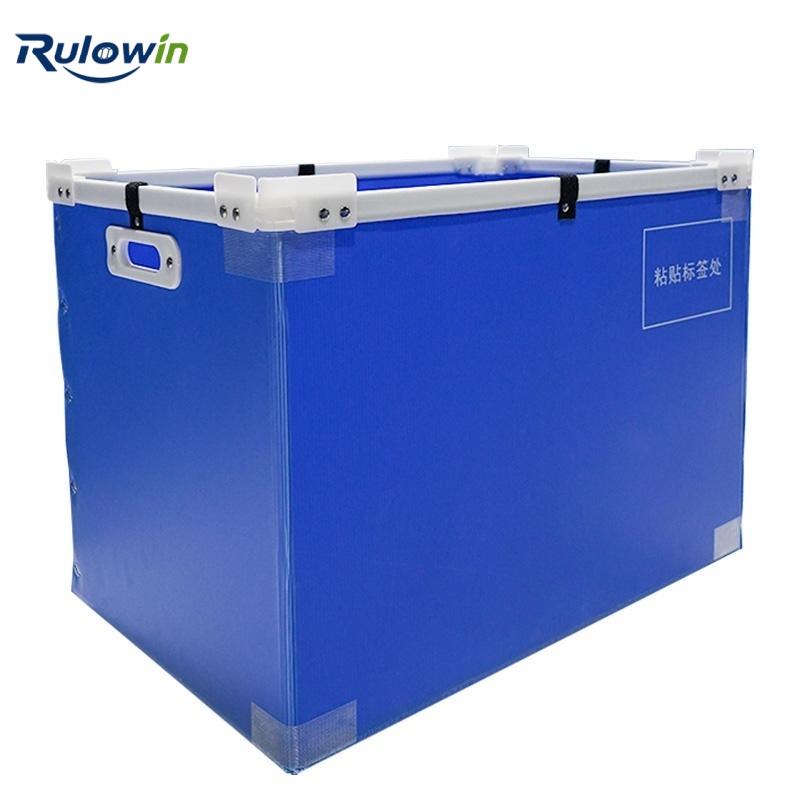
We build PP corrugated turnover boxes with locating features that resist layer-to-layer movement, and we will state the containment method the rating assumes. Send us the lane and the load and we will suggest what to change first. The wrap side of this is covered in what the wrap is costing you.