
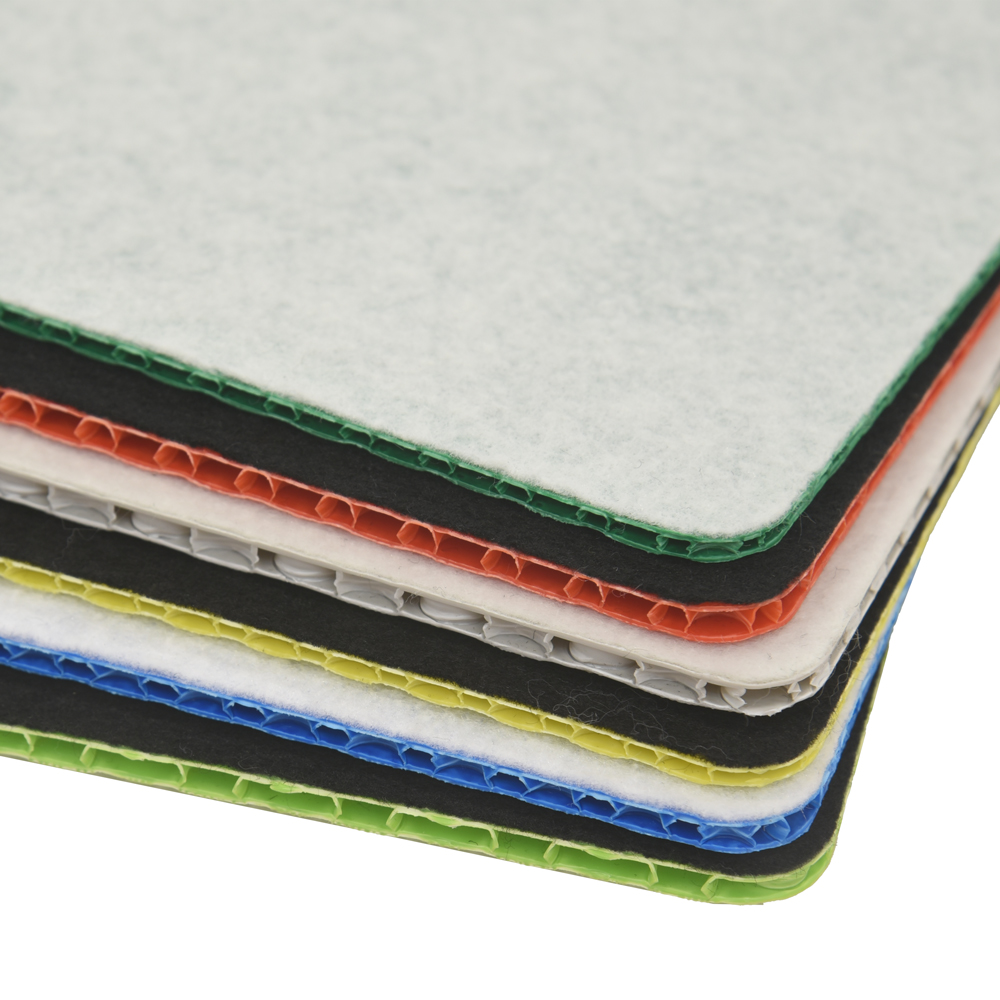
Stairs combine every difficulty: a narrow contact area, edge loading on every step, a slope, and no room to correct a slip. General protection board cut roughly to fit and taped down is the usual approach, and it is the usual source of stair incidents during fit-out.
Why stairs are different
On a tread the whole foot lands on a surface about a third of the size of a corridor step, and the nosing takes the load first. Any panel that moves, lifts or has a smooth wet face is a problem at the top of the flight rather than halfway down. Add carrying – people carry things up stairs – and the consequence of a slip is worse.
Nosing coverage is not optional
The nosing is where feet land and where damage starts. Protection that stops short of the nosing, because it was easier to cut, protects the wrong part of the step. A fabricated tread piece that wraps the nosing is more work and is the only arrangement that actually protects a stair.
Grip on the walking surface
Use the studded face, and consider a coarser pattern than the corridors because stair dust and water behave worse on a small area. Where the stair is external or gets rain on it, drainage at the front edge matters as much as grip – water sitting on a tread is water carried into the building.
Keeping panels down
Stair protection that can slide is worse than none. Mechanical restraint at the top and bottom of each flight, or a compression-fit tread piece, beats tape – tape on a stair edge lifts within days because every footfall loads it in peel. During the works, re-check restraint rather than assuming it held.
Added thickness changes the going
Anything laid on a tread raises it, and on an existing stair that alters riser heights. Small, consistent changes are usually acceptable; inconsistent ones are a stumble risk. Keep thickness uniform across every step and do not mix new and old protection on one flight.
Temporary stairs are a different risk category
A slip on a flat floor is usually a bruise; a slip on stairs is a fall with height behind it. That is why temporary stair protection deserves a stricter specification than the landing it leads to, and why a smooth-faced material acceptable on the flat should not be carried onto the treads. The nosing in particular needs a coarse pattern, because that is where the foot lands and where the edge is – the same reason a dedicated profile is worth having, as set out in stair nose and stringer protection in PP panel.
Consistent going matters as much as grip
Adding protection to a stair changes the going and the rise slightly, and an inconsistent thickness between treads is itself a trip cause. Panels cut to a consistent thickness and fixed so they cannot move are the requirement: a panel 3 mm thicker on one tread than its neighbour is a genuine hazard. Fixing is not optional on stairs, even where it is on the flat.
What to do about the first and last step
The top and bottom steps get the most traffic and the most surprise, because people adjust their stride at the transition. Those two want the coarsest available surface and the most secure fixing, and they want checking more often than the middle of the flight. On a busy temporary stair that is a weekly check, not a monthly one.
What we can do
We fabricate honeycomb stair protection as tread and riser pieces with the nosing covered and a studded walking face. Send the stair section and whether it is external, and we will quote a fabricated set – or tell you when a purpose-made stair product is the safer buy.