
Ammonia and humidity are individually ordinary and together decisive. In a livestock building they arrive at the same time, in the same air, at levels that rule out the two most common filter materials. Understanding which one attacks what makes the specification obvious.
What ammonia attacks
Metals, particularly copper and its alloys, and zinc coatings. Galvanised mesh in an ammonia-laden atmosphere corrodes far faster than it would outdoors, and the corrosion is not superficial – the wire loses section and the screen tears. Anything with brass or bronze fittings in the air path has the same problem.
Ammonia also affects some elastomers and adhesives, which is a consideration for framed panels even where the media itself is resistant.
Polypropylene is broadly resistant to ammonia at the concentrations found in animal housing. This is why it is specified there rather than because it is cheap – it is often cheaper, but that is not the reason.
What humidity does
To paper media, humidity is the primary failure. Cellulose absorbs water, loses strength, sags away from its frame and then supports mould. In a house running at high relative humidity for months, a paper filter does not survive a season and its failure is not gradual – it sags and bypasses.
Humidity also changes the dust. Dry dust rinses off; damp dust mats. A screen in a humid house loads with material that holds together and may need brushing as well as rinsing.
The combination
The two together are worse than either alone, because damp ammonia-laden dust is chemically more aggressive than dry dust, and because the moisture keeps it in contact with the surface for longer. Screens in these environments should be washed on a schedule rather than when they look dirty, since the loading is not purely visual.
Practical notes
Place screens where they can be reached for washing, which in a livestock house usually means at fan or inlet level rather than inside ductwork. Use a gauge heavy enough to survive being handled with gloves on. And keep a spare set – houses are washed on a cycle, and a screen out for cleaning should not leave an opening uncovered.
For the wider picture of screening livestock buildings, see ventilation filters for poultry and livestock houses.
What not to use
Galvanised mesh, which corrodes quickly in ammonia and moisture together. Paper media, which absorbs moisture and sags. And anything with brass or bronze fittings in the air path, which ammonia attacks specifically.
Adhesives and some elastomers are worth checking as well. A framed panel can have a resistant medium and a seal or gasket that fails, and the failure looks identical – the panel bypasses.
How ventilation rate interacts
Ammonia concentration falls as ventilation rate rises, so the two are linked: minimum winter ventilation, which keeps heat in, also keeps ammonia up. That is when the air is most aggressive and when filtration is most likely to be stressed.
It also means the loading and the chemical exposure peak together in cold weather, which is when screens are least likely to be washed. Worth planning the washing routine around the season rather than assuming a constant interval.
What we can do
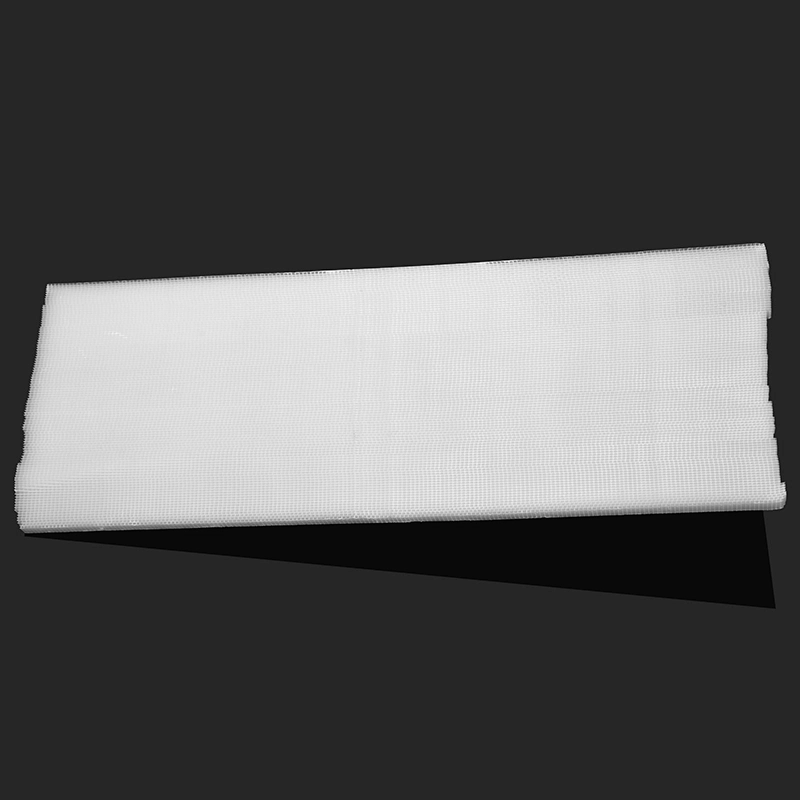
We supply washable PP honeycomb screens for livestock ventilation, sized to inlet or fan apertures. Tell us the airflow, the opening and how the house is managed, and we will recommend a specification – and tell you what to expect from washing intervals.