
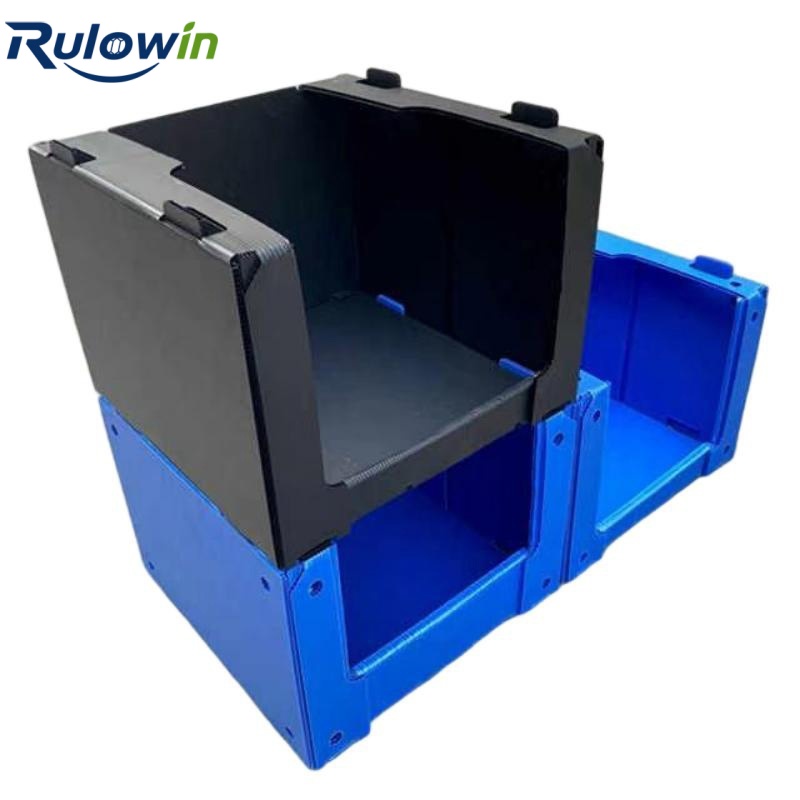
Stacking is a vertical load on the base and the corners. Accumulation is a horizontal load on the walls, applied by the drive behind, sustained for as long as the queue lasts. Both are compression, but they load the container in different directions, and a box rated for one is not automatically rated for the other. Where a line has a buffer or a zero-pressure accumulation zone, the queue case is the one that governs, and it is almost never the one that appears on the specification.
How much force a queue actually applies
On a powered roller line with the drive running underneath a stopped box, the force is the friction between roller and base, summed across every roller touching it, transmitted from the box behind. In practice it is limited by slip, which is why zero-pressure accumulation exists – the drive releases as soon as a box stops, so the force stays low. Where the zone is not truly zero pressure, or where the release mechanism is worn, the force rises to whatever the drive can deliver, and sustained. That is the condition that deforms boxes.
Why the wall is the weak direction
A corrugated PP wall is stiff in the direction of the flutes and much less stiff across them, and the flutes normally run vertically. A vertical load on the corner posts is therefore carried well. A horizontal load across the middle of a wall is carried by bending, which is the direction the material handles worst. The result is a box that survives a five-high stack and bulges in a queue of eight, which surprises people because the queue looks like the easier case.
What the bulge does downstream
A bulged wall increases the effective width of the box, which is exactly the failure described in width tolerance against side guides. It also changes where the box sits relative to the rollers, because the base deforms with the wall, and it can lift the box enough to break contact with a sensor window. Where the bulge is permanent rather than elastic, the box leaves the queue wider than it entered and carries that problem to every station downstream.
Time and temperature make it worse
Plastics creep. A load that produces a small, recoverable deflection over ten seconds can produce a permanent one over ten minutes, and the effect is much faster at elevated temperature. A line in a warm building, or one where boxes queue for long periods during a shift change, will show deformation that the same line in a cool building with short queues never shows. Where the queue duration is long, the accumulated case has to be rated for duration as well as for force.
Design features that help
A reinforced perimeter at the top of the wall, usually a rolled or folded edge, converts a bending load into a compression load around the box mouth and is the single most effective change. Corner posts that run the full height give the horizontal load somewhere to go. And a base that ties into the walls rather than sitting under them stops the wall from spreading at the bottom. All three are specification items, and all three are cheaper to include at the tooling stage than to retrofit into an existing fleet.
What to ask the equipment supplier
Whether the accumulation is genuinely zero pressure, what the maximum line force is if it is not, and what the longest expected queue duration is under normal operation and during a fault. Three questions. The answers let a container be specified for the real case instead of the assumed one, and they usually reveal that the assumed case was optimistic.
Testing the real thing
Load boxes to the working weight, queue ten of them against a stop with the drive running, and leave them for an hour. Measure the width before and after, and again an hour after release. Any permanent change means the box is being loaded beyond its creep limit in service, and it will get worse over months rather than better. Send us your queue force and duration and we will specify wall construction that holds it.