
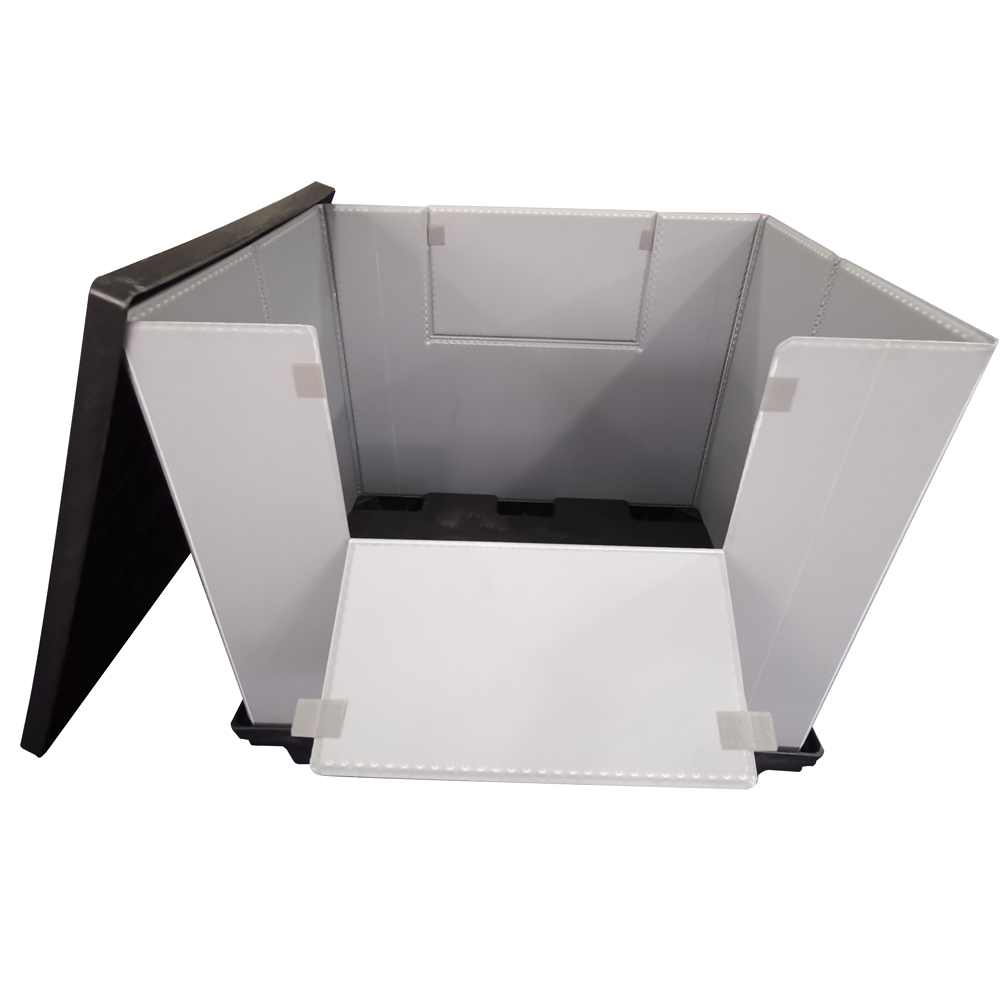
Load plans are drawn on nominal outer dimensions. Boxes are produced to a tolerance around those dimensions, and the tolerance is what decides whether the plan works in practice. A pattern with no room in it will jam on the first oversized box, and the packer will solve it by leaving one out.
Why the tolerance is directional
Boxes can be slightly large or slightly small. Small boxes rattle in the pattern; large boxes jam it. The two are not equally bad, because a jam stops the layer being completed at all, while a rattle can be packed out. For pallet patterns, the tolerance band that matters is the upper one.
How much room a pattern needs
Depends on the number of boxes across each axis, because the tolerances accumulate. Six boxes across at +/-2 mm is +/-12 mm of variation across the deck, which has to be absorbed somewhere. Either the pattern carries a deliberate gap, or the boxes have to be held to a tighter band.
Where the variation comes from
Scoring and folding accuracy, the flatness of the sheet, how the box is stored before assembly, and how it is handled during packing. Corrugated PP sheet is stiff and springs back slightly after folding, so a box measured flat is not the same as a box measured assembled. Measure the assembled box.
What to specify
State the maximum rather than a range, because the pattern fails on the large boxes. Then state the condition it is measured in – assembled, unfilled, at ambient temperature. A tolerance without a measurement condition is not enforceable, however precisely it is written.
Checking a delivery
Measure a sample from each pallet of boxes, assembled, not flat. Where the maximum is exceeded, the question is not whether it is within tolerance but whether the pattern still works. Often it does, and the practical answer is to widen the pattern rather than reject the delivery.
When to tighten
Where the pattern is tight, where boxes are stacked several high, or where the load runs automatically. In those cases a tighter band costs a little more and prevents a recurring problem. Where the load is loose and low, the standard band is fine and tightening it buys nothing.
Writing it down so it can be checked
State the maximum outer dimension on each axis, the squareness as a diagonal difference, and the condition: assembled, unfilled, at ambient temperature. Three lines. Where any of the three is missing, the specification cannot be enforced, and the argument will be settled by whoever is more senior rather than by measurement.
Then check a sample on arrival, assembled rather than flat. A blank measures differently from a folded box, and the folded box is what ships.
What to do when the tolerance cannot be met
Open up the pattern instead. Where a box size cannot be held to the band a tight pattern needs, a slightly larger nominal with a realistic tolerance produces a better result than a nominal that is only achieved on the sample. The plan has to be drawn against what will be supplied, not what was specified.
What we can do
We build PP corrugated turnover boxes to a stated maximum outer dimension, measured assembled, and we will quote a tighter band where the load needs it. Send us the pattern. What that becomes in aggregate is in how tolerances accumulate across a pallet.