
Most freight is billed on a chargeable weight, which is the greater of the actual mass and a notional mass derived from the volume. The conversion ratio varies by mode and carrier, but the logic is the same: a load is charged either for the weight it has or for the space it occupies, whichever costs more. Everything about packaging efficiency follows from which of the two applies.
Working out which side you are on
Weigh a full load. Measure its outer dimensions and convert to the volumetric figure the carrier uses. The larger of the two is what you pay. It is a two-minute exercise and it decides whether the packaging effort should go into making the box lighter or making it smaller – two programmes that pull in different directions.
Volume-limited loads
Light, bulky parts run out of space long before they run out of weight. For these, the box wall thickness and any wasted footprint are what cost money. A thinner board, a tighter internal fit and a footprint that divides the deck cleanly are worth more than any reduction in tare weight.
Weight-limited loads
Dense parts hit the axle limit with room left in the trailer. Here the box’s own weight is the enemy, because every kilogram of box is a kilogram of product left behind. A lighter board and fewer internal components matter more than a neat pattern.
How the modes differ
Air freight uses a volumetric ratio that punishes empty space hard. Road freight sits in between, and the effective figure depends on the trailer. Sea freight is usually billed per container, which makes the internal packing pattern the whole game. The same box can be optimised correctly for one mode and wrongly for another.
Why the box weight is not the whole story
Reducing board thickness lowers tare weight but also lowers stack strength, which reduces how many layers may be stacked. A lighter box that permits one fewer layer can easily cost more cube than it saves weight. The two have to be optimised together, which is why the calculation belongs with whoever specifies the box.
What to measure
For one representative shipment: gross mass, outer dimensions of the full pallet, number of units, and the carrier’s chargeable figure. Divide the chargeable figure by the unit count and you have the freight cost per part. That is the number to drive down, and it is rarely the one people track.
What changes the answer
Mode is the biggest variable. Air freight uses a volumetric ratio that makes empty space expensive; sea freight is usually billed per container, which shifts the problem entirely to internal packing. Road sits between the two and depends on the trailer. The same box can be optimised correctly for one and badly for another.
The second variable is the part. Dense metal is weight-limited almost everywhere. Large, light assemblies are volume-limited almost everywhere. Knowing which one you have decides whether the packaging programme should chase grams or millimetres, and those are different programmes.
Why this decides the programme
A volume-limited load gets cheaper when the box gets smaller. A weight-limited load gets cheaper when the box gets lighter. Those are different changes and they are not both achievable at once. Working out which applies before the enquiry is written is the difference between a specification and a guess.
What we can do
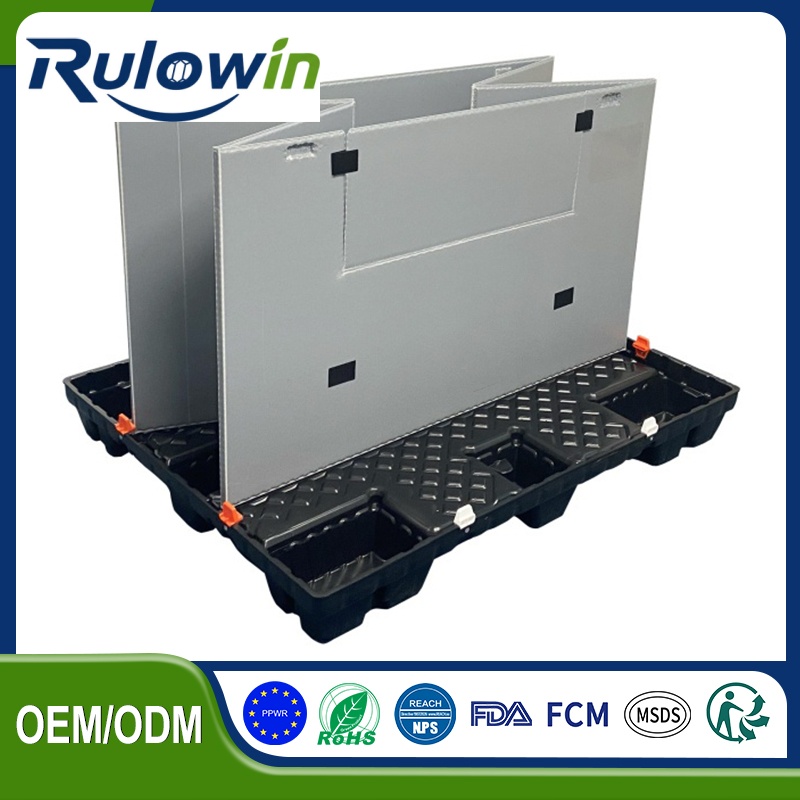
We build PP corrugated turnover boxes and can quote wall options so the weight-versus-stack-strength trade can be made against numbers. Send us the part weight and the mode and we will show the options. The measurement that follows from it is in how to work out packaging volume share.