
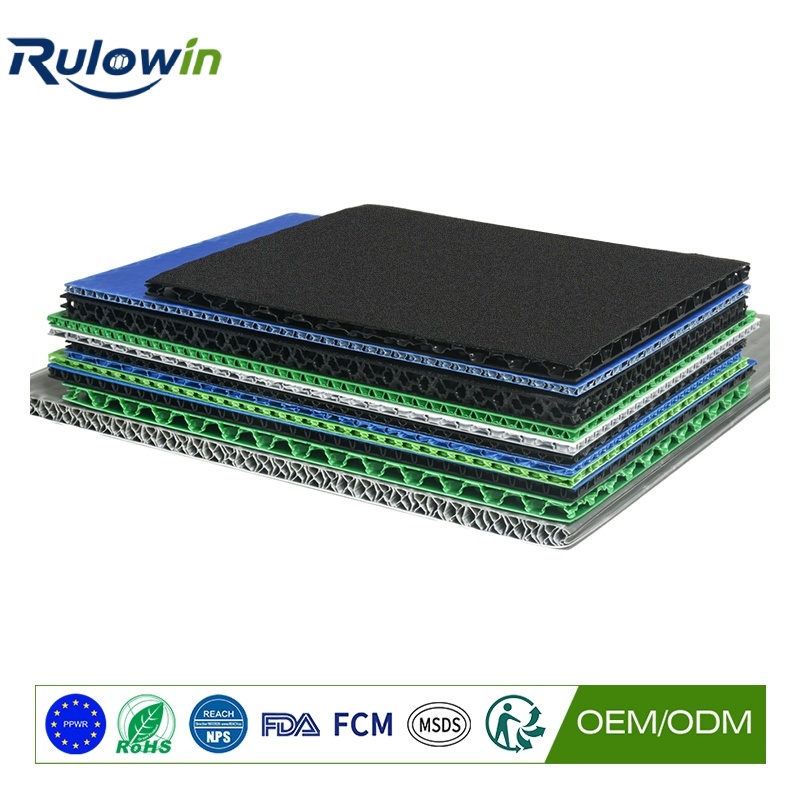
When a fleet of returnable boxes has to come home, somebody usually asks the freight question last. By then the box is designed, and the answer is whatever it happens to be. Working backwards from the return load is a much better sequence, and it usually makes the box easier to design rather than harder.
Start from trailer volume, not box volume
A standard road trailer gives roughly a hundred cubic metres of usable volume and around twenty-four tonnes of payload. Empty boxes run into the volume limit long before the weight limit, so the calculation is cubic, and the only number that matters is how many boxes occupy one cubic metre when they are empty.
Rigid, nested and flat
A rigid box returns at its full volume, so a box of 0.5 cubic metres returns at 0.5 and a trailer takes around two hundred. A nest that reduces to a third takes six hundred. A knock-down flat pack at a tenth takes two thousand. Those three numbers produce three completely different freight cases on the same lane, and the widest gap is between rigid and everything else.
Load height and stackability of empties
Empty boxes are light and unstable, so the practical limit is usually how high they can be stacked rather than how much volume is available. A trailer loaded with rigid empties will often cube out at two metres of stack height for want of anything to hold the top layer, especially if the boxes are not perfectly square. That is an argument for positive location between empty boxes, which is usually designed for the loaded stack and helps the empty one for free.
The mixed load problem
Return loads are rarely pure boxes. They carry pallets, dunnage, damaged units and whatever else is going back. That reduces the usable volume and adds handling, and it is the reason a return leg never achieves the clean number calculated on paper. Assume seventy per cent of the calculated capacity and you will be closer to reality.
Freight rate structures that change the answer
Per vehicle, per pallet position and per cubic metre reward different designs. On a per-vehicle rate, filling the trailer matters most and flat packing wins. On a per-pallet-position rate, the number of pallet footprints is what counts, which favours a box that nests onto a standard pallet cleanly. Ask the forwarder which structure applies before optimising anything.
Where the empties are stored at the far end
If the receiving plant has nowhere to put a hundred flat-packed boxes, they will be left loaded in the trailer and sent back full, which defeats the purpose. Space at the far end, and a person responsible for rebuilding, matter as much as the ratio. This is the arrangement described in pooling depots and return lanes.
A quick way to test the design
Build ten boxes, load them with the real part, then empty and stack them the way they would travel home. Measure the stack height and multiply up. This takes an afternoon, costs ten boxes, and settles the return freight question before a fleet is ordered.
Loading empties so they stay put
Empty boxes shift in transit more than loaded ones, because there is nothing weighing them down. Strapping a stack of light boxes is difficult and often left undone, and a load that has moved is a load that has been damaged on arrival. Loading front to back against the headboard, and using a final strap or a load bar rather than relying on friction, is the practical answer.
Where returns are regular, a cheap demountable frame that holds a block of empties together is worth having. It turns a loose pile into a unit, which speeds loading and removes most of the movement, and it is far simpler than trying to restrain each stack individually.
What we can do
We build PP honeycomb board boxes in nesting and knock-down configurations, and we will quote the boxes-per-trailer figure as part of the proposal. Tell us the lane and the trailer type, and we will size the return leg first.