
A mould or a die is the most expensive object most plants move regularly, and it is usually moved in whatever is under it when the tool change happens. The result is that the tool travels on a pallet in a crate built in a hurry, with the machined faces protected by whatever was to hand.
Density changes everything
A die the size of a small cabinet can weigh more than a car engine. That puts it outside the comfortable range of a board box unless the base is properly designed, and it moves the design conversation away from the walls and onto the deck and the runners. A honeycomb board box on a steel base is a normal answer here, and it is a different product from a box on a board base, even though the walls look the same.
Protecting machined faces
A die with a polished cavity has to avoid contact on that face entirely. That means a cradle shaped to the tool, contact only on designated surfaces, and no reliance on the operator to remember which side is delicate. Marking helps and is not a substitute for geometry. Where contact cannot be avoided, the contact point should be a replaceable pad, not the box itself.
Moisture is the quiet killer
Tools go cold in a store and warm in a plant, and a box that seals them in will condense water onto a machined steel surface. That is rust, and rust on a cavity is a polishing job rather than a wipe. Either the box ventilates and the tool is oiled, or a desiccant is used and changed on a schedule. The one thing that reliably fails is doing neither.
Craned or forked
Heavy tools are usually craned, at least at one end of the journey. A box that is only designed for forks will be lifted on slings over an open top, which puts the load through the walls. If a crane is part of the route, the lifting points belong on the design from the start, and the top of the box should be openable without dismantling anything.
Tool change speed
In a plant running frequent changeovers, the hour lost finding and loading a tool costs more than the packaging. That argues for a dedicated box per tool, labelled and stored in a known place, rather than a general-purpose box that fits whatever is needed. It is the same reasoning as keeping empty boxes under control, applied to the most expensive thing in the building.
What to specify
Tool weight, lifting method, the faces that must not be touched, the storage environment and the number of movements a year. Those five answers decide the base, the cradle and the ventilation. Anything less and the box is a box, not a tool container.
When a box is not the right answer
Some tools are moved once a year, stay in the same cell forever, and sit on a purpose-built stand. In that case a box adds handling steps without adding protection, and the honest recommendation is to leave it on the stand. Returnable packaging earns its place on loops, not on static assets.
Labelling and the tool that goes missing
When a tool is stored in a box, the box becomes the tool’s location. That means the box needs the tool number, the machine it belongs to and the date it was last used, all visible from the aisle. A generic box with a handwritten label in biro is how an expensive tool spends a week being looked for during a changeover.
Where several tools share a storage area, a consistent location map and a simple sign-out sheet are worth more than any tracking system, because they are maintained by the people who actually move the tools. The cost of a missing tool is measured in production hours rather than in the tool itself.
What we can do
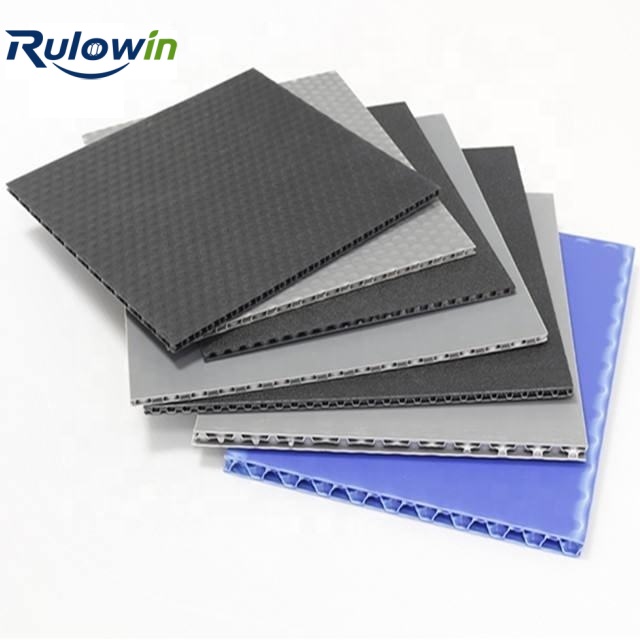
We build PP honeycomb board boxes for heavy tools, including versions on steel bases with crane points and ventilated panels. Give us the tool drawing, the weight and the route, and we will tell you where the base has to be and which faces need clearance.