
One of the promised benefits of returnable packaging is a tidier plant: no carton mountain, no baling, no skip. That benefit is real and it only arrives if the empties have a defined home. Without one, a hundred boxes become a hundred obstacles.
The empty box problem is a space problem
At any moment a fleet is part loaded, part empty, and the empty share is often a third or more. Those boxes need a place to be, and the place has to be close enough to the line that putting a box away is easier than leaving it where it stopped. If the empty store is a two-minute walk, boxes will live at the workstation.
Where empties should live
One designated position per line, sized for the peak, marked on the floor and visible from the workstation. The size matters: an under-sized store guarantees overflow, and overflow is what produces the impression of mess. Counting the peak number of empties for a line takes an afternoon and it is the whole design input.
Stacking and the height rule
Empty stacks go higher than they should because they look harmless. Set a height, mark it on the wall, and make the bay tall enough that the rule is physically easy to follow. Empty boxes stored long-term at height take a permanent set, which is the same slow problem described in stacking empties.
Nested or rigid, and the space it saves
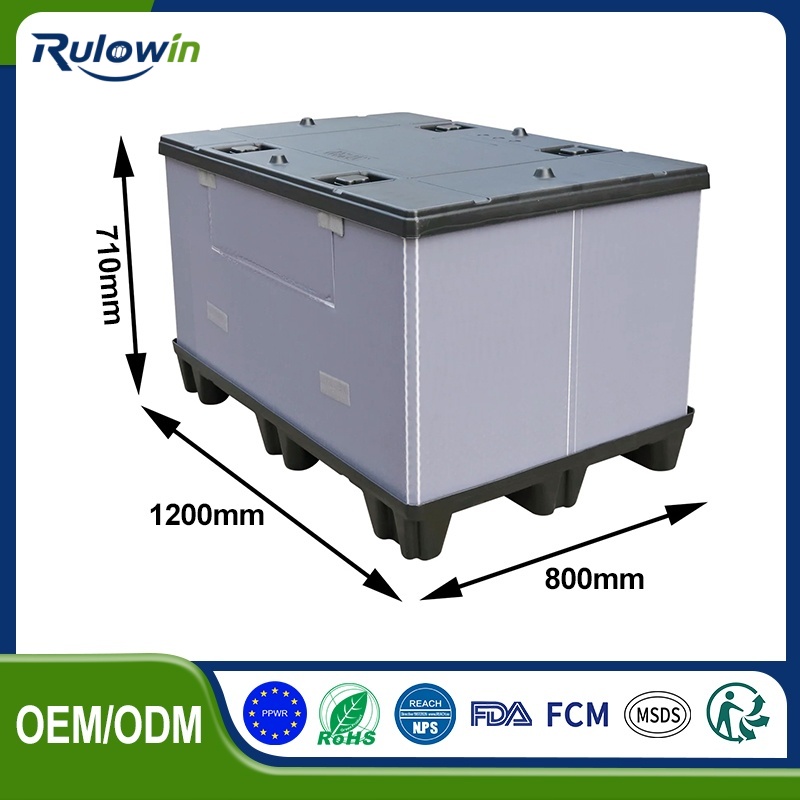
A nesting or knock-down box reduces the empty footprint by a factor of three or more, which is often the difference between the empties fitting in the line-side space and having to go to a central store. If a plant is short of space, the nesting ratio of the box is the specification item that buys the most space.
The five-minute end-of-shift rule
Ten minutes before the end of each shift, empties go back to their position and any box without a home goes to a quarantine point. It is a small cultural rule and it is what keeps the system working between audits. Plants that rely on a weekly tidy-up spend more time on tidying than on running the fleet.
Quarantine and the boxes that should not be used
There has to be one place for boxes that are damaged, wet, dirty or awaiting repair, and it should be visible. A quarantine point that is out of sight is a quarantine point that nobody uses, and damaged boxes return to service by default. The repair and scrap rules from repairing a damaged box only work if there is a place to put the box while the decision is made.
How tidiness pays back financially
A tidy fleet is a fleet where boxes are found quickly, damage is spotted early and losses are lower. Those three effects show up in the running cost, which is the subject of budgeting spares and repairs. Housekeeping is not decoration; it is the cheapest reliability measure in the programme.
Starting a system on an existing fleet
Introducing empty box control into a plant that has never had it is easier than it sounds. Mark one position beside the busiest line, put a sign on the floor and a height mark on the wall, and run it for two weeks. When that works, add the next line. Rolling out to every line at once produces a set of half-followed marks and a general impression that the system does not work.
The second step is the quarantine point, because that is what stops damaged boxes going back into service. Once both exist, the improvement in appearance is visible within a month and the fleet’s availability improves with it, which is the argument that gets the next line signed off.
What we can do
We build PP honeycomb board boxes that nest or knock down so empty space is small, and we will help you size the empty store for a line. Tell us the line and how many boxes it turns over in a shift.